
Russia’s New Afghan Dilemma: Confronting Rising Security Threats – OpEd
By Saima Afzal
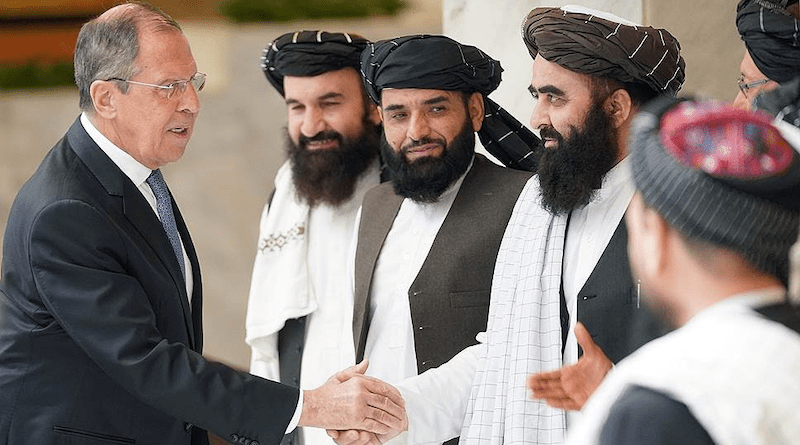
Afghanistan, situated at the crossroads of South and Central Asia, holds strategic importance for Russia’s security. Since Taliban’s takeover of Kabul and US troops’ withdrawal from Afghanistan in 2021, Moscow under the leadership of President Vladimir Putin has expand ties with Interim Afghan regime.
However, Russia mainly focused on counterterrorism collaboration and expanding trade and investment ties with Kabul particularly given Afghanistan’s strategic significance in future energy and infrastructure projects. On April 17, 2025, the Supreme Court of Russia has made a decision that is a radical change after more than 20 years of Moscow’s classification of the Taliban as a terrorist organization by removing the group from the list of terrorist organizations and lifting the ban on their activities.
Russia sees significant value in strengthening collaboration with the Taliban in the fight against terrorism, particularly given the security threats Moscow faces from certain armed groups operating in Afghanistan. In March 2024, the terrible terrorist attack against the Crocus concert hall in Moscow was claimed by the Islamic State Khorasan Province (ISKP), the same Afghanistan-based terrorist group that bombed the Kabul airport’s Abbey Gate in August 2021, killing 13 US soldiers and 170 Afghans. Therefore, Russia’s strategy to enhance relationship with Taliban regime was to counter the ISKP within Afghanistan. Russia is increasingly worried about security issues coming from its Central Asian neighbors who share borders with Afghanistan, as extremist groups supported by the Taliban are taking advantage of the open borders to spread their power. Such groups weaken the area and, at the same time, there are direct threats to Russia’s national security and regional stability.
Russia has voiced strong concern over these developments in recent times, which are mainly due to the rise of terrorist threats and the Taliban’s overt support to terrorist group inside Afghanistan. On 20th November 2025, Russia has warned that terrorist groups, particularly Daesh, are steadily expanding their influence in Afghanistan, raising concerns about regional security. At Security Council committee briefing, Russia’s UN Ambassador Vassily Nebenzia stated that the militants are deliberately fueling tensions and attempting to position themselves as an alternative power in the country. He also highlighted that Daesh continues to receive foreign financing and includes fighters with battlefield experience from Syria and Iraq. He also warned that weapons left behind by Western forces could fall into the hands of militants, posing a serious threat to Afghanistan and neighboring states. He stressed “there is a clear risk of terrorist activity spilling over to Central Asia and beyond,”.
Moreover, the diplomat emphasized that there is a need to adopt comprehensive measures to combat terrorism and dismantle all terrorist groups, as well as to prevent the use of Afghan territory for terrorist purposes, including against other States. Russia has repeatedly raised concern about the alleged presence of terrorist groups in Afghanistan. The Islamic Emirate, however, has dismissed the concerns, emphasizing that it will not allow Afghanistan soil to be used against other states. Recently, Pakistan and Afghanistan’s ties are also deteriorated because Afghanistan is supporting the terrorists’ groups particularly the Tehreek-i- Taliban Pakistan and they are launching terrorist attacks on Pakistan on the behest of Taliban regime. Despite of numerous statements by interim Taliban government that Afghanistan soil would not be used against any terrorist activities, they have failed to hold their commitments.
Similarly, Sergei Shoigu, secretary of Russia’s Security Council, states that while integrating Afghanistan into the regional economic framework is increasingly vital, the threat of cross-border infiltration by terrorist and extremist groups from Afghan territory remains a serious concern for neighboring states. While speaking at the 13th meeting of Security Council secretaries of the Commonwealth of Independent States (CIS) in Moscow, Shoigu reiterated that Russia has recognized the Taliban and continues to provide humanitarian assistance to the Afghan people. However, Shoigu cautioned that “the danger of fighters from terrorist and extremist groups entering CIS member states from Afghan territory persists,” and emphasized the increased regional coordination to address the security challenges and counter the menace linked to Afghanistan. Moscow has expressed growing concern about the presence and activity of groups such as the Islamic State-Khorasan (ISIS-K), which is not only threat to Afghanistan’s neighbouring countries of Central Asia but also to Russia.
Furthermore, in the last week of November 2025, Russia has given a warning that the Islamic State Khorasan Province (IS-KP) is getting influence in Afghanistan, gaining power, and making the situation in the region more unstable over time. Anna Evstigneeva, Deputy Permanent Representative of Russian Federation to the United Nations highlighted in UN Security Council committee meeting that the measures taken by the Taliban authorities to counter extremist groups remain insufficient. She stated that militants in Afghanistan receive foreign funding and include fighters from outside the country, including those with combat experience in Syria and Iraq. She also highlighted that the growing presence of IS-KP in Afghanistan also have spill over effects on the regional security.
In a nutshell, Russia’s rising alarm over the strengthening of ISKP and other extremist groups in Afghanistan underscores a widening regional security crisis that cannot be contained by unilateral measures. Moscow’s engagement with the Taliban may offer tactical advantages, but without verifiable counterterrorism commitments and sustained regional coordination, the threat will continue to expand across Central Asia and beyond. The evolving situation demands a coherent international strategy one that combines diplomatic pressure, intelligence cooperation, and robust border security to ensure that Afghan territory is not used as a launchpad for global terror networks. As the epicenter of extremist activity shifts, the international community must treat Afghanistan not as a distant concern but as an urgent and shared security priority.
