The Great Holocene Transformation – Book Review
Why do virtually all humans today live in large-scale societies organized as states? A new book by Peter Turchin, from the Complexity Science Hub (CSH), offers an answer based on analysis of data from more than 800 societies: warfare drove humanity’s transformation from small nomadic bands to the complex civilizations that dominate our world.
The Great Holocene Transformation (Beresta Books, September 2025) represents the culmination of an ambitious scientific project—the Seshat database—that collected and analyzed historical and archaeological data from more than 800 societies spanning 10,000 years of human history.
“This book was a long time in the making. The origins go back to 2011 when I, together with my colleagues, launched the Seshat Databank,” says Turchin, who leads CSH’s Social Complexity & Collapse group.
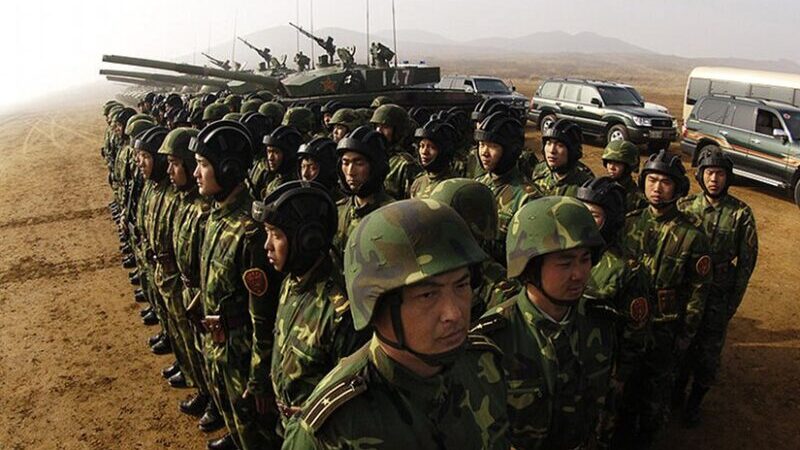
Turchin’s central finding is that competition between societies—primarily in the form of warfare—forced human groups to scale up and develop sophisticated institutions for cooperation over the last 10,000 years, known as the Holocene epoch.
“This process led both to oppression and inequality within societies, but also to the development of institutions and ideologies that promote prosociality and enhance welfare: in short, to the large-scale, complex societies that now dominate the globe,” explains Turchin.
A Scientific Approach to History
The book builds on findings published in leading scientific journals, including Science Advances and PNAS, using computational models and big data analytics to evaluate rival theories about societal evolution.
“We tested 17 competing hypotheses using the most comprehensive historical database ever assembled,” explains Turchin. “While agriculture played a role, the most powerful driver of social complexity was intergroup competition and warfare.”