Somalia’s Maritime Security, Governance, And Economic Exploitation (Part II) – OpEd
In Part I of this discussion published in Eurasia Review on April 17, 2025, we explored why despite owning the longest coastline in mainland Africa and a maritime space of nearly a million square kilometers, Somalia today remains one of the least prepared to leverage the opportunities offered by the vast Indian Ocean and its outlets to the rest of the world – the Gulf of Aden, the Red Sea, the Persian Gulf and the choke points therein (Bab El Mandab and Hormuz).
The Indian Ocean has long served as a key hub for trade, travel, and the exchange of ideas. It still continues to be so, which provides Somalia an opportunity to revive a forward-looking strategy to harness, for its benefit and others, and rooted in the geopolitical realities of today, the economic potential it can draw with respect to the rapid changes unfolding in the region. It is what we will attempt to address in this part II of this discussion on Somalia’s maritime security, governance, and economic exploitation.
The Indian Ocean is a major theater of strategic rivalry. Even Ethiopia a landlocked country neighboring Somalia, notices it and continuously mourns its lack of access to a sea. Major powers like the USA, China, Russia, India, the European Union, Middle powers like Türkiye and Japan and countries like Egypt, the UAE and other Gulf States all have presence in the Indian Ocean and are intensifying their activities through not only commercial activities but also through naval deployments, infrastructure investments, and strategic partnerships.
Somalia, a country with the longest coast in mainland Africa and facing the Indian Ocean is, naturally, a center of interest for all these countries and others as well. The Indian Ocean is not important on its own but is also an extension of the Indo-Pacific theme in global geopolitics, which renders Somalia’s vast maritime space as part of an even larger contest of influences, which span from Africa’s east coast to the western Pacific. Evidently, it can no longer sit on the sidelines and let others define its maritime future for her.
Historically, Somalia was in control of its seas and beyond, which was part of its preparedness to protect and defend its sovereignty. It needs to revive and rebuild its maritime security, if it ever has to regain such control. A secure sea is the first step toward a prosperous sea. This requires a strong national coast guard, reconstitution and rehabilitation of surveillance systems (land, air and sea), and partnerships with others on national interest basis and without dependency.
Somalia should convert its blue economy to a priority level, noting that the Somali Sea is one of the richest fishing maritime spaces in the world. It must, therefore, protect its marine ecosystems including its coral reefs, mangrove forests, and seagrass beds.
Somalia should no longer be a passive or peripheral participant but an active voice in the Indian Ocean Rim institutions like the Indian Ocean Rim Association (IORA), the Indian Ocean Global Partnerships (IOGP) and other regional fisheries management organizations. Such active membership will allow the country to shape regional norms, gain access to science, technology, training and environmental programs, and build partnerships beyond traditional donor politics.
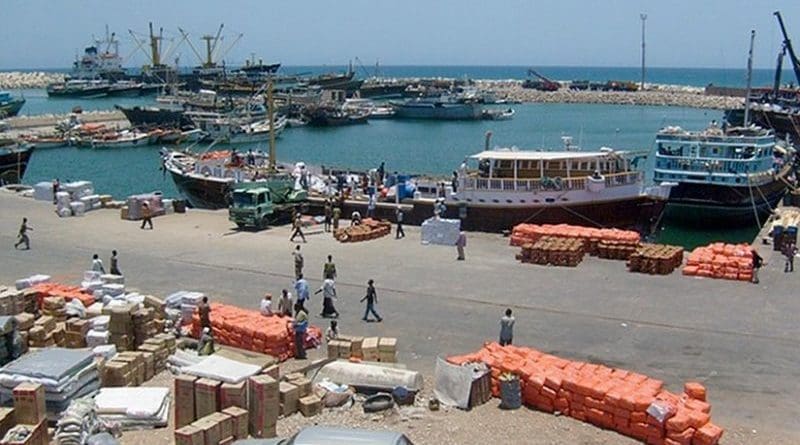
It is time that Somalia started to develop a new maritime vision starting with a roadmap for maritime governance that clearly defines roles, responsibilities, and coordination mechanisms throughout the country. Investing in key sectors will be a prime activity. This should include modernizing its ports, building new ones and other infrastructures such as roads and rail linking it to the interior and other African countries, all aimed at supporting not only the country’s trade but also regional trade, revitalizing fisheries to create sustainable livelihoods, and exploring ocean energy both renewable and fossil based.
These investments should be aligned with a robust regional and international diplomacy, which positions the country as an active and an influential player in the Red Sea and Indian Ocean corridors noting that it sits on the edge of one of the world’s most strategically important oceans at a time when maritime competition is intensifying.
The country’s seas are rich; its people are resilient; its location is irreplaceable. But without deliberate action, Somalia may watch other nations benefit from the maritime wealth that should be its birthright. Its future cannot be built solely on land. Somalia should look again to the sea. It has there, a great blessing and a great opportunity.