Sudan: As Negotiations Gather Steam, Idris Makes Clear: ‘It’s My Way Or The Highway’ – OpEd
By James Wilson
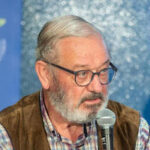
Perhaps Kamil Idris, the prime minister appointed by the Sudanese Armed Forces, was wondering why the chamber was two thirds empty when he addressed the UN General Assembly last month.
One likely answer is that all the action was elsewhere. Another is that while the magnitude of this conflict is such that it deserves the attention of the entire world, many delegations will not have wished to endorse the SAF and Idris’s widely contested claim to speak on behalf of ‘the people of Sudan’. So Idris was left preaching to the choir.
One way or another, it was a busy week around the Sudan conflict, if that is of any comfort to its suffering people. The Quad, the United States, Egypt, Saudi Arabia and the United Arab Emirates, met in New York and on the fringe of that meeting, Bloomberg reported US envoy Massad Boulos saying a breakthrough on negotiations might soon be at hand.
The US has been holding discussions with the SAF and their adversaries, the Rapid Support Forces, to agree general principles for the negotiations. “The status quo is such that nobody has the upper hand so they’re both ready to talk,” Boulos said. “Hopefully we should be able to announce something very soon.”
More immediately, it appears the Rapid Support Forces have agreed to facilitate the entry of humanitarian supplies into the besieged city of El-Fashir, the capital of North Darfur. Boulos appeared confident that a deal might be very close. “It’s taking shape as we speak.” If so, this is an important concession by the RSF, which seems to indicate their willingness to cooperate as the Quad, whose initiative has moved to the centre of international efforts to secure a ceasefire, and is working to set the terms of talks. RSF leader Mohamed Hamdan ‘Hemedti’ Dagalo now chairs the Leadership Founding Alliance (TASIS).
The central position of the Quad was underlined by a joint statement by the European Union and the African Union, issued in New York on 24 September, two days before Idris look to the rostrum. Urging the combatants to start talking and protect civilians, it welcomed the initiative of the Quad and further urged the AU and other diplomatic actors to coordinate their efforts.
Clearly a head of steam is beginning to mount. The question is: can the Quad get General Abdel Fattah al-Burhan and his Islamist backers to the table?
The Islamists certainly know that if the people of Sudan, and much of the international community, have their way, there is no place for them in the future of Sudan; they are simply too great a threat to the prospects for Sudanese democracy, and to regional security interests.
Of the two principal combatants, the RSF has always indicated its willingness to talk as an important stakeholder among many different armed, political and civic stakeholders. In contrast, the SAF has always been willing to talk to people of its own choosing, on its own terms.
And Idris made that clear to that echoing chamber at the UN General Assembly. His introduction wallowed in Sudan’s miseries, as if none of them, including the SAF’s use of chemical weapons, were anything to do with the government he nominally heads as the civilian face of Burhan’s regime.
He asserted its independent powers, despite the intense and losing battle he had to fight during the summer over the composition of his cabinet. And there was not a single facet of good governance, boxes to be ticked across the entire spectrum of human happiness, that he omitted in describing the kind of government the SAF intended to build. Perhaps he believes these things, but if so he forgets who is looking over his shoulder.
He also made clear the Burhan regime’s determination to stick to the roadmap for peace and reconstruction that they have presented to foreign negotiators. That roadmap had been drawn up, said Idris, by what he referred to as national forces, with whom his government would conduct a national dialogue’.
Which, for a roadmap, sounds very much like: “It’s my Way, or the Highway”.