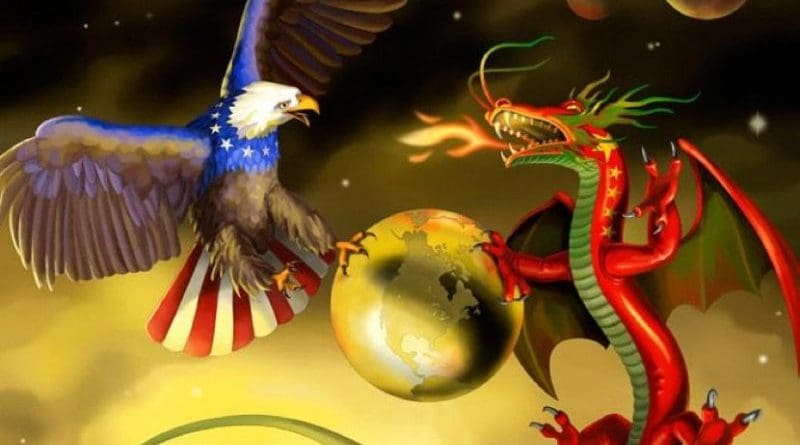
On China-American Major Power Relations: Why Balance Is Essential To Philippine Security – Analysis
Amidst the ongoing war in Iran, the Philippines faces the formidable challenge of balancing its long-standing security ties with the United States and its growing economic relationship with China.
While the Mutual Defense Treaty (MDT) of 1951 and the Enhanced Defense Cooperation Agreement (EDCA) of 2014 still aim to provide reassurance against external threats to Philippine security, China’s growing activities in the South China Sea and its economic leverage through the Belt and Road Initiative (BRI) complicate Manila’s strategic choices. The current U.S.–Iran war adds another layer of complexity, raising questions about how Philippine territory and alliances might be implicated in conflicts far beyond Southeast Asia.
Comparative experiences from peers in the Association of Southeast Asian Nations (ASEAN) and regional partners like Australia—and the reality that even Washington and Beijing balance their relations—highlight the great importance of strategic autonomy and pragmatic regional cooperation.
U.S. Security Commitments and Their Limits
The MDT obliges both parties to support each other in the event of an armed attack. More recently, EDCA expanded U.S. access to Philippine military bases, allowing rotational deployments and prepositioning of equipment including deployment of missiles.
These agreements undeniably support the development of Philippine defense capacity. They provide training, technology transfers, and anticipated deterrence against potential aggressors.
Yet they also raise attendant concerns about dependency and sovereignty. Hosting U.S. forces risks drawing the Philippines into violent conflicts that primarily serve American strategic objectives in the Indo-Pacific—and potentially beyond.
China’s Assertiveness and Legal Challenges
China’s existing claims in the South China Sea continue to challenge Philippine government positions. But China also continues to be one of the Philippines’ largest trading partners and a major source of investment, potentially through infrastructure projects under the BRI. This dual role—as both a security challenge and an economic partner—makes Philippine policy choices increasingly complex.
The Risk of Over-Alignment
However, aligning too closely with either Washington or Beijing also carries significant risks. Over-reliance on the United States may escalate tensions with China and entangle the Philippines in conflicts. Conversely, excessive accommodation of China may undermine maritime claims and erode public trust in government institutions.
The Philippines must, therefore, avoid becoming a proxy in the strategic competition between these two powers, or a collateral participant in conflicts beyond its region.
Comparative Lessons from ASEAN and Regional Partners
Other states in the region provide useful points of comparison:
- Indonesia has resisted hosting foreign bases, preferring a non-aligned posture that allows engagement with both Washington and Beijing while maintaining autonomy.
- Malaysia has balanced ties, cooperating with the U.S. on counterterrorism while deepening economic relations with China, showing the value of selective engagement.
- Vietnam has pursued a hedging strategy—strengthening defense ties with the U.S. and other partners while firmly resisting Chinese maritime claims.
- Thailand, also a U.S. treaty ally, has diversified its partnerships, engaging China economically while maintaining military cooperation with Washington, reflecting a pragmatic balancing act.
- Singapore has adopted a strategy of “strategic alignment without entanglement,” hosting U.S. forces for regional stability while simultaneously cultivating strong economic ties with China.
- Australia, though a non-ASEAN state, demonstrates how a middle power can balance alliance commitments with economic pragmatism. Canberra, as an American ally, has deepened defense cooperation with Washington while managing its economic dependence on China, offering lessons in resilience and diversification.
These examples demonstrate that the Philippines can learn from neighbors by strengthening regional cooperation, asserting neutrality in dealing with major powers, and prioritizing sovereignty over alignment.
Even the U.S. and China Balance Their Relations
Notably, even Washington and Beijing, despite their major-power rivalry, carefully maintain their own balancing acts.
Despite the ongoing tariff war, the United States maintains economic interdependence with China, while Beijing continues dialogue with Washington on issues such as trade, climate change, and global stability. This demonstrates that balance is not only a strategy for smaller states but also a necessity for great powers themselves.
For the Philippines, this underscores the legitimacy of pursuing a balanced approach—engaging both powers where interests align, while resisting pressures to take sides in conflicts that do not serve national interests.
Toward a Balanced Security Strategy
A balanced approach requires deliberate recalibration of foreign and security policies through the following actions:
- Strengthening ASEAN ties: ASEAN communiqués have consistently reaffirmed the importance of peace, stability, and the peaceful resolution of disputes in accordance with international law, including the United Nations Convention on the Law of the Sea (UNCLOS).
- Investing in indigenous defense capabilities: Greater investment in the Armed Forces of the Philippines (AFP) through the Self-Reliant Defense Posture (SRDP) can reduce dependency on foreign military assistance and ensure that the defense posture reflects national priorities.
- Leveraging diplomacy with China: While disputes must be firmly addressed, dialogue with Beijing remains essential to mitigate tensions while preserving economic cooperation.
- Recalibrating U.S. ties: Agreements like MDT and EDCA must be continually reviewed to ensure they serve Philippine interests first. Cooperation with Washington should strengthen defense capacity without compromising sovereignty or entangling the country in conflicts such as the current war in the Middle East.
Conclusion
The Philippines must cautiously navigate relations with both the United States and China. Security agreements with Washington and economic ties with Beijing should be managed in a way that maximizes benefits while minimizing risks. The U.S.–Iran war underscores the dangers of over-dependence on external powers, as Philippine territory could be used in distant conflicts.
By pursuing balance, self-reliance, and regional cooperation—drawing lessons from the experiences of its neighbors, and even the balancing strategies of the U.S. and China themselves—the Philippines can effectively safeguard its security without surrendering its strategic autonomy to either.
In an era of intensifying great-power rivalry, global instability, and international security uncertainties, the true measure of Philippine strength will be the capacity to chart an independent course—a skillful balancing act that protects sovereignty and advances national interests.