The Silent Walls Of Afghanistan For Women – OpEd
In the latest disturbing development in Afghanistan, the Taliban’s supreme leader has issued an order mandating the blocking of windows in residential buildings that overlook areas where Afghan women are present. New construction is banned from having windows that provide views into spaces occupied by women, and existing windows are to be sealed. While this is yet another step in the Taliban’s ongoing campaign to erase the presence of women from public and private life, it represents an even deeper and more insidious form of oppression, one that seeks not just to control but to entirely isolate women from the world around them.
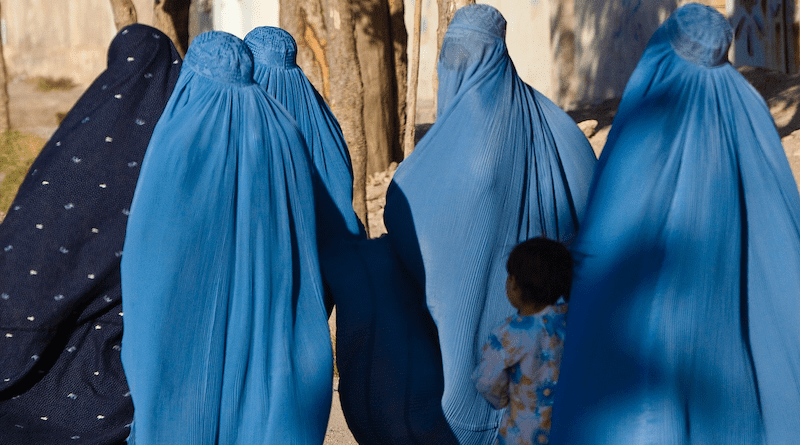
Since the Taliban’s return to power in August 2021, Afghan women have experienced a systematic stripping away of their rights and freedoms. What was once a country in transition toward greater gender equality and opportunity has rapidly regressed into one of the world’s most hostile environments for women. Forced to wear full-body coverings, banned from secondary and higher education, and pushed out of the workforce, women in Afghanistan have endured suffering that goes far beyond legal prohibitions—it has become a matter of cultural erasure.
The new window ban serves as a chilling symbol of how the Taliban’s war on women is intensifying. Beyond its logistical absurdity, the decree has profound psychological and social consequences. The very architecture of Afghan cities, towns, and villages will now serve to reinforce the walls of gender-based separation. Women’s physical and social worlds will be confined further. No longer will they be able to look out at the streets, the horizon, or their own neighborhoods. Instead, they will be forced to live in a visual cocoon, their lives shrouded from the outside world, and the outside world from them.
This decree sends a message: the Taliban views women not only as inferior but as objects to be hidden from view, their very presence to be obscured. It is a return to the medieval mindset that regards women as both a social and moral threat to the state’s vision of the world. In their minds, a woman’s sightline, her ability to look out at the world, is a form of rebellion. Their world is one of confinement, and they will go to any lengths to ensure that the visibility of women, and therefore their agency, is eliminated.
The impact of this new regulation goes beyond architectural inconvenience. It is a stark reminder that the Taliban’s policies are designed not only to deprive Afghan women of basic rights but to undermine their dignity, self-worth, and very humanity. This type of erasure is not just physical but psychological—isolating women from the larger society and reinforcing the narrative that they are less than fully human.
The international community must take immediate and robust action in response. The time for diplomatic niceties is over. The West and international human rights organizations cannot allow the Taliban to continue this campaign of total dehumanization. Pressure must be applied in a way that the Taliban cannot ignore—whether through direct sanctions, humanitarian aid leverage, or the active support of Afghan civil society and women’s rights groups.
Afghan women, despite their dire circumstances, have shown incredible resilience in the face of unimaginable hardship. They have organized protests, spoken out against their mistreatment, and found ways to resist under increasingly dangerous conditions. They need the world’s support now more than ever. The international community cannot afford to be passive. Every day the Taliban’s cruel policies go unchecked, Afghanistan moves further away from any semblance of justice or dignity for its women.
The blocking of windows is not a mere quirk of policy—it is a statement of intent. It is the Taliban’s way of further locking Afghan women in a prison of isolation, unable to see the world that is changing outside their window. The question now is: will the world let this happen? Or will it stand with Afghan women in their fight for the right to be seen, heard, and free?
In the face of such grim adversity, we cannot afford to look away. The window is closing—both literally and figuratively—on the future of Afghan women. The time to act is now.