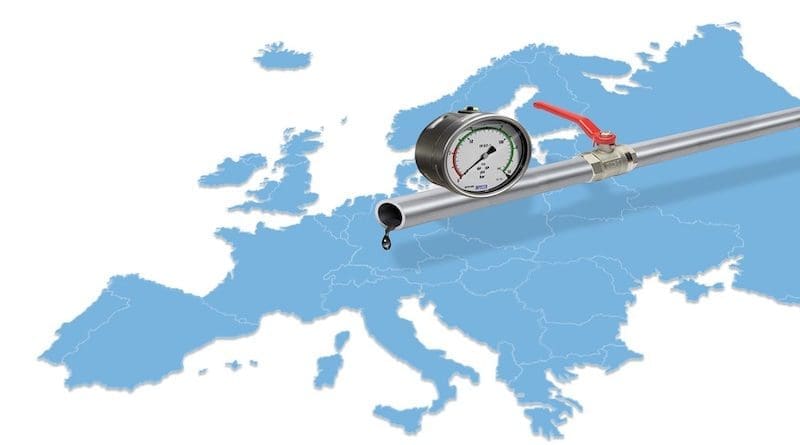
EU Forced To Delay Oil Cap For A Week After No Deal On Russian Sanctions
By Nicoletta Ionta, Thomas Moller-Nielsen, and Magnus Lund Nielsen
Key Takeaways
- EU delays new sanctions on Russia: Ambassadors postponed approval of fresh measures aimed at curbing Kremlin war funding, freezing the oil price cap until July 23 to allow more negotiations.
- Disagreements over oil price cap and exemptions: Greece is seeking protection for a shipping company (Dynagas), while Austria wants safeguards for Raiffeisen Bank; the Commission has one week to assess potential benefits to Russia.
- Oil prices spike amid regional tensions: Urals crude jumped to nearly $66 per barrel following the US-Israeli conflict with Iran, potentially increasing revenue for Putin’s war effort while the cap remains unresolved.
(EurActiv) — The EU failed to approve fresh sanctions against Russia on Wednesday, postponing a key decision aimed at curbing the Kremlin’s war funding.
In a stopgap measure, the EU’s oil price cap will be frozen until July 23 to allow a deal to be found on the sanctions package.
Ambassadors shelved plans to lower the threshold that bars European companies from providing services such as insurance to tankers selling Russian crude above the limit, according to four EU diplomats.
The European Commission had proposed freezing the cap for six months, but the plan ran into resistance from key shipping EU countries such as Greece. Instead, ambassadors agreed to keep the current cap in place until July 23.
The cap is currently set at $44 per barrel but would have risen to $58 per barrel without a deal – a development that would have helped replenish Vladimir Putin’s war chest.
EU ambassadors had been expected to rubber-stamp the deal on Monday, but the talks dragged on for two more days after they failed to reach an agreement.
Greece wants an open-ended derogation to protect one Greek company, one EU diplomat told Euractiv. The company in question is Dynagas – a maritime transportation company specialising in LNG.
The Commission has now been given a week to assess how a Greek derogation could potentially benefit Russia, diplomats said.
Urals crude, Russia’s main export blend, had been trading at around $55 barrel for most of this month but jumped to nearly $66 per barrel on Wednesday afternoon, as the US-Israeli war on Iran reignited.
The package has previously been held up over Austria’s demand that Raiffeisen Bank, which is headquartered in Vienna, be allowed to access sanctioned assets to compensate it for fines incurred in Russia and Greece’s rejection of a plan to phase out shipments of Russian liquefied natural gas (LNG).

Like what you read?
Please consider supporting Eurasia Review. Thank you for your consideration!