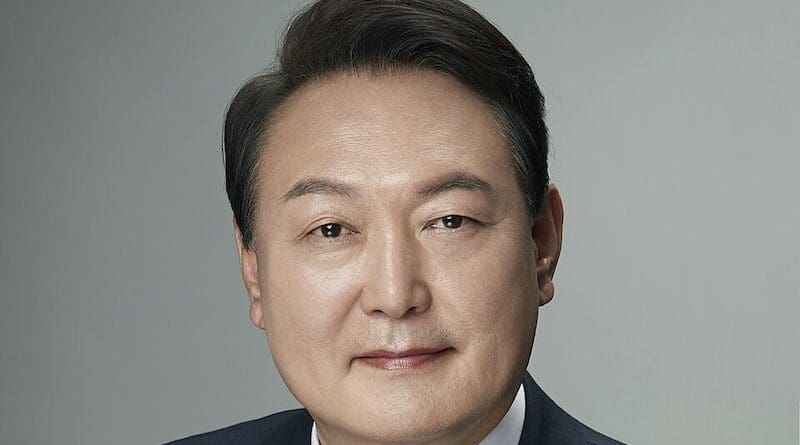
South Korea: Former President Sentenced To Five Years Over Martial Law Case
By Osama Ali
(Albawaba) — A South Korean court handed down a five-year prison sentence to former president Yoon Suk Yeol on Friday, a significant development as it’s the first conviction stemming from a string of criminal cases tied to his late 2024 martial law declaration.
The Seoul Central District Court found Yoon guilty of hindering law enforcement officers while they were trying to execute an arrest warrant, which included resisting authorities during the process. The judges also determined that he had falsified official documents and neglected to adhere to the constitutional and legal protocols surrounding the declaration of martial law.
These charges represent the initial set of criminal cases resolved against the former leader, who was ousted from office in April 2025 after impeachment proceedings.
More serious charges are anticipated
Yoon is still navigating a series of criminal trials, all connected to the martial law declaration and other contentious actions from his time in office. The most serious charges against him involve leading an armed rebellion, a crime that could potentially result in the death penalty, according to South Korean law.
Prosecutors, under the direction of special counsel Cho Eun-seok, have formally requested capital punishment in a different case, as reported by the Yonhap News Agency. They claim Yoon tried to maintain his grip on power by sabotaging the country’s judicial and legislative systems.
The Crisis’s Origins
Yoon announced martial law on December 3, 2024, citing the need to safeguard constitutional order and combat what he called threats from pro–North Korean factions. This declaration immediately sparked political chaos and widespread public discontent.
South Korea’s National Assembly quickly assembled for an emergency session, ultimately voting to rescind the decree. On December 14, 2024, lawmakers then sanctioned Yoon’s impeachment, a ruling subsequently affirmed by the Constitutional Court, thus officially concluding his presidency.
Legal and Political Ramifications
Martial law in South Korea permits the temporary suspension of specific laws during periods of extreme national crisis. Detractors, however, contended that Yoon’s declaration lacked legal grounds and constituted an overreach of executive power.
This judgment represents a significant legal turning point in one of South Korea’s most severe political upheavals in recent memory, with further legal determinations anticipated as additional cases against the former president progress through the judicial system.