The Fragmentation Of Somalia: How Clan Politics, Foreign Meddling, And Global Hypocrisy Undermined A Nation – OpEd
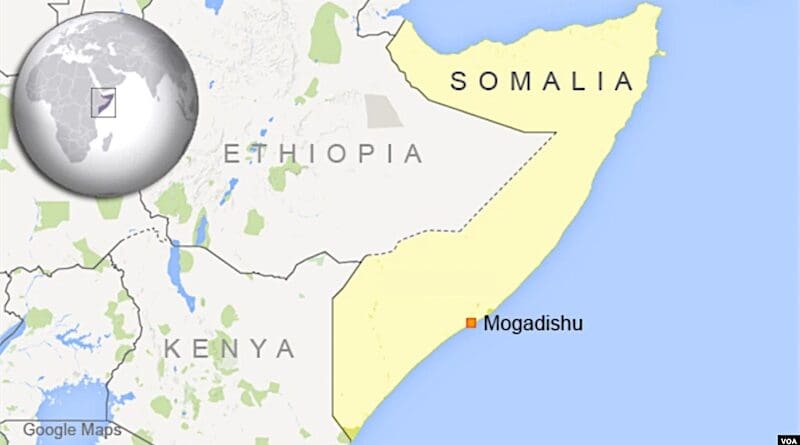
For over three decades past, Somalia has existed as a paradox in the form of a nation with one language, one religion, one ethnicity, but no unity. Its fragmentation is often blamed on internal factors including clan rivalries, warlordism, and corruption. But this is only part of the story. The more uncomfortable truth is that the international community, alongside regional powers like Ethiopia, Kenya, Djibouti, and the UAE, have actively encouraged, exploited, and institutionalized the very divisions that keep Somalia weak.
At the heart of this fragmentation is the legitimization and normalization of clannism, a process reinforced not just by Somali actors, but by foreign powers and institutions that have treated Somalia as a permanent problem to be managed rather than as a sovereign nation to be rebuilt. Nowhere is this more evident than in the international community’s implicit endorsement of clan-based federalism, the de facto independence of Somaliland, and the NGO-ization of government functions across the country.
The Pandora’s Box of Somaliland
In 1991, following the collapse of the Somali central government, the Dir-dominated region of Somaliland unilaterally declared independence. Though not a single country has recognized it officially, the declaration opened a dangerous precedent, one that Somalia has never been able to close.
Somaliland’s narrative was built on genuine grievances. Under Siad Barre’s regime, the Isaaq sub-clan of the Dir suffered atrocities, including aerial bombardment and mass killings. In the aftermath, they opted out of the union, claiming the moral and historical right to govern themselves. They then built relatively functional institutions, held elections, and maintained internal peace. To many in the West, this was seen as a “success story” in the Horn of Africa. But this story was deeply problematic for the rest of Somalia. It signaled that clan-based withdrawal from the union was a viable path. If Somaliland could secede and receive praise, even without legal recognition, why not Puntland, Jubaland, or even Galmudug? The illusion of a united Somalia began to unravel. And it did so under the quiet approval of the very powers that claimed to support Somali sovereignty.
Clan Federalism: Unity Through Fragmentation
The post-2004 political process, guided and funded by the UN, AU, Arab Governments, and Western donors, further entrenched this fragmentation. The adoption of a federal system based on clan power-sharing (the 4.5 formula) did not unify Somalia, it institutionalized clan identity as the foundation of governance. It abandoned the Somali citizen! Every federal member state became a clan stronghold, often built not to represent citizens, but to protect territory and power. Puntland functions as a Darood-majority semi-state. Jubaland, dominated by the Ogaden clan, has enjoyed Kenyan backing and military protection. Galmudug and Hirshabelle have been plagued by internal clan conflicts and weak administrations dominated by the Hawiye clan. The result is that Somalia is now a patchwork of competing clan fiefdoms, not a cohesive nation.
And yet, this system has been funded, endorsed, and defended by the very international actors who claim to promote state-building. Western diplomats insist on clan-based quotas in parliaments. Donors fund clan-based reconciliation conferences. Peacekeeping forces maintain borders not between regions, but between clans. It is a system designed not to solve conflict, but to freeze it in place. It even goes further to destabilize the whole country.
Regional Powers: Fear and Exploitation
While Somalia has been fighting to rebuild itself, its neighbors have often worked to ensure that it never truly succeeds. Ethiopia has long feared Somali nationalism, and it still does, especially given the historic Somali claim to the Somali State of Ethiopia, a Somali land in Ethiopia. Addis Ababa was a key supporter of federalism in Somalia, not out of ideological commitment, but because a decentralized Somalia is less threatening. Ethiopia has backed friendly factions, maintained influence over Somali politics, and in 2006, directly, under the IGADSOM project invaded Mogadishu with American backing to destroy the Islamic Courts Union, perhaps the only post-1991 movement that transcended clan politics and created a national governance model.
In 2024, Ethiopia took a bolder step. It signed a port access deal with Somaliland in exchange for potential recognition. This violated Somalia’s sovereignty outright and proved that Ethiopia is now openly undermining Somali unity to secure its own strategic interests.
Kenya has pursued a similar strategy, though more discreet. Its military occupation of southern Somalia before and after AMISOM/ATMIS/AUSSOM was never neutral. Nairobi supported the formation of Jubaland as a buffer zone, often working with specific clans and militias. Kenya’s ambitions in the maritime border dispute, involving oil-rich waters, show that it, too, sees Somalia not as a partner but as a territorial threat to be managed.
Djibouti does protect its port business. It currently benefits from Somalia’s instability as its ports pose no competition to it. It also benefits from its role as a diplomatic mediator, which provide with it global relevance. The UAE, meanwhile, has supported Puntland and Somaliland separately, and is currently working on Jubaland, investing in ports and training forces outside Mogadishu’s authority. For the UAE, Somalia is a strategic playground in the wider Red Sea competition, and a divided Somalia is easier to control and its ports not being under the control of one center would not pose any competition for its Jebel Ali Port in Dubai, taking into consideration the easier accessibility for international shipping to developed Somalia ports.
The NGO-ization of the Somali State
While regional powers exploit Somalia geopolitically, the international aid industry has hollowed out its institutions from within. Ministries in Mogadishu and across the land are often bypassed by donors, who prefer to work with international NGOs, UN agencies, or local contractors. These actors provide healthcare, education, infrastructure, and humanitarian relief, not as a supplement to the government, but in place of it. This has created a bizarre reality: Somalia has a flag, a government, and a seat at the UN, but it lacks sovereign control over its budget, its territory, and even its basic services. It is not just a “failed state,” it is a state outsourced to foreign agencies. It was starnge how it was admitted to the EAC when it has all these drawbacks, unless there was another story behind the curtains.
And the danger lies in the fact that the more the government is excluded, the less capable it becomes. Ministries become contract managers. Civil servants become irrelevant. Citizens stop expecting services from the state and start turning to NGOs or even Al-Shabaab, which, ironically, delivers justice and taxation more consistently than the government in some areas.
Why Clannism Was Encouraged and Not Solved
All of this raises a troubling question: why would the international community, the UN, or powerful donors endorse such a dysfunctional system? The answer is not simple, but it is also not mysterious. Clannism is easier to manage than nationalism. It divides power among predictable actors, weak states are more compliant with donor priorities, counterterrorism operations, and foreign investment deals, and a strong, united Somalia could not be a dependent client.
And here lies the deeper issue, which is that the world still sees Africa not as a collection of sovereign nations, but as a set of tribal zones to be stabilized. The same international actors that insist on democracy, nationhood, and strong institutions at home are happy to manage Somalia as a clannish society, because it serves their interests. But it is not entirely their fault! It is encouraged by local elite actors who benefit from these arrangements.
Is There a Way Out?
There is always a way out, but it will not come from the outside.
If Somalia is to recover, it must begin with a national reckoning i.e. a clear, collective decision to move beyond clan-based survivalism toward a civic, inclusive nationalism, which means, rejecting the 4.5 formula and replacing it with a citizen-based system, holding genuine national dialogue about the future of unity, governance, and justice, reclaiming state functions from NGOs and making government ministries functional again, confronting the reality that foreign peacekeepers, donors, and neighbors have often been part of the problem, not the solution. Above all, Somalis must reclaim the right to define themselves, not as clans, not as aid recipients, and not as pawns in foreign agendas, but as a sovereign people with a common destiny.
Final Thought
The fragmentation of Somalia is not a tragic accident. It is the result of conscious decisions by both Somali elites and foreign powers, working in tandem to divide, weaken, and manage a people with enormous potential. Until that cycle is broken and until unity is pursued as a national goal, not just a slogan, Somalia will remain what it has become:- united on paper, fragmented in reality, and governed by outsiders in the name of peace.