
Republic In Churn: India In A Wide Wild World – OpEd
By Commodore (Dr.) Johnson Odakkal, I.N. (Retd.)
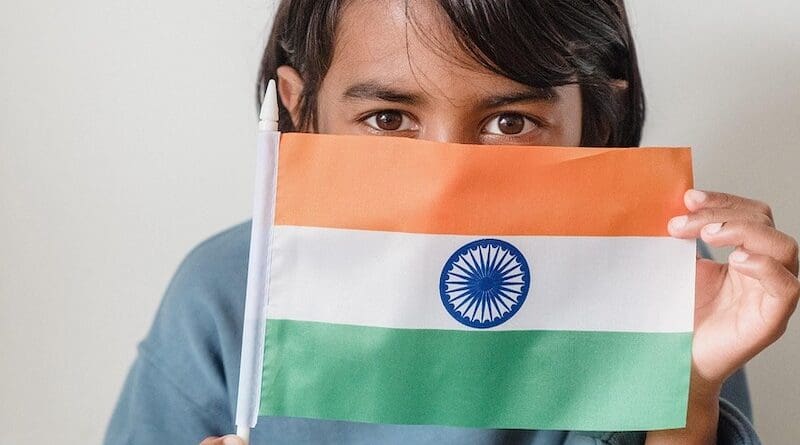
On 26 January 2026, as the tricolour rises once again over Kartavya Path, India commemorates its 77th Republic Day. The choreography will be familiar: martial precision, constitutional ritual, and the reassuring cadence of continuity. Yet beneath the surface of ceremony, the Indian Republic is passing through a moment of profound churn. Not a rupture, not a collapse, but a sustained stress-test of its institutional soul.
This churn is neither accidental nor uniquely Indian. It is symptomatic of a wider global condition aptly described in the recently published “Wide Wild World : Divergent Hues of a Chaotic Globe.” It is a world shaped by fractured orders, contested legitimacy, and an uneasy coexistence of law and power. In such an environment, republics are not judged by their declarations, but by their capacity for restraint, balance, and endurance.
In 2026, India’s question is no longer whether it is a republic, but how it practices being one.
Republic as Restraint, Not Just Replacement
The most persistent misunderstanding about a republic is that it is merely a state without a monarch. This is historically shallow and conceptually insufficient. The word republic originates in the Latin res publica (meaning the public affair). At its core, a republic is not defined by who governs, but by how power is held, exercised, and limited.
In its early formulations, a republic did not require universal participation. The Roman Republic was aristocratic; the Venetian Republic was oligarchic. Even Jean Bodin, writing in the sixteenth century, argued that a monarchy could qualify as a republic if it governed in the public interest rather than treating the state as private property. What disqualified a regime was not hierarchy, but arbitrariness.
The modern republic emerged when power ceased to be inherited and became answerable. Elections mattered, but so did constitutions, institutions, and the rule of law. The republic was born not to amplify power, but to discipline it.
India’s founders understood this distinction with remarkable clarity.
Why the Framers Chose “Republic” First
When Jawaharlal Nehru presented the Objectives Resolution in 1946, he consciously avoided the word “democracy” and instead anchored the new state in the idea of a republic. His reasoning was neither semantic nor evasive. He was acutely aware that the language of democracy had already begun to travel faster than its substance.
A republic, Nehru argued, already carried the moral and institutional essence of democracy (including sovereignty, equality, freedom from absolutism) without surrendering to rhetorical inflation. A republic could exist without being democratic, but India’s political inheritance and struggle made clear that democracy without constitutional restraint was equally dangerous.
The final Constitution would declare India a democratic republic, but the sequencing mattered. Popular will would operate within constitutional limits, not above them. This choice would prove decisive for a society of unmatched diversity, inequality, and scale.
India’s republicanism was not designed for ease. It was designed for survival.
Federal Churn and the Question of Balance
If republicanism is about restraint, federalism is its most demanding test. India’s Constitution distributes authority across multiple levels, yet retains a centralising bias, a structure often described as “quasi-federal”. For decades, this tension remained largely managed through convention, negotiation, and political prudence.
January 2026 disrupted that equilibrium. In Karnataka, Kerala, and Tamil Nadu, Governors departed from established constitutional practice by truncating, omitting, or refusing to deliver Cabinet-approved addresses. These were not symbolic gestures. They went to the heart of republican accountability: who speaks for the public will, and under what authority.
Governors hold unelected constitutional offices, envisioned as neutral bridges between state and Union. Elected state governments, by contrast, derive legitimacy from popular mandate. When these two sources of authority collide, the republic is not merely witnessing friction, it is confronting the limits of its design. This moment does not signal the collapse of Indian federalism. But it does expose its vulnerability. A republic depends not only on written powers, but on constitutional morality, restraint exercised by those who can act, even when they are legally permitted to do so.
Where restraint weakens, churn intensifies.
The Global Mirror: Republics, Federalisms, and Counterfeits
India’s experience is neither isolated nor unprecedented. Across the world, republics operate along very different institutional lines. France centralises authority in a unitary republican state; Germany disperses it through cooperative federalism; Switzerland combines republicanism with direct democratic participation. What distinguishes functioning republics from fragile ones is not structural uniformity, but institutional credibility.
At the other end of the spectrum lie what may be called counterfeit republics, states that adopt republican nomenclature without republican substance. The Democratic People’s Republic of Korea and the People’s Republic of China exemplify this contradiction. Both reject monarchy, conduct elections, and claim popular sovereignty. Yet power remains insulated from accountability, institutions subordinate to party authority, and dissent structurally impossible.
Such regimes reveal a critical truth: the absence of a king does not make a republic. Only the presence of enforceable limits on power does. This distinction matters globally, especially in an era where electoral outcomes are often mistaken for democratic legitimacy, and where external interventions prioritise ballots over institutions.
Perils of Electoralism Without Republican Depth
Recent global experiences, from Venezuela to parts of Eastern Europe and West Asia, demonstrate the dangers of treating elections as endpoints rather than entry points. Where constitutional safeguards are weak, courts politicised, and institutions hollowed out, electoral victories become instruments of consolidation rather than accountability. This pattern reflects a deeper malaise: the belief that popular endorsement alone can substitute for republican discipline. In reality, elections without institutional restraint accelerate instability rather than resolve it.
India’s constitutional architecture deliberately resists this temptation. The Basic Structure doctrine, judicial review, and layered federal authority exist not to frustrate democracy, but to protect it from its own excesses. The question in 2026 is whether this architecture is being preserved as principle, or negotiated as inconvenience.
Republics in a Fractured World Order
The churn within India cannot be separated from the turbulence beyond it. The contemporary global order is marked by uncertainty, strategic rivalry, information warfare, contested commons, and eroding norms. From cyberspace to outer space, from supply chains to social media, power is increasingly exercised in diffuse, indirect ways.
In such an environment, republics face a dual challenge: maintaining internal coherence while navigating external pressure. Strategic autonomy (the ability to act independently without isolation) depends fundamentally on domestic institutional strength. A republic internally fractured by distrust between its own constitutional organs finds its external posture weakened. Conversely, a republic capable of managing disagreement within rules projects stability beyond its borders.
India’s strength has long rested in its capacity to absorb contradiction without implosion. That capacity is now being tested.
Churn Is Not Decay, Silence Is
It is tempting, in moments like these, to frame constitutional tension as decline. That would be a mistake. Republics do not decay because they argue; they decay because they stop doing so meaningfully. The debates surrounding gubernatorial conduct, federal balance, judicial intervention, and institutional limits are not signs of republican failure. They are signs of republican engagement. In authoritarian systems, such questions never arise. In fragile democracies, they arise too late.
India’s republic is neither silent nor submissive. Its friction is audible precisely because its institutions still matter. The danger lies not in churn itself, but in normalising its erosion, in treating constitutional deviation as tactical advantage rather than systemic cost.
Enabling the Republic
Republic Day is often described as a celebration of the Constitution. In truth, it is a reminder of responsibility. A republic does not survive on documents alone. It survives because citizens, leaders, judges, administrators, and institutions repeatedly choose process over expediency, restraint over dominance, and public trust over private gain.
In 2026, India remains one of the world’s most ambitious republican experiments, being vast, plural, argumentative, and resilient. Its endurance has never come from uniformity, but from the disciplined management of difference. In a world increasingly shaped by impatience with limits and suspicion of institutions, the Indian Republic stands as a reminder that self-rule is not the absence of constraint, but its careful cultivation.
Independence made us free. The Republic taught us how to live with that freedom. Whether we continue to do so will depend not on parades or proclamations, but on our willingness to remain vigilant custodians of the res publica, the public affair that belongs to us all.
References:
- Bhargava, R. (2022, January 26). Why Republic Day is celebrated. The Hindu.https://www.thehindu.com/opinion/lead/why-republic-day-is-celebrated/article38325738.ece
- Dublish, N., Mahawar, S. (2022, July 20). Difference between democracy and republic. iPleaders.
- Know India: National Portal of India. (n.d.). Republic of India. https://knowindia.india.gov.in/republic-day-celebration/republic-of-india.php
- Invento Robotics. (2017, May 4). Differences among Loktantra, Rajtantra, Prajatantra and Gantantra. Medium. https://medium.com/@invento_tech/differences-among-loktantra-rajtantra-prajatantra-and-gantantra-78474b2c35ac
- Prusty, S. (2020, January 27). What does being a republic actually mean? https://www.youthkiawaaz.com/2020/01/what-does-being-a-republic-actually-mean
- Patel, A. (2017, May 16). Yes, India is a democracy but it’s not really a republic. Times of India. https://timesofindia.indiatimes.com/blogs/aakarvani/yes-india-is-a-democracy-but-its-not-really-a-republic
- From the archive, 26 January 1950: Today India becomes a republic. (2011, January 26). The Guardian. (Original work published 1950) https://www.theguardian.com/theguardian/2011/jan/26/archive-today-india-becomes-a-republic-1950
- DeSmith, C. (2025, March 4). What exactly is a republic anyway? Harvard Gazette.
- Bodin, J. (1576). Les six livres de la république. https://archive.org/details/lessixliuresdela00bodi/page/6/mode/2up
- Merriam-Webster. (n.d.). Democracy and republic. In Merriam-Webster.com dictionary. https://www.merriam-webster.com/grammar/democracy-and-republic
- Yuan Y. (2020, November 29). Democracy and republic. Merriam-Webster https://www.chinajusticeobserver.com/a/how-do-elections-in-china-work
- Institute for Security & Development Policy. (2018, February). China’s Presidential Election: The Role of the NPC. pp. 10.
- Young, B. (2014, February 7). Why is North Korea called the DPRK? NK News https://www.nknews.org/2014/02/why-is-north-korea-called-the-dprk
- Indian Kannon. (n.d.). Constituent Assembly Debates On 17 December, 1946 https://indiankanoon.org/doc/1887990
- Indian National Congress. (1930). Declaration of Purna Swaraj. https://www.constitutionofindia.net/historical-constitution/declaration-of-purna-swaraj-indian-national-congress-1930
- Parliament of Australia. (1994, September). Papers on Parliament No. 24. https://www.aph.gov.au/About_Parliament/Senate/Publications_and_resources/Papers_and_research/Papers_on_Parliament_and_other_resources/Papers_on_Parliament/24/c01
- Ataulla, N. (2026, January 23). Karnataka governor vs govt face-off as Gehlot reads 3 lines, walks out. The Hindustan Times https://www.hindustantimes.com/india-news/ktaka-governor-concludes-address-in-3-lines-cm-hits-back-101769109283709.html
- Dhital, A. (2026, January 20). Governors–State Governments Face Off In Tamil Nadu And Kerala Over Assembly Addresses. https://swarajyamag.com/news-brief/governorsstate-governments-face-off-in-tamil-nadu-and-kerala-over-assembly-addresses
