
Taliban Under Europe’s Spotlight – OpEd
By Nimra Khalil
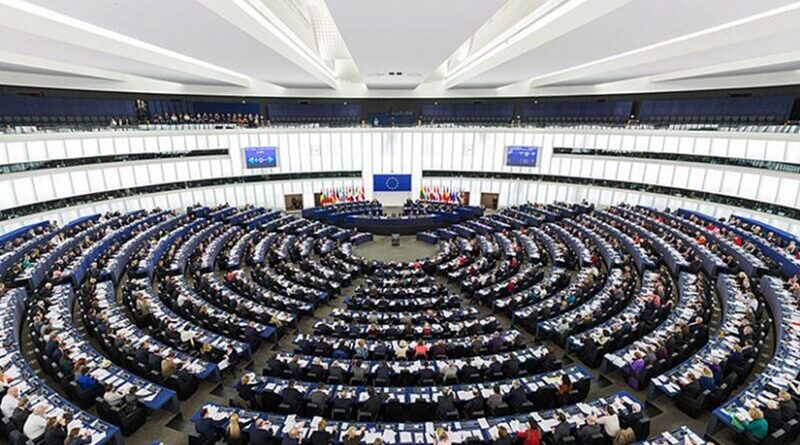
On Thursday, the European Parliament delivered its most forceful condemnation of the Taliban to date. Lawmakers voted 480 to five, with 83 abstentions, to demand expanded international sanctions against Taliban leaders, enforce International Criminal Court arrest warrants, and formally label the regime’s treatment of women as gender apartheid. The margin was overwhelming. The message was clear. Whether anyone enforces it is another matter entirely.
A Law That Made Abuse Legal
The resolution targets a specific document: the Taliban’s Criminal Procedure Code for Courts, a 119-article legal text that Supreme Leader Haibatullah Akhundzada signed on January 7, 2026, and immediately distributed to provincial courts across Afghanistan. The Taliban never publicly announced it. Human rights organization Rawadari obtained the original Pashtu text, and what it revealed shook the world.
The code permits husbands to beat their wives, provided they do not break bones or leave open wounds. Under Article 32, a woman must prove her injuries before a judge to secure a conviction, which earns the abuser a maximum of fifteen days in prison. Under Article 70, causing animals to fight draws a five-month sentence. In Afghanistan today, a man faces harsher punishment for organizing a cockfight than for beating his wife.
The code also legalizes slavery, criminalizes criticism of Taliban leaders with 20 lashes and six months in prison, forces citizens to report suspected opponents, and strips the accused of the right to a lawyer or protection against forced confession. Oxford’s Human Rights Hub concluded that the code makes “fundamental rights protecting equality, dignity, and physical integrity legally violable in Afghanistan.”
Wanted Men, Still Governing
The Parliament’s demand to enforce ICC arrest warrants carries particular weight, because those warrants already name the two most powerful men in Afghanistan. On July 8, 2025, the ICC issued warrants for Akhundzada and Chief Justice Abdul Hakim Haqqani, finding reasonable grounds to believe both men ordered the crime against humanity of gender persecution, targeting women, girls, and anyone who did not conform to the Taliban’s ideology of gender. These were the first ICC warrants ever issued specifically on charges of gender persecution. Neither man has faced any consequence. Both continue to govern.
The women under their rule face consequences every day. Zarqa, a 34-year-old former schoolteacher in Kabul who withheld her full name for safety, told a human rights researcher: “My husband now tells me openly that the law is on his side. What do I tell my daughter, who is twelve and has not been to school in five years? That the law says her body belongs to her father and then her husband, and that is all she is worth?”
Former Afghan MP Fawzia Koofi, speaking from exile in Europe, put it plainly: “This is not culture. This is not religion. This is a political project to eliminate women from public life entirely. Every time the world expresses outrage and does nothing, they go further.” Since 2021, the Taliban has issued more than 250 edicts, at least 157 targeting women and girls directly.
Afghanistan as a Terrorist Safe Haven
The resolution addresses human rights, but the Taliban also shelters some of the world’s most dangerous terrorist organizations. The UN Analytical Support and Sanctions Monitoring Team’s 2025 report confirmed that more than 20 terrorist groups operate inside Afghanistan. The Taliban’s denials, the UN stated, “are not credible.” Al-Qaeda maintains safe houses and training camps across the country, with senior commanders reportedly living in Kabul. The UN identified TTP as the largest terrorist group in Afghanistan, 6,000 to 6,500 fighters, receiving $43,000 monthly from the Taliban along with NATO-calibre weapons.
Those ties produced open conflict. Pakistan launched cross-border airstrikes in February 2026, Afghanistan retaliated, and Pakistan’s defense minister declared both nations were in a state of “open war.” Qatar, Turkey, and Saudi Arabia intervened to cool the crisis, but it remains among the world’s top ten deadliest active conflicts. Tajikistan, Uzbekistan, and Turkmenistan have all raised alarms over cross-border militant activity. At a December 2025 security meeting in Tehran, representatives from six regional nations, including China and Russia, agreed that terrorism from Afghanistan had become a shared emergency.
A World Divided
The global response has fractured. Australia created a “world-first autonomous sanctions framework” in December 2025, imposing financial sanctions and travel bans on four Taliban officials, including ICC-wanted Chief Justice Haqqani. The United States designated individual Taliban leaders under Treasury sanctions and is reviewing whether to impose the heavier Foreign Terrorist Organization designation. Canada, Germany, and the Netherlands filed proceedings at the International Court of Justice in 2024 for Taliban violations of the UN women’s rights convention. The UK, France, Italy, Japan, Norway, Spain, and Switzerland have jointly condemned Taliban policies but stopped short of independent sanctions.
Blocking stronger action: Russia formally recognized the Taliban government in July 2025, the first UN Security Council permanent member to do so, while China accredited a Taliban ambassador in 2023. Both veto any UN-level escalation.
A Country Collapsing
Meanwhile, 17.4 million Afghans, 36 percent of the population, face acute food insecurity. Nearly 4.7 million are at emergency hunger levels. Humanitarian funding collapsed from $3.8 billion in 2022 to $767 million today. UN Women projects that in 2026, maternal deaths will rise 50 percent and child marriages 25 percent.
The EP resolution is non-binding. It cannot cancel the Brussels migration talks the Commission confirmed with the Taliban on May 12. It cannot put Akhundzada in a courtroom. The Taliban has survived four years of resolutions without changing a single policy, watching as Russia recognizes them, China engages them, and Europe debates whether to invite them to Brussels.
The question Thursday’s vote raises is not whether Europe is watching. It is whether watching, however loudly, means anything at all.
