

From The Hangman’s Noose To Explosions: Iran’s Regime Is Killing Its Own People But The Resistance Is Rising – OpEd
On the streets of Tehran, in the prison yards of Evin, and across the burned provinces of a nation suffocating under tyranny, a resistance is quietly, yet unmistakably, rising.
It is a Resistance Unit not of generals or armies, but of poets, mothers, students, and ordinary citizens. It is the resistance of a nation long denied its dignity, now standing with unshakable courage against a regime that rules through death, torture, and fear.
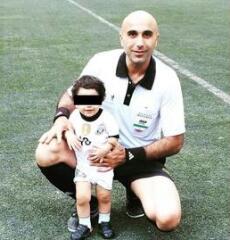
This past week, Mr Hamid Haj Jafar Kashani (Hamid Kashani), born in 1982, is a former futsal coach and referee and a former political prisoner, was violently arrested in Tehran for holding a placard that read “Death to the principle of the Supreme Leader. Until the Mullahs Are Buried, This Nation Will Not Be Free” He dared to chant against Ali Khamenei in public. For this, he was beaten, tortured, and imprisoned once again. Hamid’s story is not unique. It is the story of thousands. He has already endured years in Iran’s notorious prison system, where forced confessions, solitary confinement, and brutal physical abuse are standard practice. His crime? Speaking truth to power.
While Hamid suffers in silence behind prison walls, Iran’s regime continues a campaign of executions that is unparalleled in the modern era. According to Amnesty International’s 2024 report, Iran ranks among the world’s top executioners, with over 1,100 executions since 2023, an average of one every 5.5 hours.
Among those hanged are juveniles, political dissidents, ethnic minorities, and drug offenders tried in sham courts. The Iranian regime isn’t executing to maintain order. It is executing to survive. It kills because it fears collapse and another nationwide uprising, like 2022.
The government’s own rhetoric betrays its desperation. In Friday sermons across the country, clerics warn of ideological erosion, internal betrayal, and the creeping “Satanic” influence of dissent. Supreme Leader Khamenei recently invoked Imam Hassan’s peace treaty, an unprecedented acknowledgment of division within his own ranks. This isn’t a regime that feels confident.
It is a regime on edge, hemorrhaging legitimacy.
And yet, perhaps nowhere is resistance more dignified or more determined than in the women’s prisons of Iran. In 2025 alone, the “No to Executions Tuesdays” campaign has spread to 41 prisons, with women from ten major prisons, including Evin, Zahedan, and Sanandaj, joining in acts of weekly protest. These are not passive statements. In many cases, these women are hunger striking, chanting in prison courtyards, and coordinating with activists on the outside. Every slogan they shout risks further torture. Every message they send risks solitary confinement. Still, they rise.
In April, women in Zahedan joined the campaign, despite facing one of the harshest prison environments in the country. On April 29, hunger striking women in Evin walked together in protest, chanting for an end to executions and the release of political prisoners, in coordination with families protesting outside the prison gates.
These women are the soul of the resistance. They are the moral counterweight to a regime that has turned psychiatric wards into torture chambers, turned hijabs into shackles, and turned surveillance software into a tool of gender apartheid.
On April 26, a series of catastrophic explosions shook Rajaee Port in Bandar Abbas, one of Iran’s most strategic shipping hubs. The regime was quick to downplay the event, calling it “a minor industrial incident.” But eyewitness videos and satellite imagery suggest otherwise. Massive plumes of smoke, widespread damage, and unconfirmed casualties point to systemic negligence or worse, deliberate sabotage by factions within the fractured state. Whatever the cause, it’s one more symbol of national decay, another crack in the regime.
Iran is a country in freefall economically, morally, institutionally. But it is also a nation on the cusp of transformation. The regime’s brutality is no longer a show of strength. It is the last refuge of a ruling elite that governs without the consent of its people.
And the people are making clear: they will not be silenced forever.
The international community must stop treating the Iranian regime as a normal diplomatic actor. It is a theocratic dictatorship that executes children, tortures women, and jails poets.
Every negotiation, every handshake, every sanction waiver that fails to condition relief on human rights is complicity in repression. Any negotiation with this regime must be contingent upon an immediate halt to all executions and the unconditional release of all political prisoners.
The time has come for democratic nations to stand with the Iranian people not just in words, but in firm action.
This means supporting the Resistance Units in Iran. It means amplifying the voices of prisoners like Hamid Kashani. It means supporting women-led resistance movements inside Iran. And above all, it means ceasing to legitimise a regime that survives only by terrorising its own citizens.
Hamid’s placard was right: this homeland will not become a true homeland until the mullahs are buried, not in the literal sense, but in the political one. This means the withdrawn of this regime and that is only possible by the Iranian people.
Let the explosions in Bandar Abbas, the screams of women from prisons, and the chants in the streets be a warning: the Iranian people are ready for change.
The world must be ready to support the Iranian people and their resistance.

Like what you read?
Please consider supporting Eurasia Review. Thank you for your consideration!
