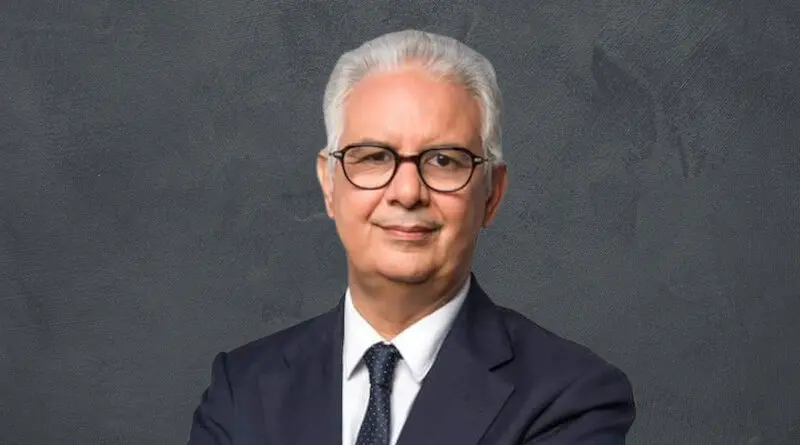
Nizar Baraka To Europe: Morocco Is The Strategic Partner You’ve Been Looking For – OpEd
In a time of mounting geopolitical fragmentation and energy insecurity, Europe faces a fundamental question: who can it trust to build the foundations of a stable, prosperous, and resilient future? In his recent address to the European People’s Party (EPP), Nizar Baraka, Secretary General of Morocco’s Istiqlal Party, delivered a compelling answer: Morocco.
Far from a routine diplomatic overture, Baraka’s message was both a strategic proposition and a wake-up call. It invited Europe to recognize Morocco not simply as a neighbor or an aid recipient—but as a credible, forward-looking partner in shaping the future of the Euro-Mediterranean space.
Security: The Value of Trust
Security cooperation is often where partnerships are tested. Morocco has long passed the test. As Baraka reminded the EPP, operational coordination with Spain, particularly in curbing irregular migration and countering terrorism, has yielded measurable results. Migratory flows across the western Mediterranean have been significantly reduced, not through coercion, but through trust, planning, and shared responsibility.
In a world where alliances are increasingly defined by volatility, Morocco offers Europe something both rare and essential: reliability.
Energy: The Southern Answer to Northern Needs
As Europe races to reduce its dependence on fossil fuels and diversify its energy suppliers, Morocco emerges as a quiet powerhouse. Already linked to the European grid via Spain, Morocco supplies clean electricity and is rapidly developing a world-class green hydrogen sector, powered by its vast solar and wind resources.
Baraka highlighted that this is no longer hypothetical: European firms—especially German, French, and Spanish—are already investing in Morocco’s energy transition. The upcoming Morocco-Nigeria gas pipeline, initiated by King Mohammed VI, stands as a strategic corridor not only for West Africa’s development but for Europe’s long-term energy security.
Competitiveness: Where Industry Meets Sustainability
Europe’s green industrial ambitions require more than subsidies—they need platforms. Morocco has become one. Its manufacturing ecosystem, from automotive to aerospace, is deeply integrated into European supply chains. It offers more than affordability; it offers sustainability, with low-carbon energy, strong logistics infrastructure, and a skilled labor force.
For European companies seeking to reconcile economic competitiveness with environmental imperatives, Morocco is not just a convenient partner—it’s a strategic one.
The Sahara Issue: Europe’s Delayed Clarity
No true partnership can ignore existential concerns. For Morocco, the Sahara issue is precisely that. Baraka did not mince words: the autonomy initiative proposed by Rabat is the only serious, credible, and realistic basis for resolving a conflict that has blocked Maghreb integration for over five decades.
Many in Europe know this. The United States and 22 EU member states have already voiced support. Yet EU institutions continue to hedge, caught between outdated neutrality and new geopolitical imperatives. Baraka’s message was simple: supporting Morocco’s proposal is not about taking sides—it’s about enabling regional peace and unlocking African potential.
2030 and Beyond: A Shared Story
The joint bid by Morocco, Spain, and Portugal to host the 2030 FIFA World Cup isn’t just a sports headline. It is a symbol—a forward-looking gesture of Euro-African partnership. It reflects a narrative that Europe needs more than ever: collaboration across continents, not confrontation.
Conclusion: A Strategic Equation, Not a Courtesy Call
Nizar Baraka’s message to Europe was clear and pressing: Morocco does not ask for symbolic gestures; it offers a strategic equation. The EU’s long-term goals—energy autonomy, secure borders, sustainable industry, and geopolitical stability—find in Morocco not just a partner, but a co-architect.
In an age where partnerships must be earned, Morocco has done more than its part. The question is whether Europe will finally respond—not out of charity, but out of enlightened self-interest.
Because, as Baraka made unmistakably clear, the time for polite hesitation is over. The time for strategic clarity is now.