
Inside The Pahalgam Probe – OpEd
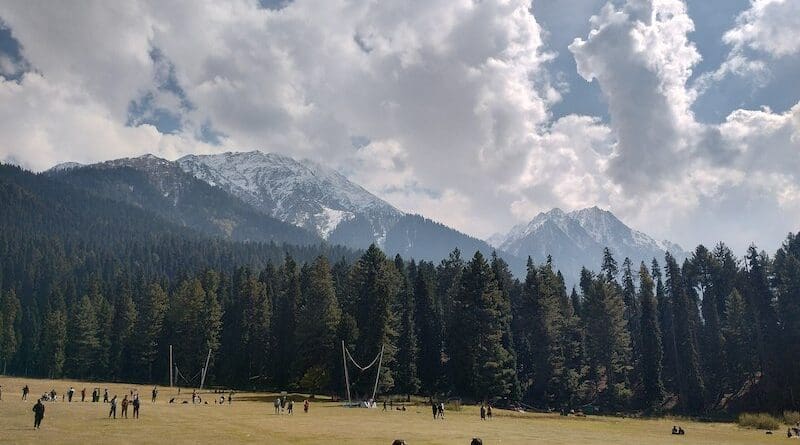
On the 22nd April, 2025, a lethal storm hit Pahalgam, a picturesque town in Kashmir. In only two hours, an FIR was registered and without any investigations, the Government of India started to blame Pakistan.
This scramble to play the blame game without any evidence left some people raising eyebrows, however this was just the start of what would be one of the strangest and conflicting counterterror narratives of recent history. What ensued over the days and weeks to come was not a search of truth but rather a campaign of falsehoods, torture confessions, media game and some state-sponsored propaganda.
Since the beginning, the said investigation remained a theatre of the absurd. Kashmir police issued AI-generated portraits of four men who were suspected to have carried out the attacks on April 23 with three of them, mysteriously, assigned Pakistani nationality and the other local named Adil Hussain. And three days after the National Investigation Agency (NIA) took over they had to own up the fact that the original sketches were wrong. However rather than the clarity, confusion set in, with five additional names being added to the list of those who were now to be suspected of being terrorists with the number of alleged terrorists now standing at ten none of which were previously reported in intelligence briefings.
On April 27-28, 14 local homes were bulldozed by the NIA on the basis that the owners facilitated the attackers. Over the same period, the Indian media has been spinning the idea that the terrorists complied with the Chinese mobile phone to ensure that they could not be located, yet sheepishly bailed out when it became clear that it was total fabrication.
The tragedy was turned into farce when on May 7, the Indian press boasted of the killing of one of the Pakistani terrorists who went by the name of Qari Iqbal. It was days later when it rose that he was a native school teacher of Poonch, shot in error. Accountability was not taken and instead, the media shifted the blame back on Pakistan, as cause of cross-border fire, the most outstanding expression of how the truth was twisted to suit the state versions.
On June 22, in desperation of having to come up with some kind of breakthroughs, police arrested two poor Kashmiri shepherds, Parvaiz Ahmad and Bashir Ahmad. Having no relation to any radical activity before, they were brutally beaten and forced to claim that they harbor Pakistani terrorists. In what was termed as an eye opener to human rights agencies, a month later, Indian soldiers beat up Gujjar shepherds at Srinagar, causing them to sign fake statements of having witnessed cross-border encroachment. Such forced testimonies were the foundations of additional arrests and the sensationalizing of it in the media.
Indian media said on July 28 that three of the Pahalgam attackers Suleman alias Hashim Musa, Abu Hamza and Zakir were neutralized in “Operation Mahadev”. But this story came crashing down in 24 hours when home minister Amit Shah during his address in Parliament mentioned three entirely different people; Suleiman, Afghan and Jibran. These names did not feature in any of the earlier lists, briefings or hypothesis. Instantly, it turns out that Afghan and Jibran are high-value terrorists though this has never been mentioned ever. The hypocrisies were not hypocritical just, they were scandalous.
What made the mockery more complete was what the agencies were allegedly using to find the evidence: a Pakistani voter list, Pakistani-brand chocolates and fighting weapons forensic evidence that were created respectively by the Indian agencies themselves. The so-called chocolate trail especially was mocked everywhere as an epitome of the narrative of India created.
The question that arises after this chain of events is that were the three men killed during Operation Mahadev already in Indian custody before the incident? Were they unwilling to give the requested confessions and did they hence have to be killed off in order to establish a plausible end to an awkward case? Or, even worse a scapegoat to take the political heat off the Modi government which has been under fire on how it is dealing with national security?
The NIA has already had its credibility questioned, and rightly so. In 2023, Canadian court rejected the evidence NIA presented in the trial of Hardeep Singh Nijjar, characterized it as unreliable. And more recently on July 2025, another probe by NIA ended up with the Bombay High Court dismissing the probe terming the evidence as bogus and all the accused were released. Such judgments on the law courts continue to put the agency on the spotlight with the perception of politicized activities and unprofessionalism.
The Human Rights Watch has been monitoring the poor record of NIA in cracking down dissent in the name of fighting terrorism. Even Indian politicians like P. Chidambaram, who was the home minister of India, have established the absence of persuasive evidence that links Pakistan to such attacks. Even Nirmala Sitharaman former Defence Minister, confessed in 2019 that there have been no terror attacks in Pakistan since 2014 and now her verdict directly flies in the face of the government rhetoric on Pahalgam.
The opposition leaders have torn into the story of the Modi government in the recent sessions of the Monsoon session of the Lok Sabha revealing its self-contradictions, illogical pieces of evidence, and random act of arrests. The current BJP who could once push nationalism to the limit with his chest thumping is now on the receiving end not only in the country but also internationally.
The case of Pahalgam investigations has turned into a lesson, the graphic demonstration that the state apparatus can be mobilized as a tool of creating the politically convenient result but not justice. The Pakistan voter lists, chocolate importation, and the artificial intelligence faces are now poignant examples of a national security framework that knows truth is much slower than the creative imagination.
It is not counterterrorism. This is a political theatre. The Modi government, in its desperation to retain its image of being tough on terror, has enabled the intelligence agencies to produce the media spectacles at the cost of professionalism. India has opted to distort instead of doing an open inquiry. Where facts are required, it has provided dramas.
Pahalgam is not about terror attack per se, it is about attack on truth that has been carried out, strangled under the debris of propaganda. The world is watching. More and more, it is laughing, as well as being concerned.

Like what you read?
Please consider supporting Eurasia Review. Thank you for your consideration!
