
Afghanistan’s Second Collapse – OpEd
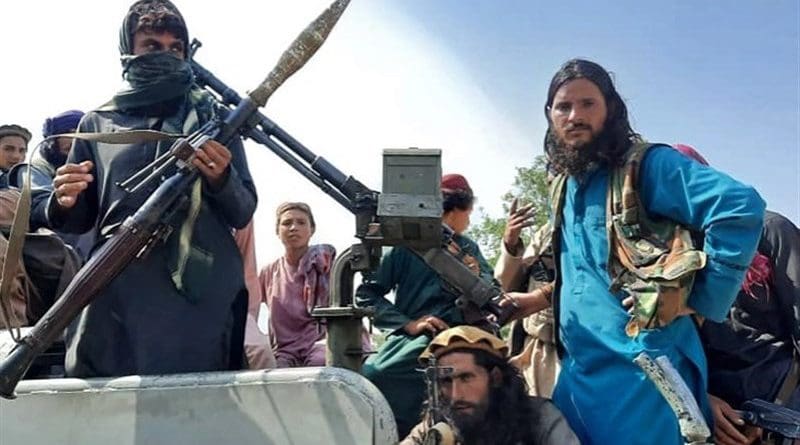
Ever since the Taliban’s return to power in August 2021, Afghanistan has undergone a dramatic transformation—one that has now reached a crisis point for regional and global security. In a pattern tragically reminiscent of the pre-9/11 era, the country is once again becoming the world’s most permissive environment for international terrorist organisations. The evidence is no longer anecdotal or speculative; it is overwhelming, documented by multiple UN Monitoring Team reports, SIGAR assessments, and intelligence warnings issued by states across Central Asia, Europe, and North America.
The most recent manifestation of this danger came in late November 2025, when a quadcopter launched from Afghan soil struck Chinese workers in Tajikistan. This is not merely a border incident—it is a direct sign that terrorist groups now feel emboldened enough to attack foreign nationals and infrastructure with complete impunity. Hours earlier, in Washington D.C., an Afghan immigrant linked to militant groups based in Afghanistan killed two National Guard soldiers. CIA Director Akash Patel confirmed that the assailant had been in communication with networks operating in Afghanistan. Such incidents illustrate a grim truth: the Taliban’s Afghanistan is not just a regional threat; it is exporting terrorism across continents.
According to UN estimates, Afghanistan currently hosts approximately 13,000 foreign fighters, including 6,250 TTP militants, 3,000 ISKP fighters, and hundreds affiliated with Al-Qaeda, AQIS, the Islamic Movement of Uzbekistan, and the East Turkestan Islamic Movement. With each passing month, this number grows. Fighters from Syria, Iraq, and Yemen are steadily relocating to Afghan territory, exploiting its ungoverned spaces and sympathetic rulers. Kunduz has reportedly become a staging point for militants moving into Central Asian Republics—turning Afghanistan into a revolving door for cross-continental jihadist movements.
This resurgence is not a coincidence. It is the direct consequence of a Taliban regime that is ideologically aligned with, tolerant of, and in many cases actively supportive of militant groups. The lines separating Taliban fighters from international terrorists have blurred, particularly as tens of thousands of Taliban operatives find themselves jobless after the end of fighting. Many are being absorbed into TTP and other networks—not out of necessity alone, but out of ideological affinity. Unemployment, poverty, and the complete collapse of state institutions have created fertile ground for recruitment.
International concern is intensifying. At the UN Security Council, Denmark’s deputy permanent representative, Sandra Jensen Landi, issued a stark warning: the TTP now poses a “serious threat” not just to Pakistan but to the entire Central and South Asian region. She accused the Taliban of providing the group with “logistical and substantial support.” Similarly, Russia’s Secretary of the Security Council, Sergei Shoigu, has cautioned that terrorist groups in Afghanistan represent a grave threat to neighbouring states. Moscow’s Permanent Representative to the UN, Vassily Nebenzia, has gone further—claiming that ISKP militants are being externally financed, expanding their influence, and may soon use weapons left behind by Western forces. What makes the current crisis even more dangerous than the pre-2001 period is the technological evolution of terrorist organisations. ISKP and Al-Qaeda affiliates have mastered digital propaganda, recruitment through encrypted platforms, and the use of cryptocurrencies for funding. Their ability to coordinate globally is stronger than ever, while the ability of the international community to monitor them is weaker.
The Taliban leadership’s claims of controlling these groups ring hollow. Even if some within the regime wish to curb extremist organisations, their capacity is diminishing rapidly. Many fighters no longer recognise Taliban authority; others view the Taliban as insufficiently radical. Afghanistan is splintering not toward moderation but toward competing jihadist centres of gravity. The consequences are predictable: attacks on Chinese nationals, cross-border infiltration into Central Asia, intensified TTP assaults in Pakistan, and the increasing likelihood of attacks in Europe and North America. The Taliban have neither the ability nor the desire to prevent these outcomes.
The time for regional complacency is over. If Afghanistan remains a sanctuary for militants, the repercussions will not be contained. Pakistan, Central Asia, China, Russia, the US, Europe, and Arab states all face real, tangible threats. A coordinated regional and global strategy is no longer optional—it is urgent. Intelligence sharing, border control cooperation, targeted sanctions, and collective pressure on the Taliban must be revitalized. Afghanistan’s collapse into a global terror hub is not an Afghan problem alone—it is a looming international crisis. The world has already witnessed the cost of ignoring Afghanistan once. It cannot afford to repeat the mistake.

Like what you read?
Please consider supporting Eurasia Review. Thank you for your consideration!
