
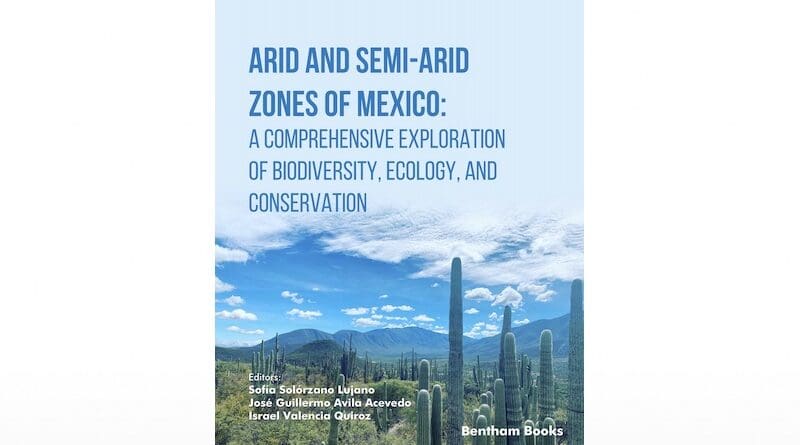
Safeguarding Desert Ecosystems: New Book Explores Mexico’s Fragile Arid Zones – Review
Arid and Semi-Arid Zones of Mexico: A Comprehensive Exploration of Biodiversity, Ecology, and Conservation is a multidisciplinary reference from Bentham Science Publishers that examines biodiversity, ecology, and conservation strategies across Mexico’s deserts.
The 14-chapter reference work brings together the expertise of leading scholars to explore the ecological, climatic, and conservation dynamics of Mexico’s arid and semi-arid regions, including the Baja California Peninsula, Chihuahuan Desert, Sonoran Desert, and the Tehuacán-Cuicatlán Valley.
The volume investigates emblematic plant and animal species and the delicate interplay between nursery processes, biodiversity, and anthropogenic pressures. Each chapter provides rich case studies and region-specific research, emphasizing both the environmental significance and cultural value of desert flora and fauna.
Special attention is given to the ecological roles of natural products and traditional medicinal plants, as well as the safeguarding of native germplasm through the lens of cacti as umbrella species.
Key highlights of the book include:
- In-depth analysis of species interactions, ecological processes, and human impact
- Assessment of protected areas and germplasm conservation
- Insights into the ecological and biochemical properties of desert-derived natural products
- Cross-disciplinary contributions from experts in ecology, conservation, and phytochemistry

Like what you read?
Please consider supporting Eurasia Review. Thank you for your consideration!
