
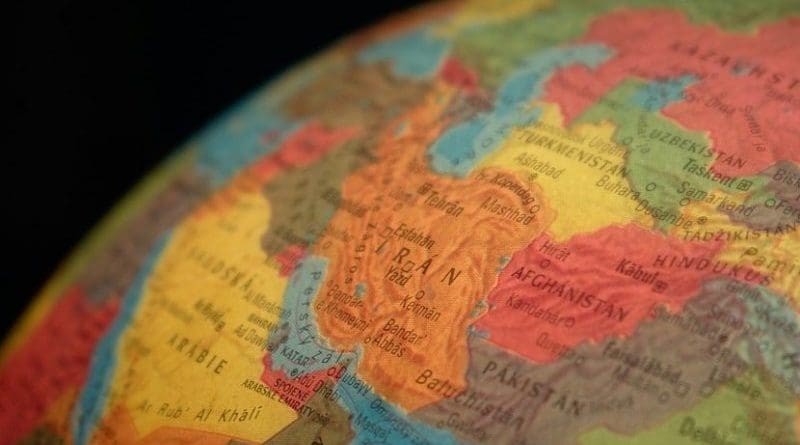
Why Is Iran Targeting Jordan? – OpEd
By Daoud Kuttab
Key Takeaways:
- Since the June 2025 US-Israeli conflict with Iran, Iranian projectiles have frequently crossed Jordanian airspace en route to Israel, with most intercepted, but recent weeks have seen direct attacks on Jordan that killed American soldiers at a shared military base.
- Tensions have risen between Jordan and the US after President Trump publicly criticized Jordan’s handling of base security and a US Embassy alert about threats in Aqaba proved inaccurate.
- Analysts warn that Iran’s decision to target Jordan risks creating lasting regional hostility, given the geographic realities that bind Iran to its neighbors.
Ever since the 12-day US-Israeli war against Iran in June 2025, Jordanian airspace has been a theater for Iranian attempts to attack Israel. Projectiles, whether rockets or drones, have often, but not always, been successfully intercepted in the skies over sovereign Jordanian territory.
No Jordanian citizens have been seriously harmed, though a few people were injured by falling debris from intercepted projectiles, rather than in any direct targeting of Jordan itself. The missiles and drones were all heading toward Israel, and passing through Jordanian airspace was the only way they had any chance of reaching their targets. Military experts have said more than 85 percent of projectiles that passed through Jordanian airspace were intercepted.
In the past few weeks, however, Jordan has been regularly and repeatedly targeted directly, resulting in the deaths of a number of American soldiers and scores of injuries. The Iranians claim that US troops are being moved from more vulnerable locations in the Gulf to Jordan, which is farther from Iran.
The most recent fatalities among US soldiers in the ongoing war with Iran happened on July 17 when three were killed at Muwaffaq Salti Air Base, a Jordanian military site that also hosts American and other international forces.
Jordan’s Minister of Foreign Affairs Ayman Safadi has repeatedly stated that there are no US bases in the country; there are, however, Jordanian bases where some American, German, French and Italian soldiers are stationed. Jordan and its Western allies have been working together in the war against Daesh.
What is unusual is that US President Donald Trump has not only refrained from calling King Abdullah of Jordan since the attacks on Jordan began, but while speaking to reporters during a visit by Lebanese President Joseph Aoun to the White House on July 21, Trump effectively blamed Jordan for failing to protect American soldiers at Muwaffaq Salti Air Base, which is located in a desert area near the town of Azraq in eastern Jordan’s Zarqa governorate, about 100 km east of Amman.
Trump said Iran did “slip something through in Jordan” and added that “if we had other operators, you know, it would not have happened, unfortunately.” He said the US had the “best equipment in the world” and went on: “We’ve stopped almost everything but when you let other people do your job, with the United States we let other people do the job, and sometimes it doesn’t work out so well.”
Jordan and the US have been unusually quiet about the details of how the Americans were killed and why attempted interceptions of the strikes were ineffective. There was further friction between the countries on July 19 when the US Embassy in Jordan warned its citizens, mistakenly as it turned out, that King Hussein Airport in Aqaba and the nearby seaport had been evacuated due to a “specific and credible threat.” The locations were, in fact, targeted but Jordanian officials and Jordanians in Aqaba denied that the major ports were evacuated or that any evacuation orders were issued. The US neither retracted nor corrected its erroneous statement.
While any or a combination of the above might explain the recent targeting of Jordan, it is also possible that there is another, as yet unrevealed reason. Some Jordanian analysts suggest that Iran wanted to attack Americans as close as possible to Israel, without attacking Israel itself.
Washington has urged Israel not to get involved in the war with Iran, in an attempt to prove to detractors that the US sets its own policies and makes its own decisions on the action it takes, irrespective of Israel or its demands. In fact, when Israel’s Prime Minister Benjamin Netanyahu visited Washington this week for the funeral of Sen. Lindsey Graham, Trump met him in private with no media presence.
Many issues are negotiable in politics and even in war, but one that is nonnegotiable is geography. Iran and the Arab Gulf countries cannot avoid living next to each other. By attacking Jordan, Tehran risks long-term hostility with its closest neighbors.
- Daoud Kuttab is an award-winning Palestinian journalist and former Ferris Professor of Journalism at Princeton University. He is the author of ‘State of Palestine Now: Practical and Logical Arguments for the Best Way to Bring Peace to the Middle East.’ X: @daoudkuttab

Like what you read?
Please consider supporting Eurasia Review. Thank you for your consideration!
