
China Becomes Pakistan’s Biggest Investor With $120 Million FDI Boost – OpEd
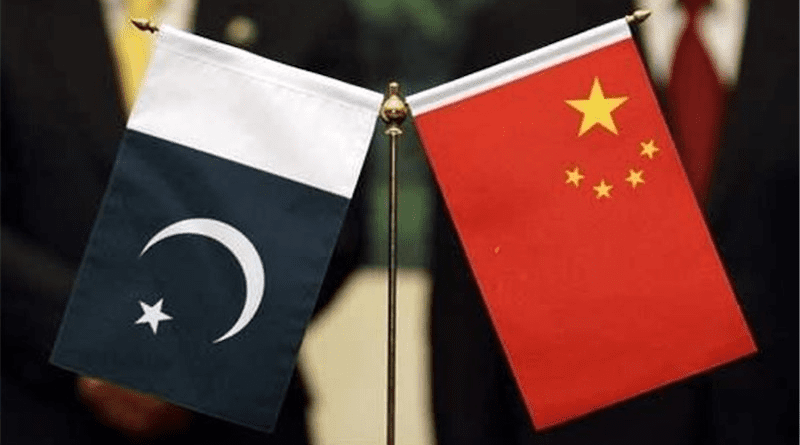
Pakistan’s foreign investment numbers have picked up some momentum, and China is leading the charge. In just the first two months of the fiscal year, Pakistan pulled in about $364.3 million in foreign direct investment (FDI), and a big chunk of that $120 million came from China. That’s roughly a third of the total, making China the single largest investor during this period.
In August alone, Chinese inflows hit $68.6 million, almost half of what Pakistan received that month. It’s another sign that the economic relationship between the two countries is tightening, moving beyond symbolic projects and turning into sustained, high-value investments.
Why China’s Money Matters Right Now
For years, Pakistan’s economy has been walking a fine line. Foreign reserves are fragile, power shortages keep biting, and local industries often struggle to scale. Having China step in with consistent FDI isn’t just about big numbers on a spreadsheet. It keeps the lights on literally, in many cases and signals to other investors that Pakistan’s economy is still worth betting on.
Most of this money is still flowing into the power sector, which pulled in $156.9 million in the first two months. That’s not surprising given Pakistan’s chronic electricity issues. Chinese-backed hydro, solar, and coal projects under the broader China-Pakistan Economic Corridor (CPEC) continue to fill gaps, and newer renewable projects suggest Beijing’s looking long-term.
It’s Not Just About Energy
What’s interesting is that Chinese interest is spreading out. Beyond power, they’ve been putting money into financial services, electrical machinery, and electronics. For Pakistan, that’s a big deal. Energy projects keep things running, but investment in banks, fintech, and manufacturing can drive real economic diversification.
The banking sector has huge potential. Pakistan has a young, tech-savvy population, and digital payments are booming. Chinese capital in this space could accelerate that shift. On the industrial side, electronics and machinery investments open the door for local manufacturing to grow beyond textiles traditionally Pakistan’s bread and butter.
Not Just a One-Country Story
China may be leading, but it isn’t the only player. The UAE, UK, Switzerland, the US, and Hong Kong also chipped in during this period. Their combined inflows aren’t as headline-grabbing, but they help Pakistan avoid being overly dependent on one source. It’s good optics too, showing that despite political and economic headwinds, Pakistan still has international appeal.
What This Means for Pakistan
The fact that FDI is rising again is encouraging. It eases pressure on Pakistan’s external accounts, creates jobs, and strengthens industries that badly need outside capital. For Pakistanis on the ground, it means more power plants, more factories, and hopefully, more opportunities.
But there’s a catch. Money alone isn’t enough. Chinese and Western investors are still worried about inconsistent policies, political instability, and red tape. Pakistan’s job is to make sure that these inflows lead to long-term growth instead of just being short-term boosts. That means making the rules easier to follow, making it easier for foreign companies to do business, and making the investment climate more stable.
The Big Picture
There is also a geopolitical layer to this. Pakistan is more than just another place for China to invest. It is a key partner in the Belt and Road Initiative, which gives Beijing access to important trade routes through Gwadar and other places. China’s steady flow of money is a lifeline for Pakistan, but it also reminds Pakistan that it needs to balance its partnerships. If global politics change, depending too much on one country can be dangerous.
That’s why the UAE and UK still matter, even though they only give a little bit of money at a time. They keep Pakistan connected to many networks, which makes it seem less like it is completely dependent on Beijing.
The short-term outlook is good: Chinese investment is likely to stay strong, especially in infrastructure and energy. If new deals in banking and electronics happen, they could make Pakistan’s industrial base much bigger.
But the real test will be whether Pakistan can use this time to fix its own problems. If there is a lot of political uncertainty or if economic reforms stop, foreign investors will leave. The $120 million that China just gave Pakistan could be the start of something bigger, not just a way to help them out financially, but also a way to help them grow more evenly.

Like what you read?
Please consider supporting Eurasia Review. Thank you for your consideration!
