
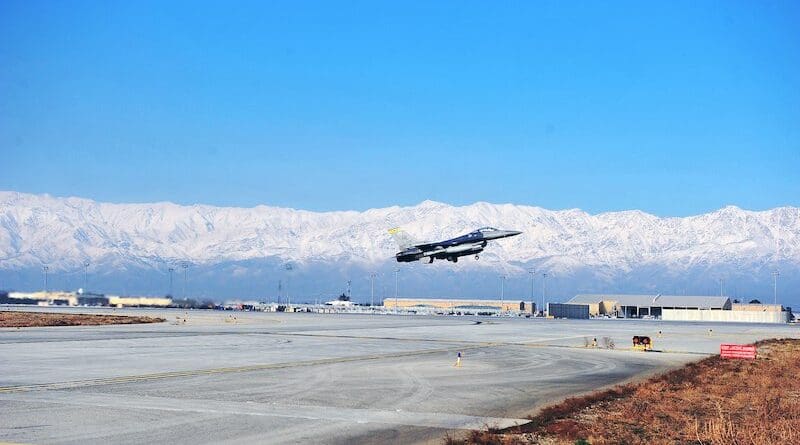
Trump’s Bagram Comments Risk Reigniting Old Fires – OpEd
Donald Trump has a habit of making foreign policy sound simple, like it’s just a matter of flipping a switch. His latest comments about “taking back” Bagram Air Base in Afghanistan fall into that pattern. It sounds tough, sure, but it doesn’t line up with the reality of what Bagram is, or what Afghanistan has become since the US pulled out. You can’t just snap your fingers and undo history.
First off, the claim that the US built Bagram isn’t true. The Soviets put it up decades ago during their own misadventure in Afghanistan. The Americans later expanded it, but the base has always been on Afghan soil. It’s not a U.S. property waiting for a landlord to reclaim. Talking about “returning” it completely brushes aside Afghan sovereignty. Whether people like the current government or not, there is one, and any decisions about Bagram must run through Kabul. That’s just how international politics works.
Then there’s his point about China’s nuclear sites supposedly being nearby. Not only is that misleading geographically, it’s also the kind of language that stirs unnecessary hostility. Turning Bagram into a platform for spying on China would drag Afghanistan right back into the middle of a great-power standoff. The country’s been a playground for empires before, and Afghans paid the price. Using it for that purpose now would risk doing the same thing all over again.
Afghanistan doesn’t need that kind of attention. The country is already struggling with poverty, militant groups, and humanitarian crises. Making it the front line of a US-China rivalry wouldn’t stabilize anything; it would just invite more violence. And let’s be honest: ordinary Afghans wouldn’t see any benefit from it.
Pakistan’s angle here is worth considering too. For years it has lived with the consequences of instability next door: cross-border militancy, terrorist groups like TTP and BLA, and millions of refugees. From Islamabad’s point of view, a US presence at Bagram could help if it was focused on counterterrorism instead of spying on Beijing. With US intelligence resources, Pakistan might have a better shot at dismantling the networks that keep spilling over into its territory.
There’s also the diplomatic side. Washington still has some leverage over the Taliban-led government, more than Pakistan does on its own. If the US used that influence to push the Afghan authorities to distance themselves from groups like TTP, Al Qaeda, or ETIM, it could make a real difference. That’s the sort of role America could play if it wanted to help stabilize the region instead of escalating global rivalries.
That said, none of this would be easy. Afghans remember the drone strikes, the raids, and the civilian casualties. The Taliban government would probably view any new US presence as an insult to its sovereignty, which could fuel fresh conflict. So, while Pakistan might hope for US help against militants, it’s a gamble whether that’s what would happen.
It’s also clear that Pakistan doesn’t share Trump’s framing at all. Islamabad isn’t interested in Bagram becoming a listening post against China, that would go against its partnership with Beijing. Its hope is much more practical: if the base is used again, it should be to track terrorists, share intelligence, and keep the region from spinning further out of control.
The best-case scenario is obvious: a stable Afghanistan where terrorist networks don’t have safe havens, where Pakistan isn’t under constant pressure from cross-border violence, and where the US can use its resources to reduce, not inflame, tensions. If you zoom out, the whole debate around Bagram isn’t really about a runway or a base, it’s about how outside powers treat Afghanistan. Trump tossing it into the mix as if it’s just a poker chip for the US to play against China makes for punchy headlines, but it skips over the hard part: the fact that Afghanistan is still trying to find stability after decades of conflict.
Decisions about Bagram aren’t simple, and they shouldn’t be made unilaterally. Any move there affects not just geopolitics, but also the lives of people who live under its shadow. Turning it into another stage for US-China rivalry risks repeating old mistakes. What the region needs isn’t more power plays, it’s room to breathe, some stability, and genuine respect for Afghans themselves.

Like what you read?
Please consider supporting Eurasia Review. Thank you for your consideration!
