
Balancing China: Security Shifts In East Asia – OpEd
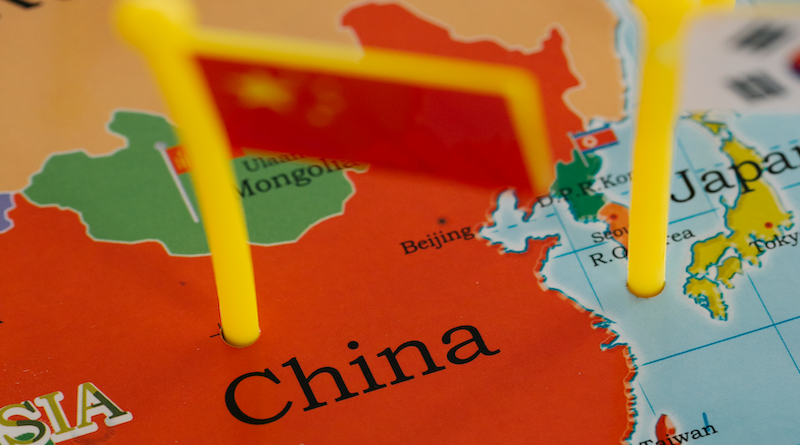
The strategic actions of China in East Asia have forced Japan and South Korea, and Taiwan to develop defensive strategies which protect their independence while sustaining regional stability.
The rising Chinese military power and economic influence in disputed ocean areas force neighbouring countries to change their defence and diplomatic approaches. The security environment of East Asia has undergone changes through non-confrontational methods because of how deterrence and hedging, and alliance management strategies interact with each other.
The People’s Republic of China has used more forceful methods to defend its regional interests since 2013. The Chinese government continuously tests Japanese control of the Senkaku/Diaoyu Islands through its military operations in the East China Sea. The Chinese military conducts more frequent exercises in the Taiwan Strait while performing increasing numbers of aerial intrusions into Taiwan’s Air Defence Identification Zone (ADIZ) and using stronger words about reunification. The Chinese government employs these actions to maintain military control in disputed areas while demonstrating resolve through non-aggressive means.
The Chinese military expansion continues to support its aggressive foreign policy actions. The People’s Liberation Army Navy (PLAN) maintains the title of world’s largest naval force through its extensive ship fleet, which enables Beijing to expand its military reach and disrupt U.S. and allied operations in the region through its A2/AD capabilities and missile systems. China uses economic tools, including trade restrictions and tourism bans, and informal sanctions to demonstrate its displeasure or show appreciation for compliance, as seen in its responses to South Korea’s THAAD deployment and Japan’s statements about Taiwan.
China implements its foreign policy through a combination of military pressure and economic cooperation with other nations. China implements two strategic approaches which link economic participation to strategic force application to block regional actors who want to defend their security needs and preserve their economic relationships.
Multiple defence systems exist throughout East Asian nations because they need to fight against China’s growing dominance. Japan leads the way in hard balancing through its National Security Strategy update and defence budget growth, and development of counterstrike military capabilities. The United States and Japan have strengthened their alliance, while Japan has built new security ties with Australia and the Philippines, and India to address the changing regional security environment.
South Korea faces a challenging situation because it needs to protect its economic ties with China while maintaining its position as a U.S. ally. The country maintains its position as a U.S. ally through trilateral security dialogues with Japan and the United States, yet it faces domestic political challenges and wants to stay out of great power rivalries. The country shows signs of increased defence preparedness through its missile defence investments and budget growth, and supply chain diversification efforts.
The Taiwanese military uses unorthodox defensive methods to safeguard its territory against Chinese military attacks. The country has developed mobile missile systems and cyber defence capabilities, and civil defence programs, while building stronger relations with democratic nations. The international community now recognises Taiwan more than before because of its diplomatic success despite Chinese efforts to isolate Taiwan from global relations.
The defensive structures have failed to protect the area from ongoing multiple problems, which continue to impact the region. Alliances face multiple stability challenges because member states have different threat perceptions and experience internal political problems and ongoing historical conflicts. The Japan-South Korea relationship demonstrates better relations but continues to experience challenges because of nationalist activities and unresolved historical disputes. The increasing military presence in disputed territories, along with insufficient crisis management systems, makes it more likely for accidental military clashes to occur. A single military incident between opposing forces could trigger an extensive military conflict.
East Asia experiences continuous instability because China actively seeks to remove all existing regional organisations and established rules. China opposes the 2016 arbitral tribunal decision about the South China Sea through its interpretation of wide maritime powers and its use of direct negotiations with other countries to reduce international law influence. The uncontrolled expansion of power-based conflict resolution methods will create a new standard for conflict resolution, which threatens to destroy the rules-based system that has maintained East Asian stability since World War II.
The upcoming period demands that East Asian nations perform a complex operation between different security measures. The strategic balancing approach requires multiple methods which combine military power with diplomatic methods to achieve its goals. Regional actors should dedicate their efforts to developing military strength and forming alliances with reliable partners instead of using containment tactics to limit China. The region needs to create communication systems for crisis management and economic cooperation to prevent a complete military takeover of all regional relations.
The United States will preserve its position as a top power in the region through direct involvement and through direct dialogue to grasp local requirements. The Quad and Indo-Pacific Economic Framework (IPEF) operate as adaptable partnership systems which enable standard alliances to work through their minilateral structures. The European Union, along with Australia and India, should work together to establish stability in the region through their support of capacity development and infrastructure construction and normative leadership initiatives.
The future development of East Asia depends on how regional actors work together to protect their autonomy and maintain stability in the region. The economic relationships between regional actors, along with their defensive strategies against coercion and value protection systems, will decide whether the area enters conflict or achieves stability through collective work. The region needs to establish strategic balancing as its best solution through specific targets and common operational approaches, and total commitment.
The views presented in this article belong to the author.
References
- Ferguson, V. A., Bohman, V., & Lim, D. J. (2025, October 4). Security begins to reshape Asia Pacific economic cooperation. East Asia Forum.
- Yatsuzuka, M., Nishino, M., Yoshida, T., & Jingushi, A. (2025). The Rising Global South and China. In the China Security Report 2025. National Institute for Defence Studies.
- Ananta Swarup Bijendra De Gurung. (2025, October 13). China’s defence white paper sets sights on Southeast Asia. East Asia Forum.

Like what you read?
Please consider supporting Eurasia Review. Thank you for your consideration!
