
Mahakumbh And Beyond: The Power Of India’s Cultural Diplomacy In Shaping Global Affairs – Analysis
In the current globalised world, where geopolitics frequently intertwines with the complexities of global relations, India has successfully applied its cultural heritage as an influential instrument of diplomacy. Among the several cultural symbols that embody the core of India, the Mahakumbh festival stands out as a deep representation of India’s soft power.
The Mahakumbh festival, a confluence of spirituality, religious variety, and the festivity of India’s rich civilizational heritage, offers a sole platform for India to project its cultural identity internationally. This article explores into the significance of the Mahakumbh as a keystone of India’s cultural diplomacy, exploring how such events and additional cultural resources help shape India’s diplomatic relations and worldwide standing.
The Mahakumbh Mela: A Unique Cultural Symbol of India
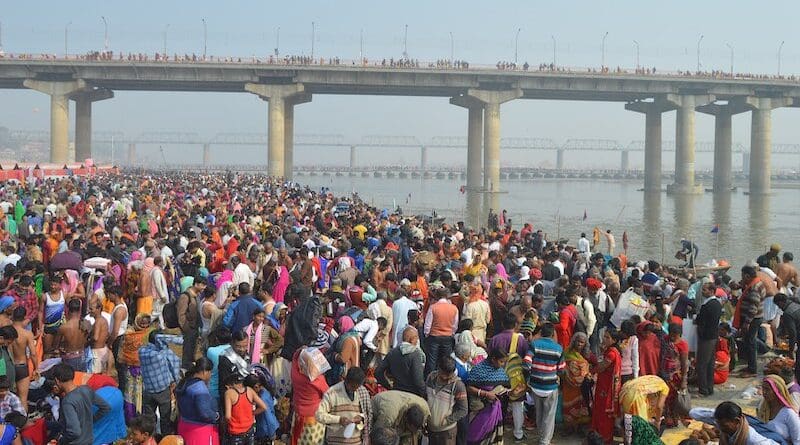
The Mahakumbh is more than just a spiritual gathering; it is an occasion that exceeds religious limitations and has deep socio-cultural and diplomatic consequences. Held once every twelve years at the confluence of the Ganges, Yamuna, and the Saraswati rivers in Prayagraj, the Kumbh Mela is measured the biggest peaceful congregation of people in the world. The Mahakumbh, as the biggest and most important iteration of the Kumbh Mela, has involved millions of pilgrims and guests from across the world for centuries.
At its core, the Kumbh Mela, and by extension, the Mahakumbh, embodies India’s deep-rooted spiritual traditions, its commitment to divine pluralism, and its ability to foster peaceful gatherings of various groups. It is an embodiment of India’s olden civilizational principles of tolerance, coexistence, and non-violence, philosophies that continue to resonate in India’s global diplomatic approach nowadays.
From a diplomatic viewpoint, the Mahakumbh is an irreplaceable opportunity for India to strengthen ties with nations and communities around the globe. By inviting foreign celebrities and people from diverse cultures to participate in the occasion, India supports its role as a leader in encouraging worldwide peace and understanding through its cultural ideals. The Mahakumbh’s symbolic importance extends far beyond its religious importance; it functions as a bond for intercultural exchange and worldwide dialogue.
India’s Cultural Diplomacy: A Channel for Soft Power
Cultural diplomacy has developed as one of the most effective instrument of soft power in international relations. Joseph Nye, the political thinker who coined the term “soft power,” defined it as the ability to figure the preferences of others through appeal and attraction rather than compulsion. India’s soft power, mainly its rich cultural heritage, has played a vital role in influencing universal perceptions and strengthening diplomatic relations. Through initiatives such as the Mahakumbh mela and other cultural programs, India has connected its civilizational assets to promote its worldwide image and influence universal discourse.
One of the important facets of India’s cultural diplomacy is its ability to use spiritual and cultural heritage as a means of nurturing closer relationships with other countries. The Mahakumbh, as a universally recognized event, showcases India’s historical, philosophical, and divine leadership. It helps as a platform for promoting India’s narrative of spiritual unity and harmony. India’s rich cultural traditions, with yoga, music, dance, and philosophy, are powerful diplomatic tools that empower the country to project its civilizational legacy to a worldwide audience.
For example, the Indian government has documented the importance of promoting its cultural diplomacy by leveraging measures like the Kumbh Mela to call foreign delegations. In 2019, the Indian government invited global leaders, ambassadors, and foreign journalists to take part in the Mahakumbh. The event became a stage for reinforcing India’s role as a nation of peace and tolerance while also nurturing deeper diplomatic relationships with nations such as Nepal, Bhutan, and Indonesia, which share cultural and religious bonds with India. The company of foreign dignitaries at the Mahakumbh symbolized India’s ability to unite the worldwide community through shared cultural and spiritual understandings.
Beyond the Mahakumbh: Broadening India’s Cultural Reach
While the Mahakumbh mela remains one of the most noticeable manifestations of India’s cultural diplomacy, the country’s larger cultural influence spreads far beyond this event. India’s soft power reaches various corners of the globe through its diaspora, its commitment to human rights and democratic standards, and its cultural transfers in the form of Bollywood, classical dance, music, and cuisine. The Indian government has strategically utilised these cultural assets to shape relationships with several countries, facilitating cooperation in parts such as trade, tourism, and education.
One remarkable example of India’s cultural diplomacy is the preferment of Yoga on the worldwide stage. In 2014, the United Nations General Assembly acknowledged June 21st as International Day of Yoga, a move introduced by India’s diplomatic efforts. The global celebration of yoga, with involvement from millions of people worldwide, represents how India has used its spiritual and cultural heritage to nurture goodwill and establish an exclusive diplomatic footmark.
In addition to yoga, India’s classical music and dance forms, such as Bharatanatyam and Hindustani classical music, have also played a important role in shaping India’s cultural diplomacy. Cultural festivals, such as the International Film Festival of India (IFFI) and Surajkund Mela, have provided opportunities for cultural exchange, bringing international artists and performers to India while allowing Indian culture to be showcased abroad. These events are integral to India’s strategy of expanding its cultural influence and establishing itself as a cultural powerhouse in global affairs.
Case Studies of India’s Cultural Diplomacy in Practice
India and the African Continent: Africa, a continent having historical and cultural linkages to India because of its colonial past and Indian diaspora, has responded favorably to India’s cultural diplomacy. In order to promote Indian art, dance, and education throughout Africa, the Indian Council for Cultural Relations (ICCR) has been instrumental in supporting cultural exchange initiatives, scholarships, and festivals. Through cultural diplomacy, India’s interactions with African nations have improved diplomatic relations and promoted economic collaboration. Further demonstrating India’s capacity to employ cultural diplomacy as a tool for developing closer bilateral ties are initiatives such as the India-Africa Forum Summit.
India and Southeast Asia: India and Southeast Asia, an area where Buddhism and Hinduism have historically influenced countries, share deep cultural and theological ties. India’s ties to Southeast Asian countries with a rich Hindu-Buddhist cultural heritage, such Indonesia and Thailand, are exemplified by the Mahakumbh. To encourage travel, educational exchange, and diplomatic collaboration, India has organized a number of cultural festivals and exhibitions around Southeast Asia.
India and the Middle East: India’s ties with the Middle East have also been a vehicle for its cultural diplomacy. Indian cultural festivals, exhibitions, and performances have taken place in nations like Saudi Arabia and the United Arab Emirates (UAE), honoring the two regions’ common history and values. As evidence of the effectiveness of India’s cultural diplomacy in fostering closer ties with the Arab world, the UAE has even proclaimed 2023 to be the “Year of Indian Culture.”
Conclusion
The Mahakumbh is one of the most significant occasions in India’s cultural diplomacy toolbox because of its distinctive fusion of religious, cultural, and social significance. It is a prime example of how India can leverage its rich cultural legacy to encourage international collaboration, tolerance, and peace. However, the Mahakumbh is not the only example of India’s cultural diplomacy. India has effectively used its soft power to influence international relations through a variety of cultural exchanges, international projects, and interaction with the international community.
India’s cultural diplomacy is evidence of the lasting force of its civilizational ideals in a world that is becoming more and more multipolar and where cultural appeal is just as important as military or economic might in determining global influence. As the centrepiece of this larger plan, the Mahakumbh is a potent representation of India’s capacity to manage international affairs via the lens of its long-standing but timeless cultural legacy. Therefore, India’s cultural diplomacy aims to create a global narrative that celebrates universal human values, cuts across boundaries, and promotes peaceful coexistence rather than just projecting soft power.

Like what you read?
Please consider supporting Eurasia Review. Thank you for your consideration!
