
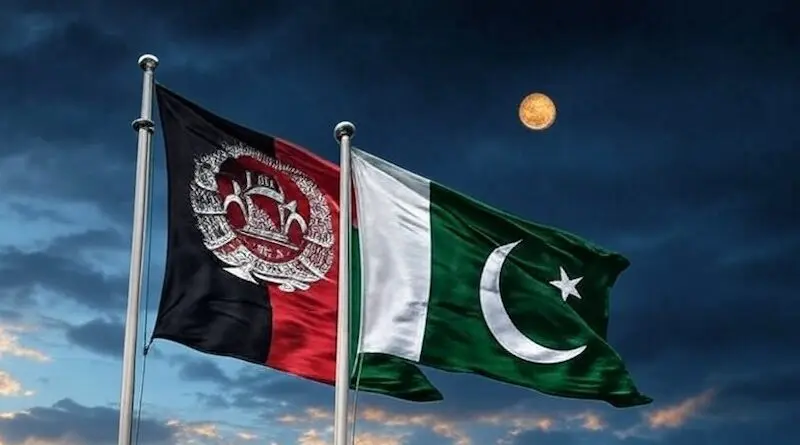
Lanterns In The Fog: Guiding A Region Toward Light – OpEd
In the shifting sands of geopolitics, where alliances are often as fragile as glass and trust as rare as diamonds, a new glimmer of hope has emerged in the heart of Asia. Pakistan and Afghanistan, two nations bound by blood, history, and mountains, stand at a critical juncture. What was once a road littered with misunderstandings, mistrust, and missed opportunities may now become a highway to mutual cooperation, if both sides can seize the moment with clarity and courage.
Beijing’s declaration that Pakistan and Afghanistan welcome stronger ties shows a realignment in how countries in the region operate. In a world divided by competing nations and full of suspicion such a gesture means a lot to many people. It indicates that, through recent uncertainties, the people of Islamabad and Kabul discover that they are connected in a way that is not easily forgotten.
Pakistan and Afghanistan have been bound together for years by a long, porous border, as well as by shared families, languages and religion. They play an important role in building a closer relationship that can eventually strengthen regional stability. The increasing collaboration between the countries occurs when the world needs teams working together rather than going against each other. Now, trade, security and connectivity are basic requirements for survival.
The economy of Afghanistan is declining fast and the UN states that 90% of the population is living in poverty. When conditions are so severe, surviving means letting go of ideological differences or historical grudges. It needs to focus on practical solutions and teaming up with others in the neighborhood. Out of all the feasible routes, Pakistan is the one that gives Afghanistan the shortest, most affordable and most practical access to the world’s markets. The transport links from Karachi and Gwadar are essential for bringing in supplies of food, medicine and also for economic recovery.
Despite facing its own hardships, Pakistan still tries to find a way to solve problems. Due to Pakistan, humanitarian trade has continued, Afghanistan has welcomed millions of refugees for four decades and diplomatic talks have not ceased despite provocation. The next decisions about Afghanistan are now in the hands of the Islamic Emirate of Afghanistan. In the modern world, isolation cannot work because openness, engagement and teamwork are needed. For the IAG to be respected politically and live on, it needs to put stability ahead of being stubborn.
The international scene, how nations around the world respond to terrorism, cannot be overlooked. There is a constant risk to Pakistan and the whole region from the actions of the Tehrik-i-Taliban Pakistan (TTP) and similar organizations. Dealing with these matters directly is the best way the IAG could enhance its relationship with its neighbors. It would mainly indicate to the world that the Taliban leaders can change and separate their ideological beliefs from their responsibilities in government.
It is clear that China played a major part in helping Pakistan and Afghanistan start rebuilding their relationship. Because it remains an influencer in Afghanistan, Beijing has managed to quietly adjust the way the Taliban is viewed. The Taliban cannot count on grand theories, imaginary allies or distant supporters anymore. It is obvious from China’s standpoint that the strongest support comes from people who stay involved, not just from those who speak out.
Sincere efforts at the planned Kabul summit could help the region move forward greatly. It is becoming clearer to the IAG that ignoring the problem leads to more uncertainty and lack of progress. The art of talking to others can sometimes be hard, yet it allows for new doors to open. An economy grows, a country is internationally recognized and society improves when people are willing to talk, compromise and cooperate.
The best and worst outcomes for everyone involved depend largely on what happens in Afghanistan. Although Kabul chooses to stress Afghan sovereignty and resistance, the way events unfold tells us something different. A nation must give its children food as well as pride. It cannot construct schools using language that isolates people from others. There is no way for it to be legitimate if it does not notice or respond to sit at home and travel to far countries.
But Pakistan has long been a constant in the region. Although security and money matters are big concerns, Canada highlights the need for dialogue instead of creating divisions. It is still pushing forward connectivity as the driving force for regional growth. The benefits of the CPEC and similar projects could be available to Afghanistan if Kabul is interested in working together. Pakistan stands out because it is both cost-effective and logistically convenient. Failing to confront this makes it harder for Afghanistan to succeed and also puts the entire region’s advancement at risk.
Changes in the worldwide political map mean China is now trying to differentiate advisers for peace from sponsors of unrest. People who oppose cooperation and benefit from chaos are being pushed away slowly. In contrast, those who advocate for engagement are discovering new tools, new relationships and new prospects. Afghanistan can either remain stuck in dishonesty or become involved in a long-term solution based on fairness and north-south unity.
Everything is in place, the moment is ready and the cast is on stage. What we are curious about is whether supported by a stronger China, Afghanistan and Pakistan will be able to create a substantial partnership from this. Should they succeed, they will change history for themselves and advice others on how to turn conflicts into solutions around the world.

Like what you read?
Please consider supporting Eurasia Review. Thank you for your consideration!
