
TTP And The Reign Of Terror – OpEd
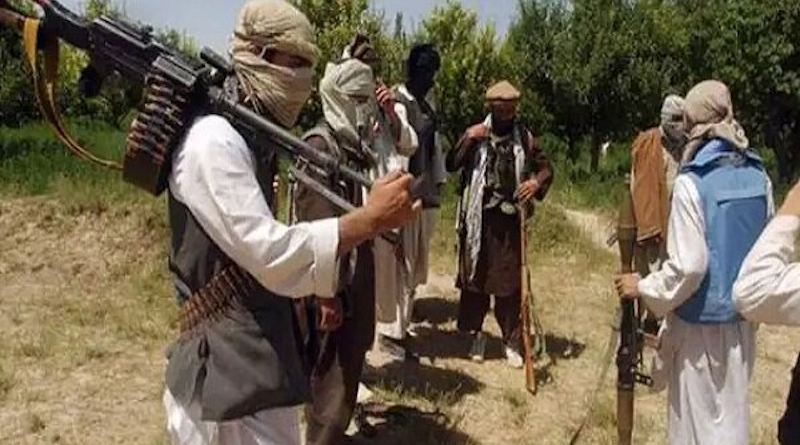
As May 2025 ended, a grim pattern once again emerged in Pakistan’s Khyber Pakhtunkhwa province: a surge of orchestrated terror attacks by Tehrik-i-Taliban Pakistan (TTP) targeting innocent civilians and vital infrastructure. Cloaked in the rhetoric of religious obligation, TTP’s campaign of violence has laid bare its true nature—not as defenders of Islam, but as purveyors of chaos and fear.
The Pakistan Institute for Conflict and Security Studies (PICSS) reports that in May alone, TTP executed 47 attacks in KP, killing 14 civilians and injuring 27 others. In the merged tribal districts, the group abducted over a dozen more, revealing a clear pattern of indiscriminate violence. Such figures expose the hollow core of TTP’s ideological narrative. Their victims are not enemy combatants but ordinary Pakistanis, many of them Muslims, whose only crime is living in regions TTP seeks to dominate.
From an Islamic standpoint, TTP’s actions are unequivocally condemnable. The Quran enshrines the sanctity of human life: “Whoever kills a person unjustly… it is as though he has killed all mankind” (Surah Al-Ma’idah 5:32). Yet TTP’s tactics—improvised explosive devices (IEDs), ambushes on civilian routes, and direct attacks on homes—betray no concern for such divine injunctions. These are not acts of religious defiance but criminal warfare against society.
Perhaps the most tragic element of May’s violence was the assassination of four members of a local Peace Committee. These individuals had devoted themselves to community-based conflict resolution, attempting to steer vulnerable regions away from extremism. Their murder represents not only a blow to local peace efforts but a broader assault on any grassroots resistance to TTP’s reign of terror. By silencing voices of reconciliation, the TTP ensures a vacuum that only further enables radicalization.
This reveals the group’s core strategy: use terror to break the social contract between citizens and the state. By attacking schools, marketplaces, roads, and homes, the TTP undermines public trust in government capacity. Communities become paralyzed, governance weakens, and the TTP steps in to assert control, not through public mandate but through coercion.
Moreover, the economic implications of this violence are dire. Disruptions to transport and commercial hubs depress local economies, deterring investment and halting development. In doing so, the TTP not only spreads fear but manufactures poverty—a combination that feeds into its recruitment and control mechanisms.
The group’s use of religion as a political cover is both deceptive and dangerous. Their declarations of jihad ring hollow when measured against the suffering of Muslims they themselves target. Islam, in its purest sense, stands for justice, mercy, and the protection of life—values completely absent from TTP’s modus operandi. Theirs is a political war clothed in religious language, one that manipulates sacred texts to justify criminal ambitions.
The Pakistani state must respond with both moral clarity and strategic rigor. First, TTP must continue to be designated and treated unequivocally as a terrorist organization. Its leadership, financial backers, and propaganda channels must be targeted systematically. Counterterrorism efforts should also expand to monitor digital recruitment platforms that feed TTP’s ranks.
Second, a robust parallel investment must be made in community resilience. Empowering local peace committees, investing in trauma-informed education, and bolstering healthcare and infrastructure are key to denying the TTP the socio-political space it exploits. When communities are connected, empowered, and protected, extremist ideologies lose their appeal.
The media and religious scholars must also play a vital role. Narratives that expose the falsehood of TTP’s ideology and reaffirm Islamic values of peace and compassion should be promoted widely. Silence from the clergy only allows TTP to hijack religious legitimacy unchallenged. Finally, it is essential that justice for victims be swift and visible. Whether through legal action, reparations, or public recognition, those harmed by terrorism must be at the center of state response. Their stories are not just statistics—they are testimonials of a war imposed by extremists upon their fellow citizens.
The violence of May 2025 is a reminder that TTP’s war is not one for faith or freedom. It is a war of domination, fear, and political manipulation. Every innocent life taken, every community silenced, is a page in the grim ledger of a group that thrives on pain and disorder. Pakistan must rise to meet this challenge not just with force but with foresight. This is not simply a battle for security. It is a struggle to reclaim the moral, social, and spiritual soul of a region that has endured too much and deserves a future free from terror.

Like what you read?
Please consider supporting Eurasia Review. Thank you for your consideration!
