
Bangladesh Should Reweave Its Immense Economic Potential – OpEd
Bangladesh had emerged from one of the bloodiest freedom struggles in human history. Approximately three million people were killed on the road to freedom. Nearly 10 million Bangladeshis fled to India. The long suffering, dislocation and genocide had little impact on the leaders of Bangladesh who instead of building the nation have created multiple crises in the country.
The Prime Minister, Shaikh Hasina’s two decade long rule had deteriorated the economic, social, political and cultural environment in Bangladesh. Deep rooted corruption, nepotism, crony capitalism, poor governance, growing unemployment, income disparity, religious intolerance, increase in debt burden and the financial sector collapse etc. precipitated into a violent public unrest in 2024. Prime Minister Shaikh Hasina escaped mob fury and left the country. The Nobel laureate, Muhammad Yunus at the age of 85 now leads the interim government in Bangladesh. More than a year has passed, the Bangladeshis are still hoping for a change. It is very essential for the new government to repair democracy, economy and social life in Bangladesh.
Bangladesh needs to build the right environment for the healthy democracy to take root. The money looted, embezzled, laundered and diverted to foreign accounts should be recovered within a time frame so that the same corrupt people won’t return to power with money power. Their bank accounts kept in foreign banks should be nationalized without delay; it will give Bangladesh huge resources to rebuild the country. The interim government should start the process of free and fair election in the country; a conducive environment should be created for the educated, honest and efficient candidates to contest election. Bangladesh needs quality leaders with honesty, integrity and efficiency. Changing a government is tough but restoring a healthy democracy for good governance and growth is tougher.
In 2023, the economy of Bangladesh was crumbling under an external debt burden of $100.64 billion. The decades-long promise of the Khalida Zia government to create jobs and improve the quality of life turned into an illusion. It has added to the misery of people. The economic situation was so worse that it compelled the higher middle class families to send their children to foreign countries for higher study and jobs. The average daily wage in Bangladesh was less than Rs 300 per day. Nearly 35 million Bangladeshis were unemployed; the migration from Bangladesh to neighbouring countries was alarmingly high. A precarious situation was kept hidden under narratives, lies and illusions. A series of Bank scams eroded more than $1.5 billion.
Reweaving Bangladesh’s economy is a tough challenge before the new government. Banks are the foundation of economic growth. There is a need for dedicated audit, inspection and scientific loan appraisal in banks so that banks will not end up in loan scams. The Self Help Groups which once created jobs for small entrepreneurs need to be strengthened under a strong leadership. Banks should be liberated from political influence and the banking sector should function independently. The government should appoint honest and efficient heads in the banks and allow them to take decisions on their own. Bangladesh should choose nation specific infrastructure projects because unnecessary infrastructure projects increase the debt burden of the country. The country should eradicate fraudsters before the massive amount which is being lost in frauds brings complete ruins to the economy of Bangladesh. Religious leaders can’t build an economy; the nation needs good Bangladeshi economists, planners and efficient administrators who can build the nation with patriotic zeal.
Quality school education which creates environmental awareness, scientific spirit, self discipline and knowledge on crop diversity along with study and sports will build Bangladesh. Quality education, research and innovation will help the country choose what is good for the country; it will save the country from loan burden, migration, unemployment and human trafficking etc. Water is the main ingredient of inclusive growth. The water rich Bangladesh should protect its water bodies from pollution so that it would give multiple crops, meet the daily water needs of people and save people’s expenditure on water. Clean water will keep the people healthy and happy. Bangladesh needs to stop deforestation on the banks of the rivers and hills; it should protect its forest for wildlife tourism and for a cool climate. For the growth of pilgrim tourism the country should protect the ancient places of worship so that pilgrims from other countries would visit Bangladesh. Cultural diversity once contributed to the flourishing economy of the Bangladesh region before the British Raj.
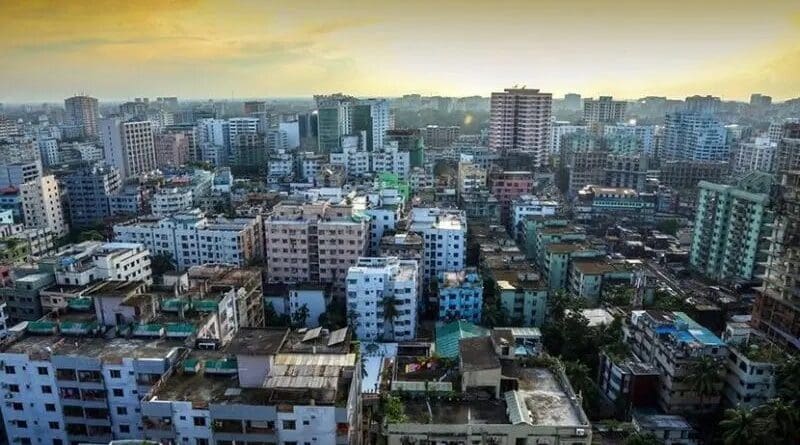
Once the country had rich crop diversity which was devoured by mono crop activity. Mono crops like rice cultivation makes a few rich people richer and generates poverty, hunger and unemployment. Bangladesh needs to check its population growth as the huge population creates endless human sufferings. Population growth, wild urbanization, errant growth of the manufacturing sector and mono crop growth erode much of the country’s potential for sustainable economic development.
Bangladesh has a rich handicraft and weaving traditions which are fast disappearing due to lack of preservation. The entry of cheap plastic goods eroded many of the handicraft items which had export potential. Genuine handicrafts like Jamdani weaving, Nakshi Kantha embroidery and Shital Pati mats etc still have high demand in the global craft bazaars. There are scores of exotic handicrafts which need preservation. Today the artistry from those crafts is fast disappearing due to low wage; the younger generation are not taking interest in craft making due low social status and low income. Though the artisans add high value to the products maximum profit goes to traders and middlemen. If Bangladesh does not protect and preserve the artisans’ skills and artistry it will permanently lose the gifted artisans. The scope of making huge foreign currency will be lost too. The handicraft sector needs genuine leaders with knowledge on handicrafts, honesty and efficiency. This is high time to reweave the immense economic potential of Bangladesh.

Like what you read?
Please consider supporting Eurasia Review. Thank you for your consideration!
