
The Role Of A Strong State In Restoring Trust And Ensuring Pakistan’s Future – OpEd
It is the time when the security of the country and the economic well-being of the nation are put to test every moment. The requirement of a strong and effective state machinery cannot be overemphasized.
For Pakistan, a nation divided between security challenges and economic turmoil, the necessity of an authoritative state—a state that legislates law authoritatively, exercises sovereignty, and ensures economic responsibility—is more pressing than ever. With its confusing security dynamics and economy being choked by corruption and excesses, the path forward requires a state not only meting out justice but also trust, stability, and progress.
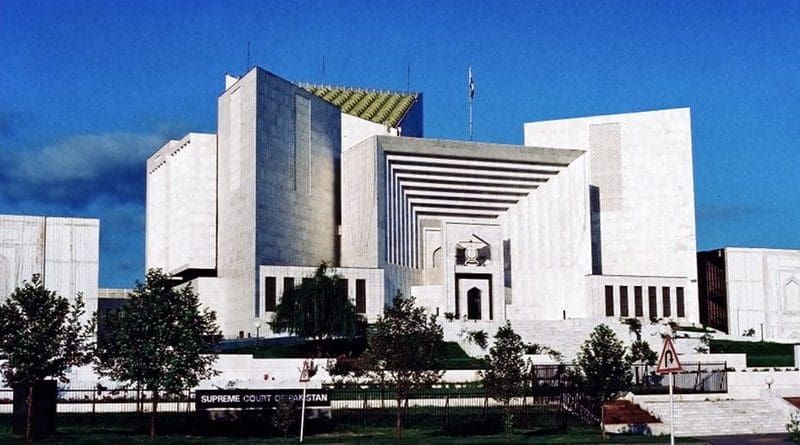
Judiciary is the collective conscience of any state’s social contract. People’s faith in the machinery is lost the moment that justice becomes late or closes its eyes towards equally pertinent laws. This is the bane from which Pakistan is suffering most desperately.
With the gradual passage of time, more and more people have loathed mistrust among citizens and institutions as the common sentiment is that justice turns into less frequently swift, fair, and even negotiated in some cases.
A strong state machinery to revive trust is the hour of need. A hard state—a state that strictly applies the law and delivers prompt justice—is a cure for corruption and crime. The malpractitioners and wrongdoers will desist from malpractices and wrongdoing if they can ensure themselves that what they will be doing will bring instant and harsh punishment. It therefore places citizens in a state where they are free and safe because they have the confidence of knowing that their security and rights will be served by law.
Apart from deterrence, efficient law enforcement creates the image of clean and effective public institutions. Placing the rulers in order makes sure that the state reconstitutes itself as the supreme dispensed of justice and equality, needed for lasting social stability and coherence.
The geostrategic position of Pakistan as a neighbor to volatile areas such as Afghanistan and India positions it at the focal point of several security issues. Pakistan has endured terrorism, insurgencies, and border wars for decades and the necessity of efficient state machinery is more than ever important. The sovereignty and territorial integrity of Pakistan need to be guaranteed with determination and authority.
Hard state is extremely important in terms of national security. Hard state is the backing of the national defense, and it ensures that the military, intelligence service, and police organizations come together to defend the masses and the state within the country and across the globe. Without a machinery of hard state, there would be chances of collapse and instability, which would be disastrous to Pakistan as much as to the rest of the region.
Added to this, also important is the public safety. A well-to-do state, its armed forces and its intel service, takes care to render violence and brutality not ubiquitous. It is particularly so in the case of a nation where extremist groups and crime syndicates most threaten the citizens’ lives as well as that of the state.
Apart from security and justice, Pakistan’s economic survival has depended on exercising strict discipline and determination to cleanse the nation of corruption. Corruption and the mafia vice with extensive influence have eroded national resources, and the country has not achieved its potential economic capacity.
In the highly interconnected world, a country’s competitiveness in the economy depends on transparency, efficiency, and accountability. An administration that can uproot mafias, suppress smuggling, and act immediately against bribe-devouring bureaucrats must be instituted to provide a level playing field for businessmen and entrepreneurs. By applying rule of law and leveling politicians and businessmen, and other classes of citizens, with responsibility, Pakistan could earn back investors’ confidence and ensure long-term growth.
Economic stability, then, necessitates that the state must also act as a gatekeeper, governing industries, balancing anomalous practices, and protecting public goods to be utilized for the general good. The state should not only avoid corruption but must also spearhead reforms constructively to drive sustainable development, improve employment, and grow sectors like agriculture, industry, and services. This will introduce the kind of economic stability that can weather the storms of geo-political uncertainties and world market fluctuations.
Pakistan’s strong state demand is not a call for authoritarianism and un-democratic rule. It is rather a call for an operational state which is hardworking, accountable, and transparent in the very best interests of the people first. Pakistan’s vices are gigantic but few. By staying committed to the law, protecting national sovereignty, and eradicating corruption, the state can create the climate for eternal peace and prosperity.
Because the world is in a state of global fluidity and Pakistan is open internally, Pakistan is able to redefine its own destiny. By creating a healthy, robust state in which justice is administered, security is provided, and economic advancement is provided, Pakistan can create a platform for the future where the people live in peace among themselves, the economy prospers, and the system of justice is honored and trusted.
For Pakistan, its path back to rehabilitation and development is the unyielding strength of the state—harsh law with no quarter asked or given, securitization of borders and citizens, and practice of the highest values of governance and economic restraint. The fate of the nation hangs in the balance.

Like what you read?
Please consider supporting Eurasia Review. Thank you for your consideration!
