
Israel Violates Lebanese Airspace, Kills Over Two Dozen In Gaza In Weekend Strikes
Key Takeaways:
- Israeli forces killed more than two dozen Palestinians in Gaza over the weekend and conducted over 100 airspace violations in Lebanon, despite existing ceasefire agreements.
- UN agencies report that while food insecurity has slightly eased, critical shortages of medicines, high market prices, and cooking gas scarcity continue to leave many Gazans without basic necessities.
- The Board of Peace announced progress toward disarmament as the next phase of the Gaza ceasefire, but Israel expressed serious security concerns and stated it would not withdraw forces until full weapons decommissioning is completed.
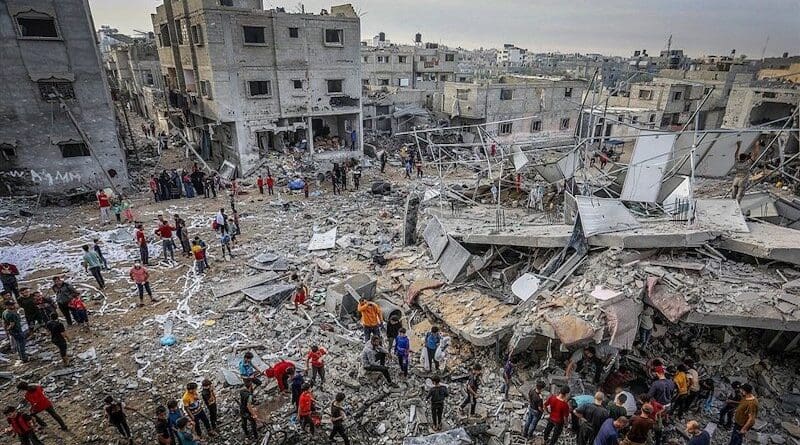
Israeli forces reportedly killed more than two dozen Palestinians in Gaza and violated Lebanese airspace more than 100 times over the weekend despite ongoing ceasefire agreements, UN agencies and peacekeepers said on Monday.
UN aid agencies also reported that needs remain high, even though food insecurity has eased a little following the October Israel-Hamas ceasefire that ended a two-year-long war which left much of Gaza destroyed and most Palestinians displaced.
Last Friday, The US-led Board of Peace backed by the Security Council and established under the 20-point peace plan announced an agreement to move to disarmament and the next stage of the ceasefire, with Hamas declaring it was accepting the roadmap.
The Israeli Government reportedly said Sunday it had “serious security concerns” over the proposal and would not withdraw from Gaza ahead of full disarmament.
Fresh Israeli strikes in Gaza
The Gaza Ministry of Health reported that more than 150 fatalities, including dozens of civilians, were documented in July, the highest reported monthly death toll since the beginning of the year, UN Deputy Spokesperson Farhan Haq said on Monday.
Most strikes targeted western Gaza, “within the less than half of the Strip”, where virtually all 2.1 million of the enclave’s residents are now concentrated, he said.
Fresh Israeli attacks also hit the area of Al-Aqsa Hospital on Saturday, damaging an adjacent medical storage facility and destroying essential medical supplies, including some delivered by the World Health Organization (WHO), Mr. Haq said.
Severe medicine shortages
In addition to airstrikes destroying critical supplies, OCHA highlighted already critical shortages of key medicines to treat chronic diseases, including insulin and materials needed for cardiac treatment, dialysis supplies and critical diagnostic and monitoring equipment.
“More supplies required to prevent and control infections are pending Israeli approval to bring into Gaza,” the UN Deputy Spokesperson said.
Right now, alcohol-based disinfectants, which are essential for hygiene and routine infection prevention, are largely unavailable, he added.
Priced out
Even with an increased number of commercial and humanitarian trucks reaching Gaza, high market prices are making basic food items unaffordable for four in 10 households, according to a World Food Programme (WFP) survey of families in the war-torn Strip.
Nearly one in two households said that they had completely run out of food at home, with 22 per cent experiencing this more than 10 times in the month preceding the survey.
A severe cooking gas shortage has left families waiting weeks for an eight kilo canister that lasts barely half a month, with black market prices beyond reach for most, and forcing thousands to burn hazardous waste or firewood if they want to make a hot meal, WFP warned.
Israeli violations of Lebanese airspace
The UN Interim Force in Lebanon (UNIFIL) continued to observe daily Israeli violations of Lebanon’s airspace, roadblocks and activities in its territorial waters despite a 17 April conditional ceasefire agreed by Israel and the Lebanese Government reached via US-led talks.
Between Thursday and Sunday, peacekeepers recorded 125 air violations, with the combined total overflight time exceeding 418 hours. Surveillance and armed drones were observed near or above UNIFIL positions in both sectors.
“Peacekeepers also report extensive military activity on the ground in south Lebanon, including significant engineering works and active troop movements,” the UN Deputy Spokesperson said.
More than 4,300 people have been killed and 12,200 more have been injured in Lebanon since Iran-backed Hezbollah militants joined the regional war triggered by US-Israeli attacks on 2 March, according to national authorities.

Like what you read?
Please consider supporting Eurasia Review. Thank you for your consideration!
