
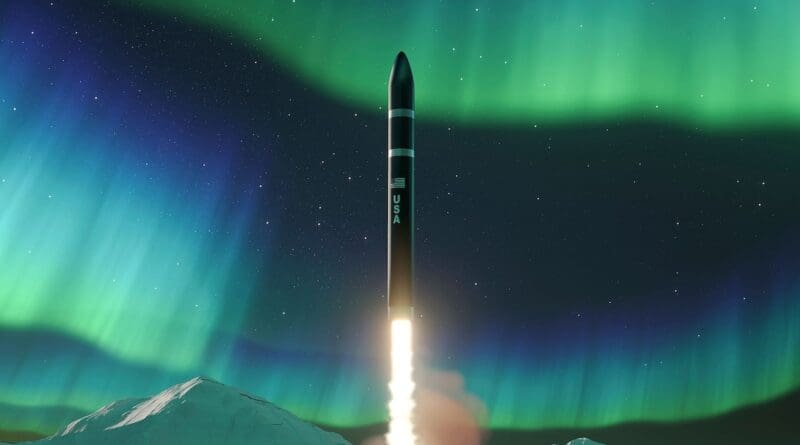
Lockheed Martin Announces Successful Burst Test Of Next Generation Interceptor’s Second-Stage Motor
Key Takeaways:
- Lockheed Martin has successfully completed a critical burst test of the second-stage motor case for the Next Generation Interceptor (NGI), validating the composite structure’s strength under extreme pressures beyond expected launch loads.
- The milestone advances the program toward Critical Design Review later this year and keeps it on track for fielding by 2030 as part of an upgraded Ground-Based Midcourse Defense architecture.
- Lockheed Martin is accelerating development through a “born-digital” design approach, major capital investments in Alabama manufacturing facilities, and broad industry supply-chain support to meet urgent production needs.
Lockheed Martin said Tuesday it has reached a pivotal development milestone for the Next Generation Interceptor (NGI), successfully completing a critical burst test of its second-stage motor case and advancing the program toward Critical Design Review (CDR) later this year.
Engineers filled the motor case with a carbon-fiber reinforced water vessel and inflated it beyond expected launch pressures. The motor case withstood the required induced loads before failure, validating the composite structure’s strength-to-weight ratio and confirming it can survive the extreme launch environment while delivering the thrust needed to place the interceptor’s payload into orbit.
“This successful burst test is a significant milestone on the path to CDR and brings us closer to fielding NGI by 2030,” said Christopher Jewell, vice president, Lockheed Martin NGI. “It proves our advanced motor architecture can withstand the harsh conditions of flight and still perform with the precision required to help protect the nation.”
Why It Matters
A faster fielding of NGI answers the call for an advanced missile defense capability. Successfully completing the burst test marks another step forward in the program’s development, keeping it on track for CDR and production. Other factors pushing NGI toward deployment completion include:
- Advanced design and speed: Leveraging NGI’s “born‑digital” foundation, designs that once required years of physical iteration can now be produced, fabricated and validated in a matter of months.
- Capital investments: Lockheed Martin is investing millions of dollars to construct or expand purpose-built manufacturing facilities in Alabama. This includes incorporating advanced manufacturing techniques, production lines, tooling and plant layouts to meet urgent production demand.
- Whole of Industry Support: Lockheed Martin is leveraging significant supply chain capabilities across the nation to delivery NGI.
NGI is being developed to enable a more capable Ground-Based Midcourse Defense architecture and will serve as a critical component of a next generation missile defense solution. NGI greatly increases the nation’s firepower against the most destructive ballistic missile threats to the nation.

Like what you read?
Please consider supporting Eurasia Review. Thank you for your consideration!