
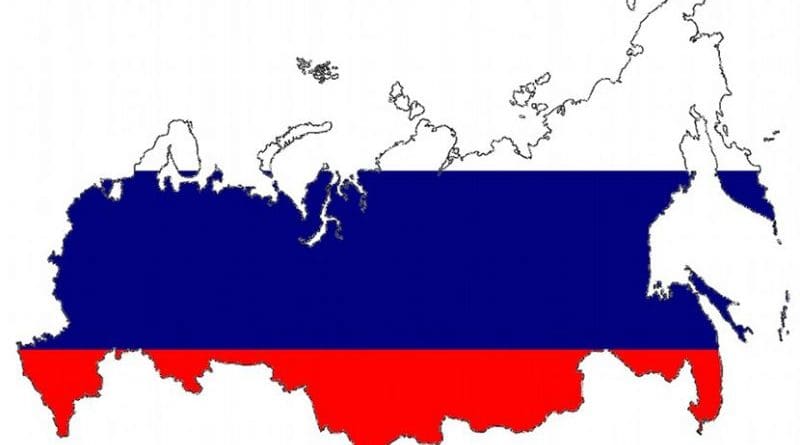
What’s Needed Now: A Calm Conversation About Whether World Would Be Better Off Without Russian Federation And What Is Needed For That To Happen – OpEd
No one should be surprised that Moscow is persecuting those who openly call for the demise of the Russian Federation, Sergey Chernyshov says; but at least equally surprising is the failure of opposition leaders and the media “are categorically refusing to talk about the liquidation of the Russian Federation in its current form.”
Such a conversation is “extremely necessary,” the Radio Liberty analyst says; because “if it is shown that a world without Russia in its current form would be better than the world with it, then why should we cling to this political formation?” (sibreal.org/a/kak-rasselit-barak-rossiyskaya-federatsiya-istorik-sergey-chernyshov-o-razumnom-separatizme/33219637.html).
Of course, it is the case that “a conversation about the liquidation of the Russian Federation is extremely difficult to begin, as difficult of beginning a conversation about sex in a Puritanical family.” And thus it is not surprising “but true” that in Russian history, “there has never been a single significant political force that has raised the issue of dividing the country.”
“Even the numerous ‘national movements’ which arose in the 19th century across the entire empire in fact raised the question not about the liquidation of a single country but about its ‘reformatting,’” Chernyshov says. And those who have wanted to do that have first wanted to seize power in the center.
There is an entirely understandable reason for that: “outdated countries have been effectively liquidated only in one case when this has happened at the behest of the supreme central power which has then acted decisively and effectively in this field,” the historian continues.
“The British empire was liquidated in the British parliament in London and not in the jungles of Africa,” Chernyshov points out; and “the USSR fell apart not because three nationalist politicians assembled in Beloveshchaya and signed something there but because a fourth politician in Moscow agreed with them.”
That needs to be recognized as must be recognized something else, he argues: until that condition is met, the population will overwhelmingly talk about reforming the country of which they are a part rather than seeking to go their own way. The latter option is almost always the choice of local elites with their own calculations.
Such elites will succeed initially if they have an ally in Moscow, but they will succeed over time only if they are able to give their peoples a better life, one that others will envy. If the first doesn’t arise, dissolution is unlikely; if the second doesn’t happen, there will always be those who will want to restore the past, Chernyshov concludes.

Like what you read?
Please consider supporting Eurasia Review. Thank you for your consideration!
