
Repression As Governance: Afghanistan Under The Taliban’s Ideological Grip – OpEd
The latest report of the United Nations Security Council’s Analytical Support and Sanctions Monitoring Team presents a grim and unambiguous picture of Afghanistan under Taliban rule. While the regime has succeeded in consolidating territorial control and imposing a form of internal order, this so-called stability rests on systematic repression, ideological absolutism, and the near-total erosion of basic human rights. Far from signaling normalization, the Taliban’s governance model reflects an entrenched policy of coercion that threatens Afghanistan’s social fabric and regional stability alike.
At the center of this system stands Taliban Supreme Leader Hibatullah Akhundzada, whose authority is neither symbolic nor consultative. Ruling from Kandahar, Akhundzada exercises uncompromising control over political, social, and religious life, framing obedience as a religious duty and dissent as heresy. The UNSC report underscores that repression in Afghanistan is not the product of rogue elements or administrative excess—it is a deliberate policy emanating from the very apex of power.
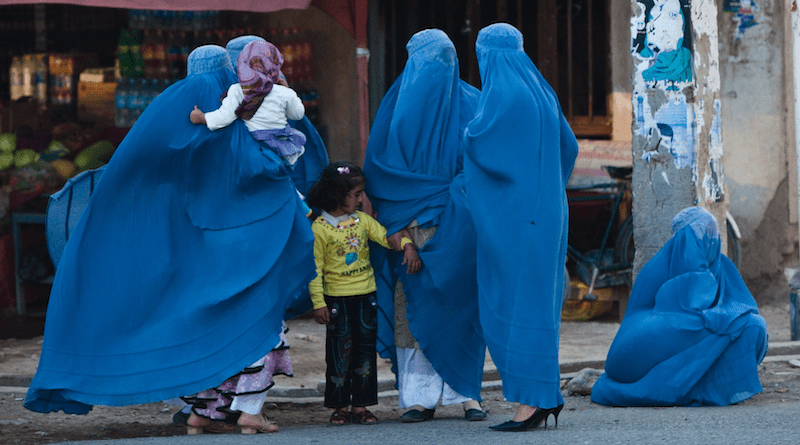
Nowhere is this repression more visible than in the condition of Afghan women and girls. According to the Afghanistan Gender Index 2024, eight out of ten Afghan women are excluded from education, employment, and vocational training—placing Afghanistan among the worst-performing countries globally on gender equality. Edicts issued directly from Kandahar have barred women from secondary and higher education, restricted their access to employment, healthcare, and freedom of movement, and pushed families toward early and forced marriages under economic and social strain. These policies have devastating consequences beyond human rights. Economically, the exclusion of women costs Afghanistan more than $1 billion annually, further crippling an already fragile economy. Yet the Taliban leadership remains unmoved. Akhundzada has dismissed domestic criticism and international pressure alike, framing these measures as immutable religious obligations rather than policy choices. In doing so, the regime has transformed misogyny into governance doctrine.
Despite the regime’s rigid public posture, the UNSC report reveals that internal disagreements—particularly over girls’ education—do exist within the Taliban. Several senior figures have argued that the ban contradicts Islamic principles and undermines Afghanistan’s future. However, such dissent is swiftly crushed.
The repression extends well beyond gender. The Taliban have imposed a singular Hanafi Deobandi interpretation of Islam, erasing Shia, Salafi, and Tablighi perspectives from religious curricula. Shia and Salafi clerics face heightened surveillance, arrests, and restrictions, reflecting the regime’s determination to enforce ideological uniformity. Ethnic marginalization compounds these tensions. Pashtuns dominate military and administrative structures, while Tajik and Uzbek figures are increasingly sidelined. Downsizing of security forces has disproportionately affected non-Pashtun regions, deepening grievances and undermining national cohesion. This ethnically skewed power structure risks planting the seeds of future instability beneath the surface of enforced calm.
The Taliban’s declared general amnesty for former officials of the Islamic Republic has proven hollow. The UNSC report documents a persistent pattern of arrests, detentions, and extrajudicial killings targeting former security personnel and government officials. Between January and March 2025 alone, at least 23 arbitrary detentions and six extrajudicial killings were recorded. Former commanders who returned from abroad have reportedly disappeared, reinforcing a climate of fear and retribution.
Media freedom in Afghanistan has collapsed under Taliban rule. Numerous outlets have been shuttered, journalists detained, and strict censorship imposed. Female journalists, in particular, have been pushed out of public life altogether. The suspension of Shamshad TV and Radio in October 2025—reportedly on Akhundzada’s direct orders—demonstrates how tightly information is controlled, especially when narratives challenge the regime’s version of events. Taliban officials labeling journalists as “traitors” and “polytheists” signals an environment where independent reporting is not merely discouraged but criminalized. Without a free press, repression flourishes unchecked.
What emerges from the UNSC assessment is a society where repression is no longer an exception but the governing principle. The Ministry for the Propagation of Virtue and Prevention of Vice, loyal clerical networks, and a compliant judiciary function as enforcement arms of Akhundzada’s will. Political, religious, and humanitarian dissent is treated uniformly—as a danger to the “Islamic system.” The Taliban may claim to have brought stability to Afghanistan, but it is a brittle and unsustainable stability—built on exclusion, fear, and repression. By systematically marginalizing women, silencing dissent, coercing minorities, and eliminating accountability, the regime has hollowed out Afghan society from within. For Afghans, this represents a profound human tragedy. For the region and the international community, it raises urgent questions about engagement with a regime that equates governance with coercion. Stability achieved at the cost of dignity and rights is not peace—it is merely repression by another name.

Like what you read?
Please consider supporting Eurasia Review. Thank you for your consideration!
