
Challenging The Systems Of Oppression And Exploitation In Pakistan: A Freirian Perspective – OpEd
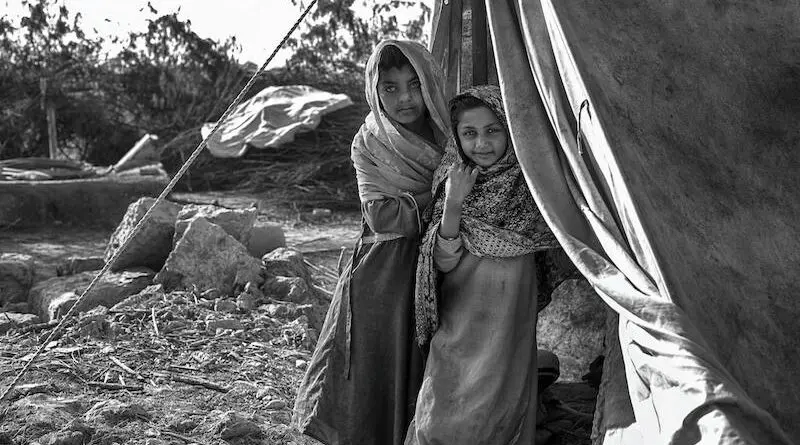
In late December 2024, just before the year ended, I entered the Emporium Mall in Lahore, Pakistan. I encountered a stark, heartbreaking reality: two young girls, no older than teenagers, were trapped in servitude as maids for affluent women. From the outward appearance, these women best fit in the social strata of a middle-upper class.
One girl, innocent and young, pushed an empty stroller for her employer. Ordered to wait quietly at the entrance of the Sapphire clothing store, the young girl stood still as if her single act or desire of walking around the store would be detrimental to her existence. At another store, I saw a second girl who was commanded to carry her employer’s shopping bags—bags that her employer could easily carry herself. These two stories represent just a small fraction of the widespread oppression and exploitation in Pakistan.
Such is the story of Pakistan, a nation that has a layer of systematic oppression and exploitation in every stratum of society, and it is deliberate. It is a deliberate system created by each class to stall the social mobility of one below them. By limiting social mobility in this manner, each social class in Pakistan has perfected the system of oppression and exploitation to a level that Pakistan may not function without it. The economic disparities, political power and influence, ethnic divides, rural-urban divides, and religious dynamics, all these variables have contributed to the establishment of a system where exploitation and oppression occur not only from one social class to another but also within the same social strata, further perpetuating inequality and reinforcing rigid class boundaries.
Contradictory to its religious identity as the Islamic Republic, Pakistan suffers at its own hands, by its own social and political systems of governance. Its social norms are in contradiction with its Islamic identity, and the Islamic identity is convoluted with social paradigms that never really evolved. Is there a remedy for Pakistan and its population that is struggling for social mobility yet is trapped in their social strata of society, living with oppression and exploitation as the norm? Is the answer to social mobility and change of conditions for the Pakistani native population to migrate from Pakistan or to tackle the central issue at the heart of oppression and exploitation at home, which is the issue of humanization and dehumanization? Recognizing one means the recognition of the other. To answer such questions, one must turn to the Freirian perspective, which gives a deep insight into humanization and dehumanization and the nature of oppressor and oppression.
Paulo Freire (1971-1997) published a notable work to shed light on the relationship between the oppressed and the oppressor. Freire was a Brazilian educational theorist who promoted the liberation of the working classes through a cooperative teacher-student educational model. In the Pedagogy of the Oppressed, Freire lays out the framework for how the oppressed population can impactfully liberate itself from the hard systems of oppression and exploitation. In his book, Freire begins the discussion by contrasting humanization with dehumanization. Dehumanization is the process in which people are reduced to objects and treated as less than human by oppressive social, political, and economic systems.
According to Freire, humanization has always been the central issue for humanity. Humanization, as Freire, describes is about people becoming fully conscious of their potential as active and aware beings who are capable of shaping the world around them. More importantly, it means breaking free from oppression and dehumanization, which puts people in certain situations or conditions that strip away individuals’ dignity from them.
Freire emphasizes that dehumanization is not just an outcome of oppression but it is a historical reality. This historical reality is best realized as people analyze the extent of dehumanization, people may just wonder if true humanization is even possible. From the historical lens, both humanization and dehumanization are possible realities for people. People are well aware of their incompleteness as humanized beings. He writes, “Within history in concrete, objective contexts, both humanization and dehumanization are possibilities for a person as an uncompleted being conscious of their incompletion.”
The Aga Khan University published a report in 2010, “Why is child labour detrimental for children?” In the report, focused on Pakistan, Cassandra Fernandes Faria, stated “Poverty driven children are an easy prey for those who seek to make a profit by exploiting this vulnerability. Employers find children more obedient and easy to control as they are unable to defend their rights and are easily convinced to do menial jobs for a much lower wage than adults.” Faria’s report further highlighted the study that the Council for Child Welfare and Development (NCCWD) conducted, which pointed to the fact that eight percent of the total working children are employed as domestic servants (in six cities). Half of these children are under the age of ten. Mainly employed in carpet-making and brick factories, a large portion of these children are working in “informal” industries. The “informal” industries may also include homes and shops.
In another report, “The Main Causes And Consequences of the Child Labor in Pakistan. 2024,” Ali Hafeez mentions, “Despite the nationwide ban on child labor and bonded labor – a form of modern-day slavery – their prevalence in Pakistan is a reflection of flawed democracy, poor economic conditions, and exploitative societal norms.” Not only children are deprived of education, but their social and emotional well-being is also affected negatively.
Pointing to the following statistics, Hafeez demonstrates that child labor is more common among boys (12.7%) than girls (5.9%), and it rises as children get older for both genders. The highest rate of child labor is found in the 14–17 age group (15.5%), followed by children aged 10–13 years (10.9%) and those aged 5–9 years (5.3%). The statistics are significant markers that economic pressures and social norms force them into labor at a young age and millions of children are trapped in this oppressive and exploitative system.
In Freire’s terms, this is a core example of dehumanization where children are deprived of their childhood and the chance to grow fully as critical thinkers, as free beings who strive for their social mobility just as the social class above them continues to push for social mobility. Instead of being able to develop their skills and become critical thinkers, the children are pushed into labor, reinforcing cycles of poverty and inequality.
In Pakistan, this oppressive system is sustained in a manner that Freire points to in his discussion on the nature of oppressors and the oppressed. Reflecting on how oppression and exploitation take place, keeping the oppressive class of individuals from ever rising up, Freire asserts, “The same is true with respect to the individual oppressor as a person. Discovering himself to be an oppressor may cause considerable anguish, but it does not necessarily lead to solidarity with the oppressed. Rationalizing his guilt through paternalistic treatment of the oppressed, all the while holding them fast in a position of dependence, will not do.”
In Pakistan, this is precisely how oppression and exploitation take place. Individuals who employ the young and old labor force keep the servant class bound to their service by demonstrating a very “paternalistic” attitude. This paternalistic behavior is not meant to liberate or change the condition of the labor class but to keep them stalled and bound to a system of servitude. The educational institutions, whether traditional or vocational, are not designed to allow accessibility to education.
The sympathy for the serving class is in reality a camouflage for the true intent – to keep loyal servants in place while being served for food, cleaning, driving, etc. Because there is a lack of accessibility to educational institutions and vocational training due to high costs and lack of government financial support for individuals in the lower strata of society, the social norms dictate who has access to education versus the governmental policies. The government, itself is the beneficiary of those chained to serving; hence, social mobility remains a major challenge in Pakistan.
According to the United Nations Children’s Fund (UNICEF), “Currently, Pakistan has the world’s second-highest number of out-of-school children (OOSC) with an estimated 22.8 million children aged 5-16 not attending school, representing 44 percent of the total population in this age group.” The primary reason behind these statistics is “At systems level, inadequate financing, limited enforcement of policy commitments and challenges in equitable implementation impede reaching the most disadvantaged.
Additionally, UNICEF reported that “Gaps in service provision at all education levels is a major constraint to education access. Socio-cultural demand-side barriers combined with economic factors and supply-related issues (such as availability of school facility), together hamper access and retention of certain marginalized groups, in particular adolescent girls.” Given such socioeconomic challenges, how can the Pakistanis stuck in the lower strata of society and those seeking social mobility in a class-oriented society change their conditions? Freire provides an answer to this.
He writes, “In order for the oppressed to be able to wage the struggle for their liberation, they must perceive the reality of oppression not as a closed world from which there is no exit, but as a limiting situation which they can transform. This perception is a necessary catalyst but not sufficient for liberation itself; it must become the motivating force for liberating action.” The oppressed and the exploited need to first understand that their condition is temporary. This understanding needs to be psychologically ingrained. This realization is not enough to change such oppressive conditions; however, this realization is sufficient to begin the transformation process.
Secondly, those seeking freedom from an oppressive and exploitative situation must understand that seeking freedom is not an easy process; however, the effect of going through such a process leads one to emerge as a new person–what Freire describes as a complete human being. Describing this process, Freire explains, “Liberation is thus a childbirth, and a painful one. The man or woman who emerges is a new person, viable only as the oppressor-oppressed contradiction is superseded by the humanization of all people. Or to put it another way, the solution of this contradiction is born in the labor which brings into the world this new being: no longer oppressor nor longer oppressed, but human in the process of achieving freedom.” It is the core fundamental of human existence, humanization, of the lower social classes is missing in Pakistan. While charity, sympathy, and compassion are at times present, it is inconsistent in the social strata of Pakistan because “paternalistic” behavior amongst those who seek to control the labor force is not out of such reasons, but to keep the social fabric as is.
Freire emphasizes that the oppressed must overcome the fear that they feel and people in their social class must also do the same. This is precisely the reason, the oppressed and exploited class avoid talking about it or listening to each other, especially the ones who desire freedom from their current conditions. In their mind, if they were to join the freedom struggle, they risk a severe backlash. Rather than adhering to what feels safe and familiar, even though the oppressed and exploited class knows, it won’t lead to their true freedom, they must overcome this fear through critical thinking. Freire explains the inner struggles of the oppressed. He mentions that they feel torn because they want to live authentically but are afraid of the change it requires.
In dealing with this inner struggle, the oppressed internalize the mindset of their oppressors and struggle with the choice between embracing their true selves or staying divided. This is the mindset that the oppressed and exploited must come out of – not to internalize and mimic the behavior of their masters but rather to overcome it. The conflict they face between solidarity and isolation, action and inaction, and the desire for freedom versus the comfort of conformity, this inner conflict is a painful reality that must be addressed in their education and struggle.
Freire believed that people could reclaim their humanity through collective action, shared knowledge, and the struggle for freedom. Education, when done properly, allows individuals to critically engage with their environment and transform it. This goal is continuously challenged, but it is precisely through these challenges that the pursuit of humanization is continually affirmed.
In Pakistan, the true socioeconomic transformation can only happen through the realization of the oppressed as Freire suggests. People must first critically recognize the causes of oppression and exploitation. When the causes are analyzed critically, it is through transformational actions, which is no less than the experience of “childbirth,” a painful process, that a new situation can be transformed. As Freire puts it, it becomes possible then “the pursuit of a fuller humanity.” It must be understood that oppression hurts both the oppressor and the oppressed. It makes both parties less human. It’s the oppressed people who, despite their suffering, must fight for a more complete sense of humanity for everyone. On the other hand, the oppressors, even though they are also affected by their actions, are unable to lead this fight because they are accustomed to the social structure they have created. They are accustomed to dehumanizing others. When the oppressor truly understands the dehumanization of the ones whom they oppressed, only then can they join the process of liberation with the oppressed. For Pakistan, those who have created the systems of oppression and exploitation, “the structure of domination” in which they are engaged and are used to such a system, cannot be the transformational force required for an inclusive and equitable Pakistan irrespective of their influence and wealth.
The oppressed and exploited in Pakistan must understand according to Freire’s Pedagogy of the Oppressed that the struggle for their freedom, which in this case, is social mobility and humanization can only be achieved through education that fosters critical thinking, dialogue, and empowerment. Although governmental organizations and nonprofit organizations have a major role to play in this, the contradictory nature of the Pakistani social structure prohibits this transformation because people in each strata of the society are beneficiaries of those stuck in oppressive and exploitative conditions. The education that Freire refers to needs to happen within each social structure of the society. It is only then the oppressed and the oppressors achieve humanization of themselves.

Like what you read?
Please consider supporting Eurasia Review. Thank you for your consideration!
