
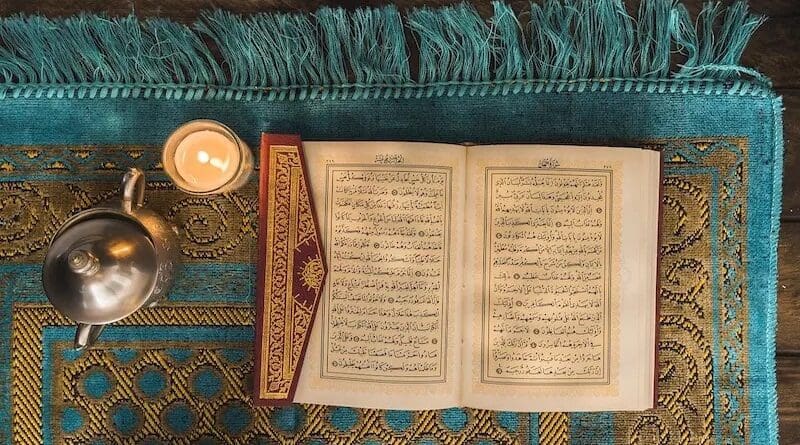
Arabic: The Perfect Vessel For The Quran’s Message – OpEd
Throughout history, the world has witnessed numerous languages, each with its unique characteristics and contributions to human civilization. In the 7th century, languages such as Greek, Latin, Persian, and Hebrew were prominent, yet Arabic stands out as the chosen language for the Quran.
One may wonder why the Quran, the holy book of Islam, was revealed in Arabic, and why Arabic was given preference over other languages that were prominent during the time of its revelation. Even today, with English being one of the most widely spoken languages in the world, it is striking to note that Arabic possesses a unique richness and depth that allows it to convey complex meanings and nuances with unparalleled precision.
The Arabic language’s ability to capture the subtleties of the Quran’s message is a testament to its remarkable expressive power, and it is this very quality that has made Arabic an indispensable part of Islamic theology and culture. In this article, we will examine the unique characteristics of the Arabic language that make it an ideal medium for conveying the Quran’s message, and why its richness and depth continue to inspire and challenge scholars, linguists, and readers to this day. The Arabic language is replete with words that showcase its depth and complexity. Let’s take a closer look at some examples:
Sabr (صبر) is often translated as “patience,” but it embraces a range of meanings, including enduring hardships, maintaining self-control, and persevering in the face of adversity. Sabr is a fundamental concept in Islam, emphasizing the importance of patience in the face of adversity. This word encompasses a range of meanings, from enduring hardships to maintaining self-control. The Quran highlights sabr as a vital virtue for believers, promising rewards for those who practice it.
Ta’bir (تعبر) is typically translated as “expression” or “interpretation,” but it involves conveying emotions, thoughts, and experiences through various forms of expression. Ta’bir refers to the interpretation of dreams, thoughts, or expressions. In Islamic tradition, interpreting dreams is considered a vital skill, with the Prophet Muhammad (peace be upon him) emphasizing its importance.
Hayba (هيبة) is often translated as “awe” or “reverence,” but it conveys a sense of respect, fear, and admiration simultaneously. Hayba describes a feeling of awe, reverence, or veneration, often in the context of spiritual experiences. This word presents the essence of humility and respect, underlining the importance of identifying one’s place in relation to a higher power.
Qalb (قلب) is usually translated as “heart,” but it covers the heart, mind, and soul, reflecting the intricate nature of human consciousness. It is a multifaceted term and in Arabic, the qalb is considered the seat of emotions, thoughts, and spiritual progression.
Ihsan (إحسان) is often translated as “benevolence” or “charity,” but it includes doing good deeds, kindness, and perfection in one’s actions. Ihsan is a concept that embodies excellence, sympathy, and benevolence. In Islam, ihsan is considered a high moral standard, encouraging individuals to strive for perfection in their actions and interactions.
Tawbah (بةتو) is typically translated as “repentance,” but it involves a sense of remorse, seeking forgiveness and signifies repentance, return, or turning back to a righteous path. This concept is central to Islamic theology, emphasizing the importance of acknowledging mistakes and seeking forgiveness.
Shukr (شكر) is often translated as “gratitude,” but it encompasses appreciation, thankfulness, and acknowledging blessings. In Islam, shukr is considered a vital aspect of faith, recognizing the blessings and favors bestowed upon individuals.
Khushu’ (خشوع) is often translated as “humility” or “devotion,” but it involves a state of concentration, focus, and sincerity in one’s relationship with the divine. Khushu’ describes a state of humility, devotion, and concentration, often in the context of prayer or spiritual practices.
Rahmah (رحمة) is usually translated as “mercy” or “compassion,” but it conveys a deep sense of empathy, kindness, and nurturing. Rahmah signifies mercy, compassion, and benevolence, reflecting Allah’s attributes and human virtues.
Jihad (جهاد) is often translated as “struggle” or “striving,” but it encompasses internal and external efforts to uphold one’s faith, promote justice, and resist adversity. Jihad is a complex term that encompasses struggle, striving, and effort. Often misunderstood, jihad refers to the internal and external efforts to uphold one’s faith, promote justice, and resist adversity.
Some of the above-mentioned examples merely scratch the surface of the Quran’s linguistic brilliance, and a deeper dive into its vast vocabulary would unveil countless more treasures. The richness and complexity of the Quran’s language continue to offer a profound wellspring of knowledge and insight that remains unparalleled to this day. As we explore the Quran’s language, we are reminded of the infinite power of words to convey meaning, evoke emotions, and transform lives.
In conclusion, the Arabic language of the Quran is a testament to its timelessness and divine origin. Despite being revealed over 1400 years ago, the Quran’s language remains unparalleled in its comprehensiveness, depth, and richness. Its unique characteristics and multifaceted words continue to inspire and challenge scholars, linguists, and readers to this day. Even modern languages, including international lingua franca like English, cannot be compared to the richness and depth of Arabic as far as the terms used in the Quran are concerned. Indeed, it is more than a miracle that the Quran’s language has stood the test of time, remaining a beacon of wisdom, guidance, and literary excellence that continues to captivate hearts and minds across cultures and generations.

Like what you read?
Please consider supporting Eurasia Review. Thank you for your consideration!
