
Advanced Capabilities Needed To Counter China-Russia Space Weapon Cooperation
Key Takeaways:
- China and Russia are deepening cooperation on counterspace capabilities aimed at degrading, disrupting, or destroying both military satellites and commercial constellations such as SpaceX’s Starlink, including electronic warfare, cyber operations, directed-energy systems, and co-orbital satellites.
- A July 2026 investigative report describes a structured, multi-disciplinary partnership that goes beyond rhetoric, combining Russia’s operational experience in military space and electronic warfare with China’s industrial capacity and investment to develop systems neither could achieve alone.
- The developments underscore the need for the United States and its allies to prioritize resilient, distributed satellite architectures, rapid replacement, enhanced cybersecurity, spectrum protection, and improved space domain awareness rather than relying on a small number of high-value assets.
China and Russia are expanding cooperation on space capabilities to degrade, disrupt or destroy military satellites as well as commercial constellations such as SpaceX’s Starlink.
Beijing and Moscow are sharing expertise, coordinating policies and investing in counterspace options that go beyond traditional anti-satellite (ASAT) missiles. Analysts say those options include electronic warfare systems capable of jamming satellite communications, cyber operations targeting satellite networks and ground infrastructure, directed-energy technologies to interfere with optical sensors, and co-orbital satellites that can approach or inspect other spacecraft.
The regimes’ collaboration spans counterspace operations, integrated air and missile defense, autonomous weapons, armored vehicles and military aviation, according to an investigative report jointly published by The Insider, Der Spiegel and Le Monde in July 2026.
Beijing and Moscow are studying how to counter low Earth orbit constellations such as Starlink, which is critical to Ukraine’s defenses because of the network’s resilient, distributed architecture and its role in battlefield communications and operations. Starlink, for example, has helped Ukraine extend the reach of some of its weapons.
According to the investigation, China and Russia have proposed a three-tier approach that begins with diplomatic and regulatory efforts to limit Starlink’s expansion, progresses to coordinated electronic warfare and spectrum denial to prevent an adversary from gathering information through radar, electronic intelligence systems and other sensors, and ultimately envisions cyber operations and physical attacks against the satellite constellation.
Although both countries purportedly emphasize peaceful space exploration policies, the investigative report includes leaked documents that “expose China’s professed neutrality in Russia’s ongoing war of conquest in Ukraine as a fiction. Instead, they show a partnership that has moved well beyond shared rhetoric into a structured, multi-disciplinary program to build [space] weapons neither country could develop alone — reaching into the most sensitive strategic systems.”
Russia brings decades of operational experience in military space systems and electronic warfare, while China contributes rapidly expanding industrial capacity, advanced manufacturing and significant investments in space technologies to the deepening partnership, the report said.
For the United States and its Allies and Partners, these developments reinforce the importance of resilience rather than reliance on a small number of high-value satellites. Distributed constellations, rapid satellite replacement, enhanced cybersecurity, spectrum protection and improved space domain awareness are becoming key pillars of deterrence.
“We need counterspace capability to deter a space conflict, and fight and win if necessary,” U.S. Space Force Brig. Gen. Casey M. Beard, deputy commander of U.S. Space Force Combat Forces Command, said at an April 2026 roundtable hosted by the Space Foundation in Colorado. “We don’t want to use them [space weapons], but if we do, we will succeed. We will not fail.”
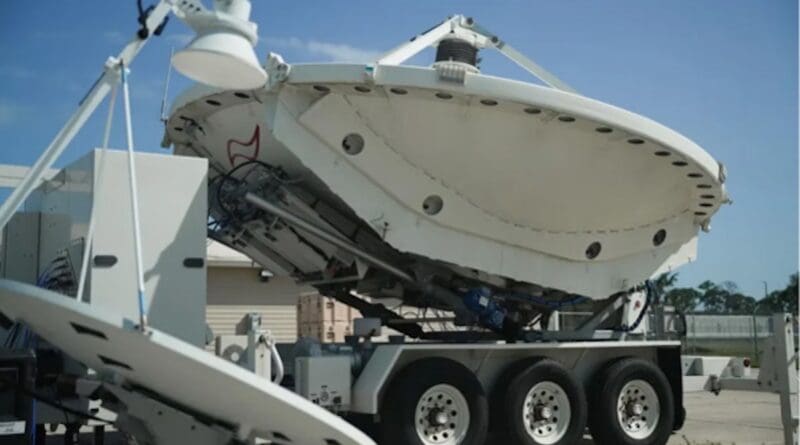
The U.S. is developing technologies to counter China-Russia collaboration on offensive space weapons. The U.S. Space Force, for example, announced its June 2026 acquisition of a ground-based satellite jammer from L3Harris Technologies. The Meadowlands system can target and disable adversary satellites with electromagnetic radiation. During the Ukraine conflict, Russian forces have attempted to jam Starlink and co-opt the network, a tactic that was thwarted in February 2026 by SpaceX officials curtailing unauthorized use.
Public-private partnerships will remain essential for Allies and Partners to defend space assets and interests, as commercial providers increasingly deliver capabilities. Such partnerships will help counter the shift from the isolated threat of ASAT weapons toward a comprehensive adversary arsenal involving cyber operations, electronic warfare, orbital maneuver and commercial infrastructure.
As China and Russia deepen cooperation in these areas, the U.S. and its Allies and Partners will face growing challenges that require next-generation countermeasures to protect critical space assets and maintain stability in an increasingly contested and crowded orbital environment.
“We will gain and maintain space superiority for long-term peace and prosperity for ourselves and our allies,” Beard said.
- This article was published by Indo-Pacific Defense FORUM

Like what you read?
Please consider supporting Eurasia Review. Thank you for your consideration!
