
SCO Summit: Emergence Of A New Block And Pakistan’s Role – OpEd
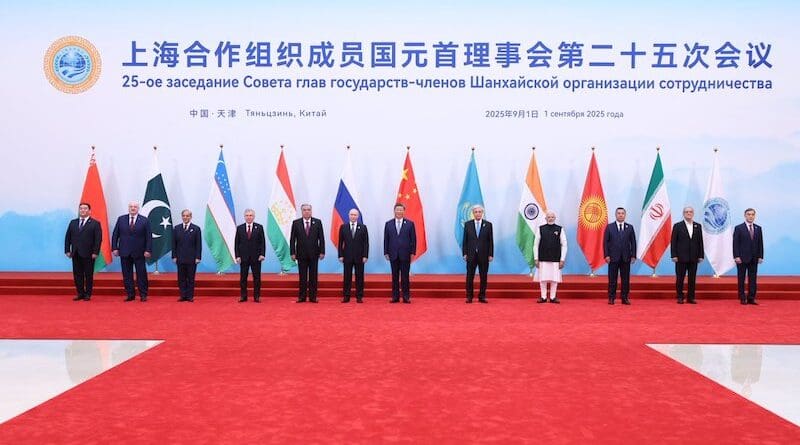
SCO – Shanghai Cooperation Organization – founded in 2001 by China, Russia, and four Central Asian states including Kazakhstan, Kyrgyzstan, Tajikistan, and Uzbekistan, aimed to promote regional security, economic cooperation, and political stability. Currently, SCO held a summit in Tianjin, China, from August 31 to September 01, 2025, bringing together leaders from 21 countries, including China, Russia, India, Pakistan, Iran and Türkiye, along with representatives from international organizations. The summit focused on regional security, economic cooperation and global governance, highlighting the bloc’s growing geopolitical significance.
Based on the latest updates, the summit also underscored the emergence of a new bloc, which has become a major concern for the United States and the Western powers. Statements from intellectuals, generals, and even U.S. President Trump who named leaders supporting this bloc in a tweet reflect the unease. This development signals a strategic shift that could have profound implications over the next 10–20 years.
Originally established as a security-focused forum, SCO now appears to align partially with BRICS objectives, which may be shared or divided in the future. Decades ago, the US built India as a counterweight to China, linking Pakistan–India relations to US interests and engaging Pakistan through Afghanistan. While India has grown significantly, it now faces trade tensions with the U.S., including tariffs and non-tariff disputes and oil import from Russia, which even led Trump to postpone his visit. This tension largely stems from the dominance of the U.S. dollar, as replacing it with local currencies could reduce U.S. global leverage impacting 43% of the world’s population represented at the SCO meeting, which also accounts for a large share of global GDP.
Notably, Indian Prime Minister Modi attended the summit alongside Chinese President Xi Jinping, Pakistan’s Prime Minister Shehbaz Sharif, and Pakistan’s Army Chief, the same Army Chief previously invited by Trump to a Washington lunch, which Modi had declined. Modi’s presence marked a rare acknowledgment of Pakistan’s role at such a forum. Following the Sharm el-Sheikh declaration, which highlighted Indian terrorism in Balochistan during the tenure of Manmohan Singh and Pakistani PM Yousaf Raza Gilani, Modi’s participation further documented recent incidents such as the Khuzdar attack and the Jafar Express attack in Pakistan.
Prime Minister Shehbaz Sharif also addressed the 2nd Pakistan-China B2B Investment Conference in Beijing on 4 September 2025, emphasizing enhanced economic cooperation, investment opportunities, and strengthening bilateral trade ties between Pakistan and China.
The recent SCO Summit and Pakistan-China B2B Investment Conference highlight Pakistan’s growing role regionally and globally. Through active engagement in multilateral forums, strategic diplomacy, and economic initiatives, Pakistan demonstrates its commitment to regional stability, security, and sustainable development. The country must carefully balance its international relations, leveraging strengths while maintaining strategic optics, sustaining strong China ties without alienating the U.S. During his visit, Prime Minister Shehbaz Sharif, with Pakistan’s Army Chief, reinforced CPEC and business ties with China while signalling independent diplomacy through engagement with Russia, balancing U.S. interests.

Like what you read?
Please consider supporting Eurasia Review. Thank you for your consideration!
