
Decentralising Power: The Case For Strong Local Governments In Balochistan – OpEd
In a province long burdened by centralised governance, administrative inertia, and socio-political alienation, Senator Saeed Ahmed Hashmi’s recent call for empowered and organised local governments offers a pragmatic and much-needed roadmap for peace and progress in Balochistan. His argument is not merely political rhetoric—it reflects a structural truth about Pakistan’s governance: sustainable stability begins at the grassroots.
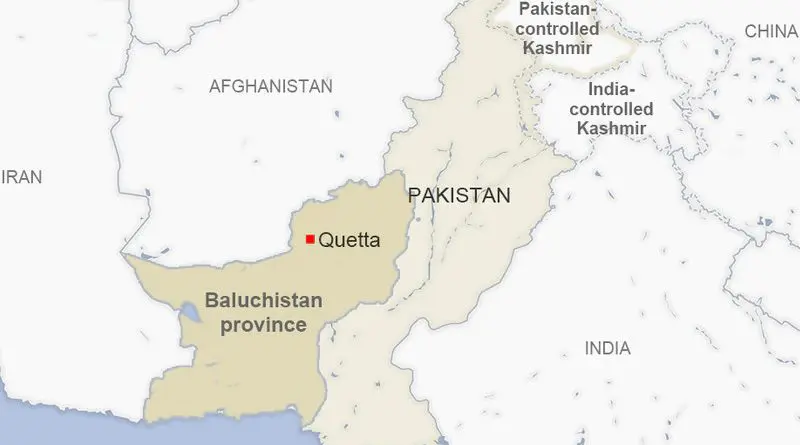
For decades, Balochistan’s governance has revolved around a single power hub—the provincial capital, Quetta—leaving 37 districts dependent on one central authority for every decision, development project, and security measure. This imbalance has created inefficiency, alienation, and mistrust between the people and the state. Hashmi’s call for 37 functioning local governments—one in each district—is therefore not just administrative reform; it is a call for democratic revival and social healing.
Senator Hashmi’s emphasis on Articles 32 and 140A of Pakistan’s Constitution is both timely and constitutionally sound. Article 32 ensures the promotion of local government institutions, while Article 140A mandates that “each province shall establish a local government system and devolve political, administrative and financial responsibility and authority to the elected representatives of the local governments.”
Yet, in practice, these provisions have remained largely symbolic. Provincial governments across Pakistan, including Balochistan, have hesitated to devolve real power to local representatives, fearing loss of political control. The result is a perpetual cycle of inefficiency—development bottlenecks, weak service delivery, and alienated communities. Hashmi’s demand is therefore not revolutionary—it is restorative, seeking to realign Balochistan’s governance with constitutional intent. Without empowering local governments, democracy remains incomplete, and governance remains inaccessible to the people it is meant to serve.
In Balochistan, governance and security are inseparable. Weak administrative presence in remote districts has allowed poverty, resentment, and militancy to fester. Where the state is absent, non-state actors fill the vacuum—whether in the form of tribal intermediaries, insurgent groups, or criminal networks.
Functional local governments can reverse this equation. By bringing authority closer to the people, they bridge the gap between the state and the citizen. District councils, municipal bodies, and union councils can address local grievances before they escalate into larger conflicts. Senator Hashmi’s argument aligns with the reality that peace in Balochistan is not merely a military or political challenge—it is a governance challenge. When citizens can engage directly with elected representatives in their own communities, they feel ownership in governance, which naturally reduces alienation and conflict.
International experience supports this model. From the community boards in New York City to the borough councils in London and the municipal systems in Rome, effective governance thrives where local authorities have autonomy in managing infrastructure, education, sanitation, and policing. The same principle can apply to Balochistan’s unique context, where local leadership is deeply connected to tribal and communal structures.
Senator Hashmi’s statement that “setting up 37 functioning governments will ease the pressure on the single administration centered on Zarghoon Road” encapsulates a critical reality. For too long, every matter—from school appointments in Khuzdar to road maintenance in Gwadar—has been funnelled through Quetta’s bureaucratic maze. This over-centralization not only delays service delivery but also distances governance from local realities. District-specific challenges—such as water scarcity in Awaran, infrastructure deficits in Kharan, or health crises in Dera Bugti—require localized responses, not one-size-fits-all solutions dictated from the provincial capital.
Decentralization would also enhance administrative accountability. Local governments can respond faster to crises, allocate resources more effectively, and engage directly with citizens. This would free up the provincial administration to focus on broader policy formulation and strategic planning, rather than micro-managing district affairs.
Senator Hashmi’s caution against “new experiments” is particularly relevant. Balochistan has seen too many policy resets and abrupt changes, often influenced by shifting political alliances rather than long-term strategy. Governance must be built on institutional continuity, not political expediency. The success of Pakistan’s local governance model in the 2000s—when empowered district governments improved public service delivery—offers a template for revival. Building on past successes, rather than discarding them for short-term political optics, is the pragmatic way forward.
Balochistan’s challenges—economic disparity, security concerns, and political alienation—cannot be solved through centralization. They demand a bottom-up approach, one that trusts the people with their own governance. Senator Saeed Ahmed Hashmi’s vision of 37 empowered local governments represents not just administrative reform but a democratic awakening. Strong local governments are not a threat to provincial authority—they are its foundation. When power flows from the people upward, rather than from the center downward, governance becomes more effective, peace more sustainable, and democracy more meaningful. For Balochistan, decentralization is not merely a governance reform—it is the path to stability, inclusion, and lasting peace.

Like what you read?
Please consider supporting Eurasia Review. Thank you for your consideration!
