
From Sanctuary To Strikes: Unraveling The ISKP-TTP Strategy And Global Security Threats – OpEd
Over the past three decades, jihadist groups have repeatedly leveraged safe havens beyond their home territories to plan external operations, recruit, and rebuild after local defeats. Today, two organizations the Islamic State Khorasan Province (ISKP) and the Tehreek-e-Taliban Pakistan (TTP) have turned post-2021 Afghanistan into a permissive environment enabling sanctuary, networking, and external plotting.
Unlike earlier insurgent safe havens that allowed groups to consolidate territorial control, Afghanistan’s ungoverned spaces provide mobility and operational flexibility for militants whose objectives increasingly extend beyond local battlefields. Analysts and regional security practitioners warn that when extrajudicial spaces persist, militant groups adapt pragmatically-sharing resources, realigning allegiances, and calibrating their propaganda and attack strategies to amplify impact. Today, the ISKP–TTP dynamic in Afghanistan reflects such adaptation, with both organizations exploiting the absence of effective enforcement to sustain themselves, develop external strike capabilities, and pose a growing threat to neighboring states.
The Safe Haven Problem: Afghanistan’s Enforcement Gap
Recent United Nations sanctions monitoring assessments emphasize that the Afghan Taliban regime has not effectively dismantled or degraded operational networks of groups like ISKP and TTP. Enforcement, when it occurs, is sporadic, opaque, and driven by tactical necessity rather than a strategic counterterrorism policy. This allowed for both fragmentation and cooperation among the militants in the difficult terrain of Afghanistan.
Counter-TTP operations in Pakistan led to a large number of TTP militants moving eastwards into the territory of Afghanistan, some surrendered to local authorities, while others mingled with local groups. Others moved into areas under de facto militant control. The Taliban, on the one hand, has apprehended a number of insurgents, while on the other hand, interconnected networks of extremists and poor reporting systems making it possible for escaped or released militants to merge with the TTP. The latest evaluations suggest that the defeated or escaping ISKP militants are being accommodated in the TTP networks. It highlights that the increasing interaction between the terrorist organizations Afghan soil. ISKP and TTP share both the ideologies and the operational interests, thus making it possible for the ISKP resurgent to survive, reconstitute, and maintain relevance under the TTP umbrella.
ISKP-TTP Convergence: Operational and Ideological Synergies
The convergence between ISKP and TTP elements in Afghanistan represents not only ideological but also practical operational collaboration. The senior TTP leaders do not engage in direct conflict with ISKP terrorists but instead assert that their military effort is directed towards Pakistan and not towards ISKP. This de facto merger of personnel and infrastructure creates hybridized safe havens, where militants can regroup, network, and plan external attacks with relative security. Consequently, Afghanistan remains a territory that allows several terrorist organizations not only to operate but also to cooperate thus strengthening its position as a transit point for global militant movement.
Media Strategies of ISKP and TTP
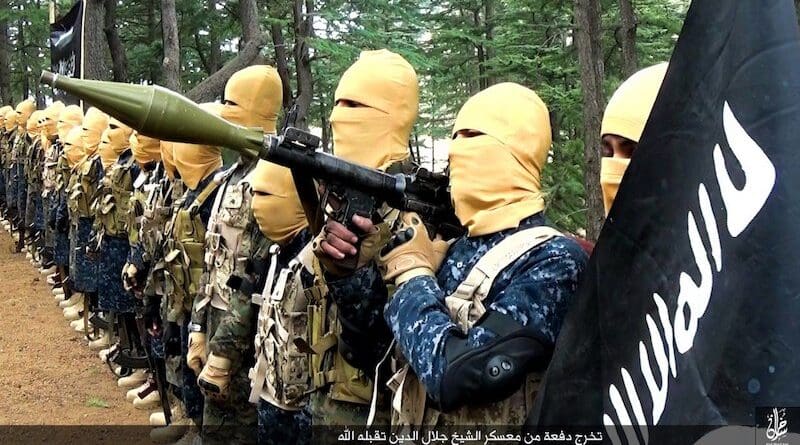
Through the al-Azaim Media Foundation, ISKP has managed to create a highly advanced propaganda network that spans across different countries, which is producing content in Arabic, English, Farsi, Pashto, Urdu, Tajik and Uzbek. The media operations of ISKP have several purposes: to focus on the ideological aspect of its presence in Afghanistan, to adapt the narratives to the relevant geopolitical situations, and to generate fear and recruit foreign fighters by making the claims of attacks louder. ISKP with its glamorous multimedia releases and multilingual messaging is making people think of its power that is much more than the real operational capabilities.
TTP similarly operates a structured media apparatus to propagate ideology, glorify attacks, and recruit supporters. In addition to its main media branch, Umar Media, which distributes its content through magazines, videos, podcasts, radio, Telegram, WhatsApp, and social media platforms, the use of encrypted websites aids in avoiding take downs. This network enables TTP to amplify anti-state narratives, mobilize fighters, and project operational success across South Asia. Collectively, these media strategies not only complement physical operations but also extend the groups’ perceived reach, drawing sympathizers and decentralized affiliates willing to act on their behalf.
Operational Spillover: From Afghanistan to Neighboring States
Despite Taliban assurances that Afghan territory will not support external attacks, open-source incident data tells a different story. Analyses by institutions such as The Washington Institute indicate a marked rise in ISKP-linked activity targeting neighboring countries, including cross-border attacks into Pakistan-assassinations, bombings, and coordinated cell strikes and rocket or indirect fire incidents against Tajikistan and Uzbekistan near poorly monitored border areas. The collaboration between ISKP and TTP increases the danger significantly: TTP mainly targets Pakistan, but its sheltering of ISKP operatives opens up the possibility for external plotters to use TTP’s logistics, safe houses, and recruitment networks, thus mixing the local insurgency and the global jihad.
Implications for Regional Security and Policy Responses
Erosion of State Control and Regional Stability: Afghanistan’s permissive environment undermines regional security. Neighboring states must strengthen border security, intelligence cooperation, and cross-border patrols to mitigate spillover. Ungoverned militant zones threaten fragile states already grappling with governance challenges.
Intelligence and Counterterrorism Coordination: Shared threats necessitate enhanced intelligence sharing among Pakistan, Central Asian republics, and partners such as the United States and EU member states. Bilateral and multilateral frameworks must prioritize real-time fusion of signals, human intelligence, and cross-border tracking mechanisms to preempt external plots.
The Media Dimension of Extremism: Counter-narratives must complement kinetic responses. Regional policymakers and civil society actors need to undermine ISKP’s and TTP’s rhetorical reach by promoting alternative narratives that delegitimize violence, expose misinformation, and preempt online radicalization.
Addressing Radicalization Drivers: Socioeconomic fragility, disenfranchisement, and displacement continue to drive violent extremism. Policies promoting inclusion, education, and employment, particularly among youth, are critical to reducing recruitment pools exploited by extremist media.
Conclusion: From Safe Havens to Strategic Threats
Afghanistan has evolved from a territorial backdrop to a strategic operating environment for militant networking, survival, and external plotting. The convergence of ISKP and TTP within this permissive context amplifies the threat of cross-border and global attacks. Their reliance on ungoverned spaces, combined with sophisticated media outreach and operational opportunism, underscores the limitations of current counterterrorism approaches.
Regional and global actors must recognize that safe havens are not relics of the past-they are dynamic incubators of transnational threats. Addressing these challenges requires intelligence and military coordination, strategic policymaking, governance reinforcement, socioeconomic resilience, and counter-narrative initiatives. Only through such comprehensive frameworks can Afghanistan’s ungoverned spaces cease to be launching pads for terror and instead become arenas of stability and cooperation.

Like what you read?
Please consider supporting Eurasia Review. Thank you for your consideration!
