
From Sialkot To Stadiums Worldwide – OpEd
Made in Pakistan is not just a brand, but it already seems to be a competitive advantage in the global sport equipment market. Sportswear manufactured in the country over the years were lying in the side-lines of the global supply chains straining to do the heavy lifting as larger brands forced their way through to the spotlight. The figures show that the silent period is pass. The sports goods industry of Pakistan is flying at the rate of a 10-figure growth rate and in such a way that speaks volumes bigger where the economy still had a reason to shine: genius hands, uniformity and the ability to cultivate the faith in the purchasers of the products with a high degree of demands.
The headline comprises of the most recent export values. According to the Pakistan Bureau of statistics, the exports of sports goods have gone up by 15.86 percent in first 5 months of FY 2025 26. The export earnings have increased to 179.33 million dollars against 154.79 million dollars in the month of July and November 2025 26 respectively compared to the same months of the previous year. This is a good sign that Pakistan can perform well in large volumes without losing the magic that makes these products worth buying because the renewed demand and ever more confident on Pakistan as a supplier.
This is critical because the sports goods industry is at an opportune stage of industry and self. It is factory, but not the one that can and does depend on cheap labour. It also entails design, finishing, testing and high-quality check. That is why foreign customer will not stay as long as the producer continues to be consistent with standards. This percentage of export growth is an excellent indicator that the Pakistani firms are not only gaining the market but retaining the customers. The reality of vote of confidence in the trade is repeat business.
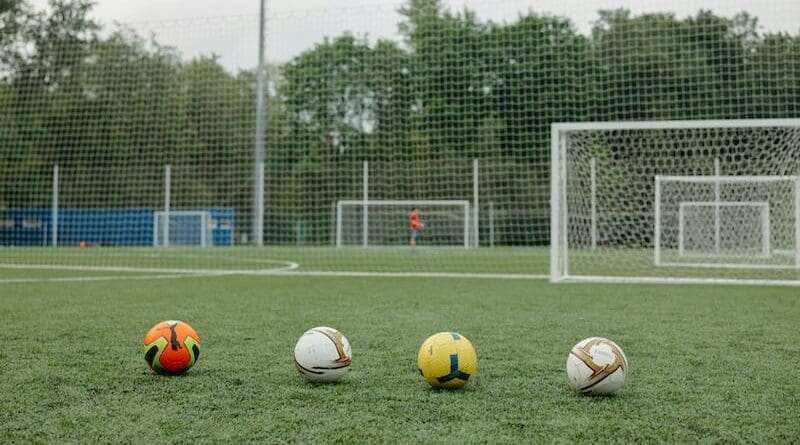
Where the system works, football exports, in particular, show how good could be done by Pakistan. Football export revenue improved by a margin of 23.64 percent to 113.64 million dollars. It is an excellent starting point and this builds up brand image of Pakistan as a major football producing hub. The world is not buying footballs out of passions. It buys them because they labour, they feel and they can take the pressure. Once the demand on the international level is increased, it is a sign that the workmanship and quality control are on par with the top brands and professional markets.
There is something deeper in the football story. The winning point of Pakistan lies on the availability of skilled labour and cluster model where suppliers, stitchers, material suppliers and finishers are closely situated to one another to overcome issues within a limited period of time. This kind of concentration of know how is hard to copy within one night. There is no way to make a culture of craft, training, and pride that has been passed down in workshops over decades in other countries, and make it on the spot. That protection of that skill base can be offered to Pakistan and it will be the capability of modernizing that as well and this will be permanent.
The more positive part is that it is not only the expansion of footballs. The other sports goods export grown 15.79 percent to 41.29 million dollars. It applies since it is an industry that is dependent on one hero product, and is thus vulnerable. A broader basket will suggest that manufacturers are training themselves in selling more lines, serving more niches and responding to more buyer requirements. Diversity is not some nice addition in the world where demand can be altered with ease but risk management.
The only weakness of the data is the use of gloves. Exports of gloves fell down to 24.41 million dollars by 10.34 percent. Others will learn that, and they are to be learnt as such. This might be due to the heightened competition, changing tastes of consumers, or pricing, or lack of product development. However, a strength of performance is strong. The number of lines which grows month by month is not what constitutes a sound export industry. It is one that strays into one genre and still makes some headway, and then acquires enough to return.
It has an additional layer of trust with regard to monthly performance. Export of sports goods went up by 7.80 percent in November 2025 to 31.65 million dollars against 29.36 million dollars in November 2024. This kind of increase is significant, in the sense that it is characteristics of a slow rise, as opposed to a spike. Reliability is what causes buyers to take up long contracts and make more sourcing to a supplier which they trust in.
So, what then must Pakistan make of this time. First of all, quality is not the issue of the price but the primary national selling point. The world will not bargain cheap with reliability especially when the product finds its way into professional sports, schools and the mega stores of the retail sector. Second, invest into testing labs, material development, and compliance software that would help the smaller companies make them internationally compliant. Third, energy and logistics ought to cease being a daily struggle to exporters. Trust is easily lost than gained in the event of a missed delivery schedule as a result of unnecessary friction. And finally, train more staff members, not necessarily to sew, but to work machinery, inspect products and workflows. It will be a blend of robotization and art in the future of sports goods and those nations who integrate the two will win.

Like what you read?
Please consider supporting Eurasia Review. Thank you for your consideration!
