
Violation of Afghan Refugees’ Rights in Pakistan: A Myth – OpEd
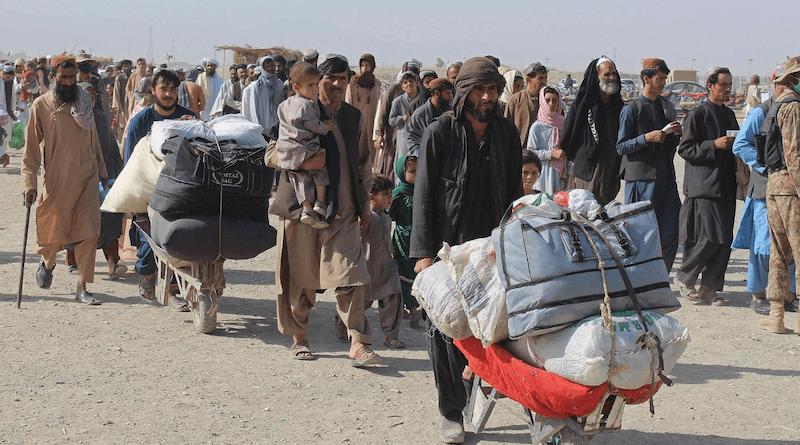
The country’s recent deportation policy of illegal migrants has sparked an intense public discussion in which Pakistan is deemed by many to have violated Afghan refugee rights. I validate Pakistan’s immigrations control methods to be to the standard of the international legal standards and worldwide accepted practices. As a political myth of rights violations, the story only exists because Pakistan uses the legal grounds of protection of its national security in conjunction with economic ones and law enforcement practices. This analysis will analyze how Pakistan plays double standard to the United States and other international countries when it comes to rationalizing its decisions.
Authority over determining foreign nationals that can enter and cross state border is solely in every state and Pakistan does this through immigration laws. Although they may be comfortable there in Pakistan, it is a clear right of the state to remove these illegal immigrants as the security risks and the economic problems keep on rising. Pakistan has unendingly supported by taking in more than 4 million Afghan refugees with its very little financial means. Bruyel hostilities toward illegal immigrants have generated multiple serious consequences for the state through economic pressure, security threats and societal tensions.
The government of Pakistan follows international standards in its policy development. The legal responsibility to accept illegal immigrants forever does not exist for any nation thus various countries including America enforce aggressive immigration protocols for their security interests. Through the Trump regime more than a thousand people received deportation orders based on national security reasons. Even though the West failed to object to similar legislation in other countries Pakistan receives excessive international criticism for implementing the same policy. The widespread acceptance of United States immigration policies by worldwide rights activists and Afghan influencers creates a clear double standard which reveals their unjustified criticism of Pakistani immigration practices.
Afghan influencers together with the Pashtun Tahafuz Movement (PTM) and some political factions utilize the situation to increase panic levels and carry out their set objectives. The actors use their platforms to reshape Pakistan’s legislation into a human rights violation even though the country continues to offer sanctuary. They refrain from condemning U.S. actions that led thousands of Afghan asylum seekers to become stranded while maintaining verbal attacks against Pakistan’s immigration control. It is inconsistent because it serves the political interests of weakening Pakistan’s ability to manage national security and economic targets.
This issue has been used in turn by the Afghan administration to deny scrutiny of their operational shortcomings. It is the Afghan government who fails to resolve the fundamental problem that makes people leave their country, and holds Pakistan responsible for its legal sovereignty. In this way, blame tactics alter the actual circumstances and damage the teamwork that should be at the core of solving this problem.
As Pakistan does not support the 1951 UN Refugee Convention, the country has no legal requirement to provide refugee accommodation or take legislative action. Afghan nationals are allowed to live in Pakistan under voluntary assistance not as per the undertakings of the international agreements. Pakistan granted its land and resources to Afghan refugees for educational and medical support during a 40-year period. The continued support by Pakistan faces severe limitations because of its existing economic and security problems.
Thousands of asylum seekers received arbitrary registration from The United Nations High Commissioner for Refugees (UNHCR) without any collaboration with Pakistani government institutions. Independence of Pakistan’s national sovereignty faces harm because international authorities implement immigration obstacles that hinder Pakistan’s policy operations. The U.S. and UK alongside other international actors have complicated the Illegal Foreigners’ Repatriation Plan (IFRP) through massive exemption lists which resulted in lengthy delays and procedural difficulties.
The security worries of Pakistan have valid bases. The combination of terrorist threats and organized crime groups together with economic instability has worsened due to the existence of undocumented immigrants throughout Pakistan. Studies show the magnitude of illegal immigration based on new statistics:
- The law enforcement authorities of Karachi documented 225 arrests of street criminals who were Afghans during January 2025.
- Security forces recovered PKR 35 million stolen money from robbers with Afghan citizenship in January 2025.
- Crime statistics in Peshawar rose by 30 percent during November 2024 while Afghan immigrants made up 60 percent of all suspected street criminals.
- A Peshawar law enforcement operation resulted in the arrest of 352 Afghan criminal suspects in November 2024.
- A militant participating in a January 2025 Zhob combat proved to be an Afghan national.
The public along with national security needs more aggressive measures to guarantee security and protection. The Pakistan government performs these necessary measures to maintain public security and enforce law enforcement rather than demonstrating hostility toward any group.
Human rights organizations globally react rapidly to criticize Pakistan yet they overlook the overall circumstances. These organizations fail to understand Pakistan’s economic and security difficulties so they pass the entire responsibility onto the government of Pakistan. The international community needs to provide refuge for Afghan refugees since their protection should not rely solely on Pakistani responsibility.
The Pakistani society bears a legitimate burden from the way they host Afghan refugees and their concerns about these rights violations form a real basis that transcends myths. The Pakistani government follows proper policies that protect illegal immigrants within local and international standards. The nation experiences excessive unfavorable attention because politicians exploit the occasion for their own benefits and society applies different standards while simultaneously failing to grasp the real difficulties Pakistan faces.
The leadership of Pakistan shows continuous support toward Afghan refugees through generous housing since the 1980s despite reaching its accommodation limits. National security safeguards together with economic requirements impose tough decisions on Pakistan as the country works to defend its citizens while supporting stability. International organizations should join Pakistan in tackling migration source issues and equally should help Pakistan support refugees because targeting the country is unjust. A fair and permanent answer must be achieved before reaching this point.

Like what you read?
Please consider supporting Eurasia Review. Thank you for your consideration!
