
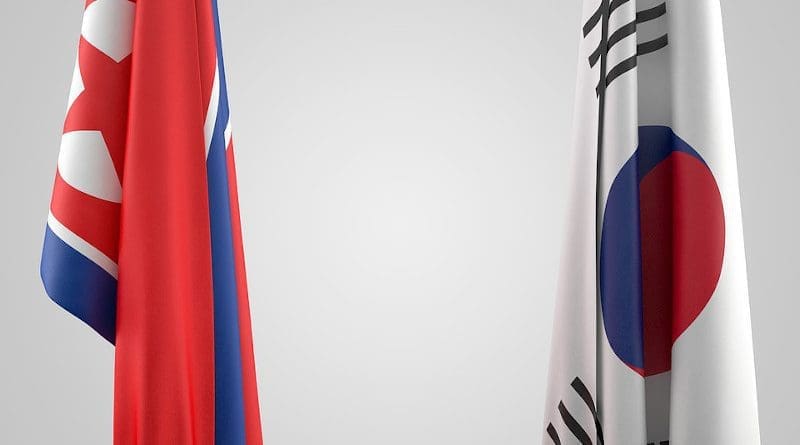
Beyond Nukes: Why Korean Reunification Is The Key To Lasting Peace – OpEd
The situation on the Korean Peninsula is frequently viewed through the lens of North Korea’s ambitions. However, the core issue is not the existence of North Korea’s nuclear weapons but rather the ongoing division of the Peninsula itself. The prolonged separation of North and South Korea, driven by the strategic interests of major world powers, contributes to regional instability. Instead of focusing solely on denuclearization, reunification should be seen as the true path to lasting peace.
The external forces—particularly the United States, Russia, China, and Japan—have entrenched the division of the Korean Peninsula, turning it into a geopolitical chessboard. If these powers withdraw and allow for self-determined dialogue, Korea can work towards eliminating the dilemmas that sustain military tensions and move closer to reunification. Indonesia’s neutral diplomatic stance could leverage frameworks for negotiations, drawing on models like Cambodia or the South China Sea. With shifting global dynamics in 2025, particularly North Korea’s military ties with Russia and the evolving U.S. policy towards North Korea, this is a crucial moment for reframing the issue of nuclear power beyond mere disarmament and towards the goal of reunification.
The division of Korea stems from boundaries established by Cold War external powers, which continue to shape the region’s security landscape. The 1953 Korean Armistice ended active hostilities, but the Peninsula remains divided, with the U.S. supporting South Korea and China backing North Korea. This external intervention has institutionalized separation and fostered ongoing hostility. The presence of nearly 28,500 U.S. troops in South Korea is a major source of friction, as North Korea views it as a direct threat to its sovereignty. Meanwhile, China and Russia provide diplomatic and military support to Pyongyang to counterbalance U.S. influence. This continual involvement of external powers hinders genuine intra-Korean reconciliation. Rather than reducing tensions, these interventions sustain a fragile armistice that risks escalating into renewed conflict.
In 2025, North Korea doubled down on its military expansion, openly defying global pressure. Kim Jong-un has firmly integrated nuclear weapons into the country’s strategy, signaling a permanent commitment to its arsenal. North Korea has strengthened its alliance with Russia by supplying arms for the Ukraine conflict while potentially receiving advanced military technology in return. These developments mark a strategic shift in Pyongyang’s approach, viewing its nuclear program not only as a deterrent but also as a tool for diplomatic leverage. Meanwhile, the U.S. and South Korea continue their joint military exercises, which exacerbate perceptions of threat from Pyongyang. The absence of a long-term political solution ensures that hostilities will persist, highlighting that denuclearization alone is an inadequate goal. A true resolution must address the core issue: the division of Korea itself.
U.S. policy towards North Korea has subtly shifted from a focus on absolute denuclearization to managing threats as we move toward 2025. Key officials, including Secretary of State Marco Rubio and Director of National Intelligence Tulsi Gabbard, recognize that expecting North Korea to disarm is unrealistic. Their strategy now emphasizes risk mitigation rather than the dismantling of North Korea’s nuclear arsenal. This pragmatic shift follows past negotiations, such as the failed 2019 Hanoi Summit, which showed that Pyongyang views its nuclear weapons as essential for regime survival. While this approach may help avoid immediate military confrontation, it does little to address the long-term instability of the peninsula. If the U.S. accepts that North Korea will not disarm, diplomatic efforts should shift toward reunification as a sustainable solution. A unified Korea would eliminate the need for nuclear deterrence, thereby removing the rationale behind North Korea’s weapons program.
One of the most alarming trends in North Korea in 2025 is its military partnership with Russia. Reports confirm that Pyongyang has provided artillery systems and missile support to Moscow’s war in Ukraine. In return, North Korea could receive crucial military technology, including advanced missile guidance systems and satellite capabilities. This alliance sets a dangerous precedent, reinforcing North Korea’s strategic position while undermining international sanctions. Furthermore, the implications of this partnership extend regionally, as an emboldened North Korea may act more aggressively toward South Korea and Japan. China’s stance remains ambiguous; while it does not fully endorse North Korea, Beijing benefits from Pyongyang’s role as a buffer state against the U.S. military presence in Asia. The interests of these powers continue to obstruct peace, demonstrating how external actors sustain division rather than resolve it.
Dialogue remains essential for de-escalation, but should it aim for reunification or prioritize short-term military de-escalation? Currently, diplomatic efforts focus primarily on arms control, sidelining discussions of reunification as impractical. However, history shows that divided nations can reunify through strategic diplomacy. For example, Germany’s peaceful unification in 1990 offers valuable lessons, as does Indonesia’s neutrality, which could introduce diplomatic frameworks like the Cambodia Model, where a multi-party agreement facilitated reconciliation, or the South China Sea Model, which emphasizes multilateral negotiations and conflict management. ASEAN’s history of conflict positions it as a credible mediator in fostering dialogue between the two Koreas without the interference of external military powers. By advocating for reunification as a viable solution, diplomacy can move beyond the current cycle of threats and military buildups.
However, significant challenges remain, and the major powers are unlikely to achieve their goals easily. The presence of the U.S. in South Korea is essential for countering China’s influence in the region, while China and Russia continue to use North Korea as a strategic counterbalance. Japan, wary of North Korea’s missile capabilities, strongly opposes geopolitical shifts that could compromise its security. Within Korea, reunification itself faces domestic challenges. South Korea’s younger generation is increasingly indifferent to or even opposed to reunification, viewing North Korea as an entirely separate entity with little economic compatibility. Meanwhile, the North Korean regime fears that a unified state would likely lead to the dissolution of its ruling elite. Additionally, the economic disparities between the two Koreas complicate integration, as South Korea would bear a significant financial burden in the event of reunification.
Despite the challenges of reunification, a long-term path to peace still exists. A divided Korea perpetuates dilemmas related to security tensions, military conflicts, geopolitical strife, and instability. As long as external forces continue to manipulate the peninsula, the Korean people will remain hostages to great power rivalries. Instead of solely focusing on containing North Korea’s capabilities, global recognition should support Korean-led reunification efforts as the true path to stability. Through Indonesia, ASEAN can play a critical role in introducing a framework for peace and encouraging reconciliation.
While reunification will not happen overnight, it must be prioritized as the ultimate diplomatic goal rather than a sidelined aspiration. If the international community genuinely seeks a peaceful resolution for the Korean Peninsula, the conversation must shift from denuclearization to reunification. Only then can the region move beyond perpetual conflict towards lasting peace.
The opinions expressed in this article are the author’s own.
References
- Smith, Sheila Miyoshi. Korea’s Divided Future: Geopolitics, Reunification, and the Global Stakes. Oxford University Press, 2023.
- Kim, Sung-han. Beyond the Armistice: Rethinking Korean Reunification in a Changing World. Cambridge University Press, 2023.
- Choi, Min-seok. Nuclear Shadows: North Korea, Global Powers, and the Unfinished Korean War. Columbia University Press, 2023.

Like what you read?
Please consider supporting Eurasia Review. Thank you for your consideration!
