
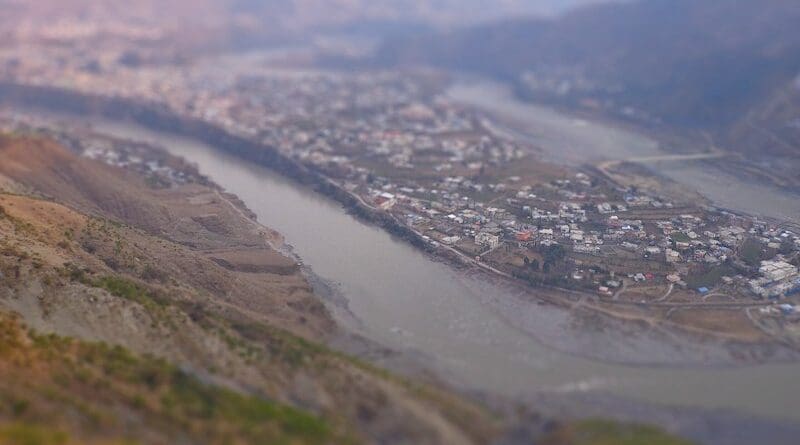
Who Really Owns The Waters Of Shared Rivers – OpEd
Key Takeaways:
- The Indus Waters Treaty creates binding legal rights and obligations for both India and Pakistan; it cannot be unilaterally put “in abeyance” by one side.
- Under international water law, upstream geographic advantage does not equal absolute sovereignty — use of shared rivers is limited by duties of equitable utilisation, cooperation, notification and no significant harm.
- Withholding hydrological data and suspending treaty mechanisms turns water into a tool of coercion, sets a dangerous global precedent, and undermines the rules-based order.
A river does not automatically turn into the sovereign property of a state just because it happens to enter that state’s territory first, nope. Geography might explain physical reach, yet international law puts limits on how that reach can be used, or claimed. This fine distinction sits right in the middle of the present quarrel around the Indus Waters Treaty, which is, in practice, one of the longest lasting transboundary water agreements anywhere.
The Treaty wasn’t really made as something like political generosity, from one state to another, i mean it was framed differently. It set out binding legal rights and obligations for both India and Pakistan, divvied up the waters of the Indus river system, created institutions meant for cooperation, and it also put in place procedures for sorting out technical differences and legal disputes. The fact that it has endured through wars, crises, and a long stretch of political hostility has shown—pretty clearly—that essential natural resources can stay protected from the bigger fight.
India’s call in April 2025 to put the Treaty “in abeyance” stirred up this whole idea. But the Treaty itself doesn’t contain a real mechanism, where one side may unilaterally pause everything just because the political relations have gone downhill. So Pakistan’s view is rather direct: a binding agreement can’t just get neutralized by a political statement. International treaties run on law, not on the short-lived preferences of governments.
The legal problem is bigger than the idea, or even the phrase “abeyance”. The real question is if an upstream state can take geographic advantage and turn it into strategic leverage, quietly or otherwise. Under international watercourse law, the notion of absolute territorial sovereignty over shared rivers gets rejected. An upstream state may use the waters that travel through its own territory, yet that use is limited by duties tied to equitable and reasonable utilisation, plus cooperation, prior notification, and the prevention of significant harm to other riparian states.
These principles exist because shared rivers create an interdependence you just can’t shake. Each dam, diversion, reservoir release, and daily operational choice upstream can ripple into downstream irrigation, electricity production, flood danger and livelihoods. So the upstream state has more physical capacity, yes, but also more responsibility. If power comes without responsibility, then every international river could be turned into some kind of ongoing coercion machine.
Hydrological information is a critical part of that responsibility. River flow data, reservoir levels, release schedules and canal operations are not just small technical details or whatever you want to call them. They help downstream authorities predict floods, handle reservoirs, divvy up irrigation water and line up agricultural activity. In a basin that’s getting hammered more and more by glacial melt, irregular monsoons, sudden flash flooding and harsh weather, data that arrives in time can decide if communities get a warning or end up in disaster mode, with almost zero preparation.
When the established ways to share information get disrupted, the effects show up fast. The agricultural departments lose trust in their water-flow forecasts. Farmers start second guessing when to sow and how to run irrigation. Reservoir managers have to operate with fragmentary knowledge, not full situational awareness. Disaster-management agencies, meanwhile, lose that precious lead time for evacuations, for reinforcing embankments and for emergency teams getting where they need to be. What sounds a bit diplomatic as “withholding data” can turn into real-world operations trouble, meaning crop losses, damaged infrastructure and deaths that could have been prevented.
This is why water information can’t be treated as some kind of discretionary political favour, honestly it just doesnt hold up. Under a functioning treaty regime, transparency is an obligation that sits inside cooperation, not like a optional courtesy. A state can’t really claim it is only exercising sovereignty when its choices, are foreseeably increasing vulnerability across a border, between countries, and so on.
India might say that extraordinary security circumstances call for extraordinary measures. Still, that line of reasoning is legally thin and strategically kind of weak. The Treaty already has institutional mechanisms for dealing with disagreements, like it was built for that. If India believes Pakistan has violated its obligations, or that the existing arrangements need reconsideration, then it should pursue remedies through the recognised legal channels. But a unilateral suspension just sidesteps the very rules that separate lawful dispute management from coercive statecraft, which is not a small difference.
The consequences also kind of extend way past South Asia. Transboundary rivers keep a lot of people alive across Asia, Africa, Europe and even the Americas. Many of these basins show a rough imbalance in power between upstream and downstream states. And if political tension turns into some accepted reason for pausing water cooperation, then stronger states will get a pretty dangerous precedent to pressure weaker neighbours. Climate change will make this even worse, because water scarcity, floods and food insecurity just keep ramping up.
India’s broader international ambitions make the whole contradiction more sensitive, for reasons that are hard to ignore. A country aiming for recognition as a responsible global power has to show it can stay consistent between what it claims abroad and what it does in the region. Backing a rules-based order can’t be pick and choose, not even a little. International law starts losing its meaning when states quote it when it suits them, but drop it when it’s inconvenient.
Pakistan, for its part, needs to keep framing the whole matter in legal and institutional terms, rather than leaning only on political rhetoric. It should make sure it documents every disruption, uses all treaty mechanisms that are still available, strengthens technical capacity, improves domestic water governance, and then engages international partners without puffing things up. Pakistan’s best argument is not really that it owns the Indus, but that no country owns a shared river in some absolute way
The Indus future, really hinges on bringing back this underlying principle. Shared rivers, are managed not by unrestricted sovereignty, but by reciprocal rights, legal restraint, and workable cooperation. The key question is thus not who controls the river at a given point on the map. It’s rather whether states accept that whoever exercises control also carries obligations.
A river crossing borders creates a community of risk. Its waters connect farmers, cities, ecosystems and economies that political boundaries cannot separate. The Indus Waters Treaty recognised that reality. Weakening it does not merely damage bilateral relations; it undermines the international legal order designed to prevent geography from becoming coercion.

Like what you read?
Please consider supporting Eurasia Review. Thank you for your consideration!
