
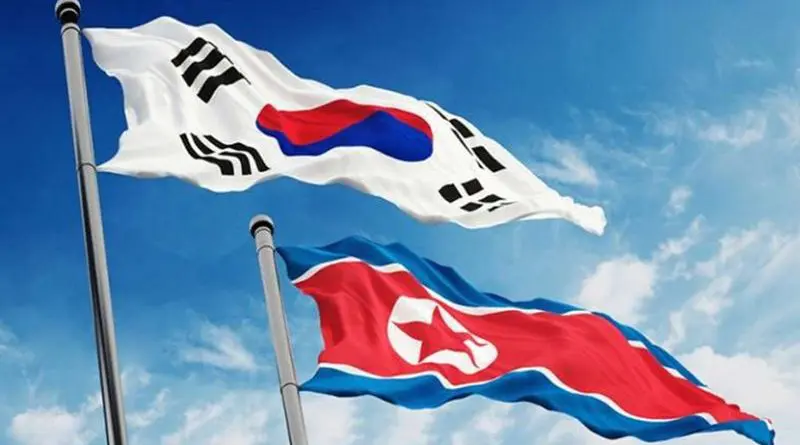
Great Powers, Divided Korea – OpEd
The Korean Peninsula maintains its status as a long-standing conflict area because of historical disagreements and opposing political beliefs, and complex global power relationships.
The division between North and South Korea has been made worse by their mutual animosity and the strategic interests of four major powers, including the United States, China, Russia and Japan, which have blocked Korean independence and halted peace negotiations.
The Korean Peninsula was split into two parts in 1945 after Japan lost control of its colonies when the 38th parallel became a temporary border. The Cold War rivalry between nations elevated an emergency administrative system to establish a lasting division between Eastern and Western nations. The Korean War between 1950 and 1953 brought extensive devastation to local areas and established a permanent foreign military presence in the region. The conflict ended with an armistice instead of a peace treaty, which created a legal uncertainty in the peninsula and made military operations more complex. The unresolved status maintains its influence on how both Koreas and outside nations understand the situation while creating their corresponding policies.
Korean society today has achieved much progress, but it faces multiple essential problems. South Korea has established itself as a strong democratic state and economic leader, but continues to face survival risks because of North Korean missile strikes and conventional assaults, and the unclear status of Pyongyang’s nuclear program. The North Korean government has established a permanent authoritarian system which depends on military power and nuclear weapons to protect the ruling family from threats. Pyongyang views nuclear weapons as vital for protecting its nation from foreign attacks, but Seoul and Washington, and Tokyo consider these weapons to create an unacceptable danger to regional security.
The four major powers must undertake an impartial assessment of their extant policies. The United States remains committed to defending South Korea, yet it primarily tailors its policies to counter China and maintain alliances and deterrence. The diplomatic process has reached an impasse because Washington insists on immediate North Korean nuclear disarmament, yet North Korea demands security guarantees to ensure its survival. China maintains official opposition to proliferation while providing North Korea with economic and diplomatic backing to prevent border disputes and fight against U.S. regional power. Russia seeks to reassert its presence in Northeast Asia by strengthening ties with Pyongyang and leveraging the peninsula in its broader contest with the West. Japan views the peninsula as a security risk because of North Korean missile threats and unresolved abduction cases, while following U.S. diplomatic instructions. The peninsula serves as a strategic location for the powers rather than a potential peace negotiation site between opposing forces.
Realist theory explains these developments because states operating in an anarchic international system focus on survival while working to achieve dominance over other states. A unified Korea under the influence of a major power would create new regional circumstances which other nations might view as threatening. For China and Russia, a democratic, prosperous Korea closely allied with the United States represents a strategic setback. Conversely, should South Korea weaken, the U.S. and Japan would confront threats to their deterrence and regional stability. The deep-seated division between North and South Korea causes actors to preserve existing conditions instead of dealing with unification risks, which makes Korean-led initiatives less significant than international political negotiations.
The solution to this problem exists within the principles of idealism. Nations need to establish institutions which build legal frameworks and social norms to enable international cooperation, thus transforming diplomatic relations from competitive zero-sum games into collaborative exchanges. The 1953 Armistice established a temporary peace, but it did not lead to a permanent peace treaty, which allowed legal and moral problems to continue and create ongoing security risks. The implementation of impartial multilateral mechanisms together with the rule of law enforcement and institutional security guarantees would decrease power politics and coercive actions while enhancing Korea’s diplomatic negotiation position.
The E.N.D. The initiative which President Lee Jae-myung presented at the United Nations in 2025 demonstrates how established frameworks of idealistic principles combine with strategic planning methods. The proposal presents a structured approach which begins with Exchange, followed by Normalisation and Denuclearisation to establish confidence through international legal oversight of multiple stages. The South Korean government chooses “absorption unification” because it recognises North Korea’s political system to protect Pyongyang from risks while enabling economic and humanitarian cooperation and cultural exchange that benefits both countries and maintains stability.
The implementation process faces multiple substantial obstacles. The North Korean government shows no signs of giving up its nuclear weapons program because it needs to feel protected from threats to its rule. The four major powers would probably block any agreements that reduce their power base or create complicated strategic problems. Young South Koreans who worry about the expenses of reunification tend to lose their backing for current diplomatic initiatives. The process of implementing sanctions adjustments needs to achieve a balance between protecting civilians and preserving elite control through verification systems and humanitarian evaluation methods.
A functional solution requires different viewpoints to merge into a single entity. The diplomatic method should establish step-by-step arms control agreements which link verification systems to established response protocols and scheduled execution schedules instead of focusing on full denuclearisation at once. South Korea must adopt a more proactive stance in organising inter-Korean initiatives to establish regular economic and social ties with the North. The international community needs to implement two main approaches to improve sanctions by focusing on elite behaviour and creating humanitarian and development pathways to reduce civilian casualties. The United Nations requires authority to establish official peace agreements, which would transform the present short-term ceasefire into a binding legal structure for security and cooperation.
The peninsula will stay in conflict status because outsiders continue to view it as a control instrument instead of recognising its potential to become a self-governing Korean territory. Stakeholders need to recognise power relationships when creating new institutions, which will build trust through step-by-step development to address social fragmentation. The E.N.D. The initiative of President Lee presents a unique solution to these problems through its implementation of measured and responsible strategies. The Korean political power system requires international diplomats to work together to establish enduring solutions which will create lasting peace on the peninsula while upholding dignity and stability.
The opinions expressed in this article are the author’s own.
References
- Idomoto, Y., & Kang, D. (2025). The bargaining theory of war and North Korea: Why the peninsula is more stable than the conventional wisdom suggests. Seoul National University Institute for Peace & Unification Studies.
- Jeon, K. (2025). Making a case for flexibility in the ROK-US deterrence relationship. Journal of East Asian Security.
- Xiangfeng, Y. (2025). Toward a Eurasian security complex? The two Koreas’ entanglement in the Ukraine war and Northeast Asian security dynamics. International Relations of the Asia-Pacific.

Like what you read?
Please consider supporting Eurasia Review. Thank you for your consideration!
