
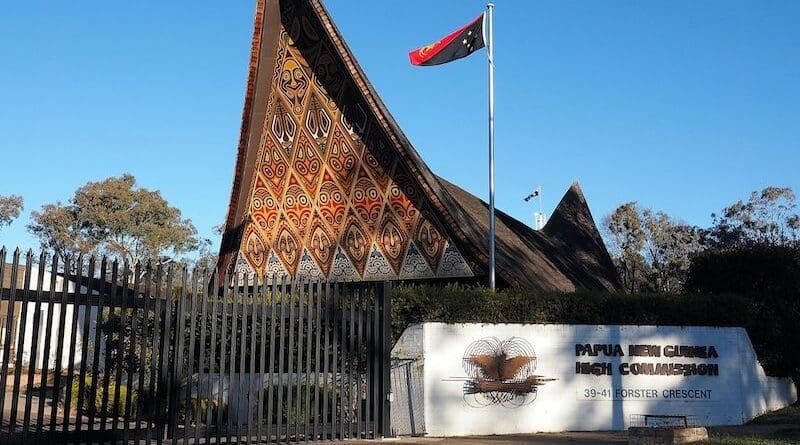
The Pukpuk Treaty: Reshaping Pacific Security – OpEd
The Pukpuk Treaty, which Australia and Papua New Guinea established through their October 2025 agreement, became a vital milestone for Pacific security.
The treaty establishes Canberra as Australia’s first alliance since 1951, which demonstrates its dedication to becoming the Pacific Islands’ primary security partner against increasing great-power competition. The treaty enables Port Moresby to receive training and logistics support and institutional backing, and financial resources, which will strengthen its weak defence systems and provide outside protection against maritime threats.
The Pukpuk Treaty represents more than a defensive treaty between two countries because it establishes a fundamental change in Pacific security structures. The conflict between Australia and Papua New Guinea generates effects which reach beyond Canberra and Port Moresby, while altering Indonesian strategic positions and regional power dynamics, and creating additional challenges for Papua’s political status because of increasing military presence and unclear sovereignty.
The treaty includes multiple vital provisions which are thoroughly explained. It commits both nations to mutual defence in the event of an armed attack, establishes pathways for up to ten thousand Papua New Guineans to serve in the Australian Defence Force, and envisions the expansion of PNG’s defence force to approximately seven thousand regulars, complemented by an additional three thousand-person reserve. Australia has committed to supporting training programs and infrastructure development and modernisation efforts, which will enhance operational interoperability between the two military forces. The Canberra document presents itself as a tool for peace protection, which builds Pacific resilience through local capability development instead of using military power for its own ends.
Indonesia is the external actor most directly affected by this treaty. The 824-kilometre border between Jakarta and PNG through the Papua provinces requires Jakarta to treat the treaty as an urgent matter. The border remains permeable, which has allowed smuggling activities and refugee movements, and occasional fighting between separatist groups. The PNG defence force, strengthened by Australian support, would achieve border-based insurgent control and international criminal organisation disruption, which matches Indonesia’s goals for eastern province stability. The implementation of better coordination between maritime surveillance systems and joint law enforcement activities would generate particular advantages for both countries.
However, the visible presence of Australian-supported forces near the Indonesian border risks being perceived in Jakarta as an externalisation of what Indonesia asserts is a domestic issue. The Indonesian government has always opposed the internationalisation of Papua, and any suggestion that external powers now control the issue would likely spark nationalistic reactions and damage diplomatic ties. The establishment of a formal alliance between Australia and PNG would likely be viewed by Jakarta as a strategic geopolitical move, even though Canberra and Port Moresby focus on their shared neighbourhood and historical and geographical ties.
The agreement establishes new power dynamics between nations in the region. Indonesia has sought to function as a stabilising force in the Indo-Pacific by relying on ASEAN consensus and a non-aligned posture to maintain strategic autonomy. The Pukpuk Treaty establishes Australian dominance in Melanesia, which could reduce Jakarta’s influence during its attempts to build stronger ties with the region. The treaty will face security-based evaluation through AUKUS and new U.S. Pacific initiatives, which could lead Southeast Asian nations to make defensive diplomatic and military changes.
The treaty shows major disagreements which exist between different groups within PNG. The state faces its most dangerous security threats from domestic elements because tribal conflicts and criminal operations and inadequate governance, and corruption problems simultaneously damage public confidence and service delivery. The allocation of resources toward external defence and military expansion without sufficient funding for police forces and judicial systems, and social development programs threatens to waste available resources and create military dominance over weak institutions. PNG’s long-standing foreign policy stance of being “friends to all, enemies to none” faces a potential challenge because treaty provisions might restrict Port Moresby’s diplomatic freedom and limit its ability to engage with other countries.
The current developments in Indonesia present both security risks and beneficial opportunities for the nation. The treaty would produce quick advantages for border communities when Canberra and Port Moresby concentrate their cooperation on non-traditional security activities, including maritime patrols and fisheries enforcement and search and rescue, and disaster response operations. The establishment of joint development projects in border provinces, which concentrate on healthcare and education, and infrastructure development, will address the root causes of instability and demonstrate that security partnerships can deliver tangible benefits to civilians beyond military goals.
An inclusive and stabilising path forward necessitates deliberate policy choices. Australia and PNG need to establish ongoing formal discussions with Indonesia to seek its participation in useful collaborative efforts. The implementation of treaties needs to focus on building capacity through open methods which work together with existing regional organisations and their established standards. Prioritising humanitarian assistance and sustainable development alongside defence cooperation will diminish the political significance of militarised activities and foster reciprocal trust among neighbours.
Practical confidence-building measures can be beneficial. The treaty partners need to perform regular trilateral exercises for humanitarian assistance and disaster relief, and create parliamentary-supervised joint commissions across each country while including civil society and customary leaders in program development. The implementation of transparency mechanisms through public annual reports and independent monitoring of training and deployment activities will reduce misunderstandings and build trust among regional stakeholders.
Indonesia must also exercise agency in this context. As ASEAN’s largest state and a natural bridge between Southeast Asia and Melanesia, Jakarta possesses both the capacity and responsibility to influence the emerging order. The creation of trilateral mechanisms for border management and maritime security and coordinated development enables Indonesia to act as a constructive mediator while safeguarding its national sovereignty. The treaty would benefit from Jakarta’s leadership role, which would enable the city to guide the practical implementation of inclusive security principles.
The Pukpuk Treaty is thus a double-edged sword. The agreement lets PNG build its institutions, but Australia gets to secure its northern border at the cost of establishing military control over a defenceless state, which limits Port Moresby’s diplomatic freedom and creates a new strategic situation for Indonesia. The treaty’s effects on regional stability will become apparent through decisions that occur during its implementation stage. The pact will enhance regional stability through open implementation, which supports transparent non-traditional security and development objectives, yet it will create more competition and distrust when used as an exclusive strategic defence system. Leaders need to use patience together with strategic decision-making and effective team collaboration to reach their objectives.
The opinions expressed in this article are the author’s own.
References
- Ainun, H. (2025). Indonesia’s role in ASEAN peacebuilding through the ASEAN Outlook on the Indo-Pacific (AOIP). PIJAR: International Journal of Academic Research, 2(1), 14–24.
- Fitriani, & Sambhi, N. (2025, September 1). Indonesia’s upcoming defence policy paper must balance security and democracy. The Diplomat.
- Setiawan, D. E., & Subanidja, S. (2025). Indonesia’s diplomatic strategy in countering Vanuatu’s support for the Papuan separatist movement in the South Pacific. Security Intelligence Terrorism Journal (SITJ), 2(3), 274–289. https://doi.org/10.70710/sitj.v2i3.64

Like what you read?
Please consider supporting Eurasia Review. Thank you for your consideration!
