
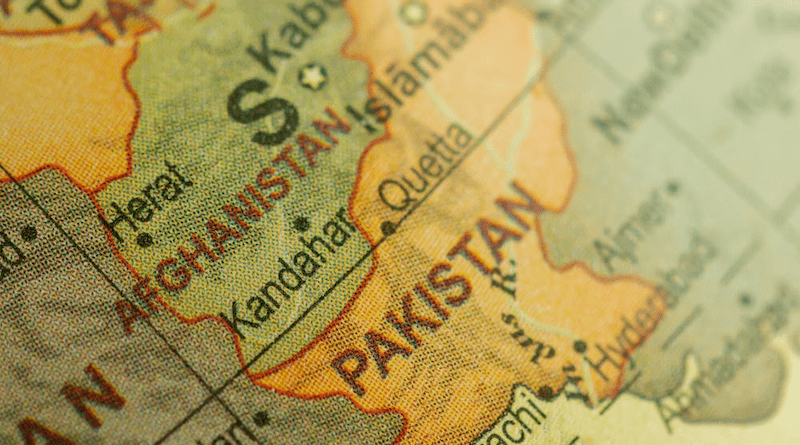
Understanding Recent Pak-Afghan Standoff – OpEd
Zabihullah Mujahid’s recent remarks about Pakistan–Afghanistan relations offer more emotion than analysis, and more selective reasoning than genuine policy insight. His statements attempt to shift blame for the ongoing tension onto Islamabad while conveniently ignoring the single most critical factor behind the current mistrust — cross-border terrorism emanating from Afghan soil. Kabul’s refusal to sign a verifiable agreement on dismantling Tehreek-e-Taliban Pakistan (TTP) and Balochistan Liberation Army (BLA) sanctuaries during the Istanbul talks is not a minor diplomatic hiccup; it is the root of the current deadlock.
For over three years, Pakistan has been the primary victim of unchecked militant activity originating from Afghanistan. Since 2021, more than a thousand cross-border attacks have targeted Pakistani security installations, civilians, and border posts. These are not isolated incidents; they are coordinated infiltrations conducted by the TTP and Islamic State Khorasan Province (ISKP), both of which operate openly inside Afghanistan. Pakistan’s patience, tested repeatedly, has been mistaken by Kabul for weakness.
Mujahid’s attempt to paint Pakistan as politically divided is equally flawed. The narrative of a “civil–military disconnect” is a convenient fiction circulated by those unwilling to accept that Pakistan’s policy toward Afghanistan is unified, institutional, and long-term. Both the civilian government and the military establishment are on the same page — regional peace is contingent upon verifiable Afghan action against terror outfits operating from its territory. This has been stated publicly and consistently by the Prime Minister, Deputy Prime Minister, Foreign Minister, Defence Minister, and several other senior officials. Only those who choose not to listen could still pretend otherwise.
Pakistan’s border policies are not designed to punish Afghanistan; they are dictated by hard data and national security imperatives. The temporary closures of crossings such as Torkham and Chaman are not political tools but necessary security measures to control infiltration and illegal trade in weapons and narcotics. Controlled border management is essential for maintaining both security and legitimate commerce. Despite all the difficulties, Pakistan remains Afghanistan’s largest trading partner, with bilateral trade exceeding USD 1.6 billion in FY 2024–25. Pakistan has deliberately kept economic channels open even while absorbing cross-border violence, which speaks volumes about Islamabad’s restraint and commitment to regional stability.
Mujahid’s comments on the Kunar River issue further expose his selective reasoning. Pakistan has never opposed Afghanistan’s right to pursue developmental projects. What Islamabad expects is simple — adherence to international water-sharing norms and transparent data-sharing mechanisms. The downstream flow of the Kunar River sustains vital agricultural zones inside Pakistan. Any unilateral action upstream without coordination can have direct implications for millions of livelihoods. Responsible states cooperate on transboundary resources; they do not treat them as tools of leverage.
Perhaps the most misleading claim made by Mujahid is his portrayal of the Imran Khan period as an era of “smooth relations.” This revisionist claim overlooks a harsh reality: during 2021–22, Islamabad extended unprecedented diplomatic goodwill toward the Taliban regime — a goodwill that was ruthlessly exploited. The Taliban used that period to strengthen the TTP’s presence inside Afghanistan rather than dismantle it.
According to the UN Monitoring Team Report (2023), TTP attacks against Pakistan increased from 573 in 2021 to 1,203 in 2023 — more than doubling within two years. The same report documented how the Taliban’s General Directorate of Intelligence (GDI) facilitated at least three guesthouses for TTP leaders in Kabul and issued them movement passes and weapons permits. This was not passive tolerance; it was active facilitation. The Taliban regime effectively allowed an anti-Pakistan insurgency to regroup and rearm under its watch.
During that same period, Pakistan’s then-PTI government engaged in repeated outreach efforts — including local peace initiatives, prisoner-release gestures, and back-channel negotiations. Yet every step toward conciliation was answered with more bloodshed. Pakistani civilians, soldiers, and police personnel paid the price for a misplaced trust in Kabul’s assurances. What Mujahid now describes as “cooperation” was, in reality, Pakistan’s restraint — a restraint that the Taliban leadership failed to reciprocate.
The truth is straightforward: Pakistan’s expectations are neither unrealistic nor aggressive. Islamabad does not seek to dictate Kabul’s internal politics or sovereignty. It seeks written, monitorable guarantees — a verifiable commitment that Afghan territory will not be used by the TTP, BLA, or ISKP. This is the bare minimum any responsible neighbor would demand. When such guarantees are in place, borders can open fully, trade can resume unhindered, and regional connectivity projects can flourish. Until then, border management will remain strict, and closures will occur whenever threats escalate.
Pakistan’s engagement strategy is clear — firmness balanced with diplomacy. Islamabad continues to rely on Turkish and Qatari facilitation channels to maintain dialogue with Kabul, even when provoked by incendiary statements. The objective remains consistent: a peaceful, stable Afghanistan that does not serve as a launchpad for terrorism. But peace cannot be built on rhetoric alone. Words must be matched with actions that can be verified and sustained.
Zabihullah Mujahid’s remarks may have been intended to project defiance and independence, but they expose an uncomfortable truth about the Taliban regime’s priorities. Instead of addressing the terror infrastructure within its borders, Kabul prefers to externalize blame, accuse Pakistan of hostility, and distort facts to placate domestic audiences. That strategy might work for internal propaganda, but it fails in the realm of international diplomacy.
Pakistan’s patience is not limitless, but its policy remains rational and consistent. It seeks no conflict with Afghanistan — only cooperation rooted in accountability. The path to peace lies not in verbal jousting but in verifiable counterterror action. Mujahid’s rhetoric may satisfy short-term nationalist pride, but it does nothing to address the region’s real problem: terrorism nurtured by inaction. Until Kabul accepts this fundamental reality, relations will remain strained, and Afghanistan will continue to pay the economic and diplomatic cost of its own selective reasoning.
In the end, policy is judged not by words but by outcomes. If the Taliban wish to be treated as a responsible state, they must act like one — starting with dismantling the sanctuaries of those who kill Pakistanis while hiding under Afghanistan’s protection. Only then can both nations move from blame to brotherhood, and from rhetoric to real peace.

Like what you read?
Please consider supporting Eurasia Review. Thank you for your consideration!
