
PTM’s Narrative Vs Pakistan Army’s Counterterrorism Achievements And The Sacrifices Of 90,000 Pakistanis – OpEd
The Pashtun Tahafuz Movement (PTM) was formed as an independent Pashtun advocacy group airing complaints that have found their place in the suffering caused by conflict-ridden regions. Its leaders have repeatedly accused the Pakistan Army and state institutions of destruction in the tribal belt, as well as enforced disappearances, extrajudicial action, landmines, and failure to prosecute the victims of violence.
The main message of PTM has always been that the Pashtuns were between the terrorists and the state, and the Pakistan Army, rather than protecting them, caused them even more pain. According to them, counterterrorism activities uprooted millions of people, houses were destroyed, and a legacy of distrust was left in regions like Waziristan. PTM leaders also insinuate that the war against terror in Pakistan was contrived or mismanaged by state organs, generally ignoring the efforts of terrorist groups such as the Tehrik-i-Taliban Pakistan (TTP) and its efforts that left the country butchered with schools burnt and tribal elders assassinated.
Such claims lie at the core of the story of PTM, nevertheless, a more focused and honest analysis of facts shows how partial and distorted this image is. Pakistan’s war on terror was not a choice, but a matter of existence. Since 2001, terrorist groups such as TTP launched a bloodshed campaign within Pakistan. Suicide attacks in the marketplace to the massacre in the Army Public School in Peshawar, the intention of the terrorists was to disable the society and shatter the will of the state. More than 90,000 civilians and security agents were martyred in this savage war in Pakistan. It was a tremendous price but it was a real danger: great tracts of the tribal belt, at one point, fell into the hands of terrorists declaring war on Pakistan itself.
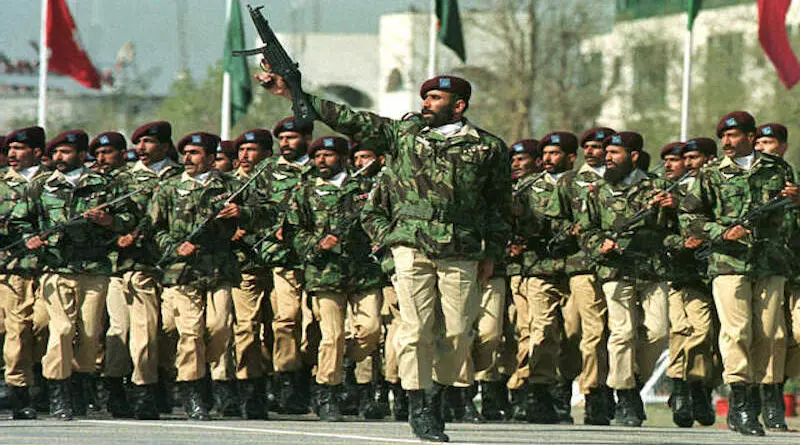
That being a fact, Pakistan Army started on a trail of other high standards operations like Zarb-e-Azb and Radd-ul-Fasaad to clear terrorist strongholds and restore the writ of the state. They were not raids on Pashtuns, as PTM tends to suggest, but rather against terrorists that had converted villages into places of refuge and hid behind civilians. The operations chased out networks of bomb-makers, suicide cells and foreign terrorists who had rooted themselves in the territory. While the displacement of civilians was also the case, it was only temporary and accompanied by rehab programs that were implemented even more systematically than before them, with millions of households working to relocate themselves when their localities are once again liberated by the government. Roads, hospitals, schools and communication networks have been rebuilt in the new merged districts since, it is a long-term investment because terrorism would no longer be a threat.
PTM generally applies to landmine accidents and the disappearance of people as indications of state carelessness or malice. These are grave matters, yet their delivery by PTM deprives them of context. Terrorists planted landmines primarily to hinder Army movements and provide a nightmare to local people, and it has been a tedious, excruciatingly slow process to clear them. Concerning missing persons, the courts, parliament, and security agencies of Pakistan do not stop dealing with such cases yet PTM prefers to highlight only those cases that damage the reputation of the state and not to show the thousands of lives being saved through intelligence efforts which prevented terrorist attacks. Such cherry-picking makes a state look like it has declared war against its own people, yet in reality the state was hard at work destroying terrorist networks who had already taken tens of thousands of lives of Pashtun.
When the rhetoric of PTM was openly expressed and how it was received internationally are also questions. Their words and verbosity are disproportionately reinforced in Indian presses, where every slander on the Army is euphorically endorsed as legitimate confirmation of negative histories. Such crossing does not imply that all individuals who are on the side of PTM are unpatriotic but only indicate how they align their narrative to fit foreign interest in promoting their destabilization agenda to undermine Pakistan. When the PTM leaders recite the slogans accusing the Army of oppression but do not mention the terrorist organisations through which they were originally destroyed, the overall effect here is to present the impression that the terrorist organisations who were crushed into submission by the same institutions that they were trying to defame with their slogans are no longer the cause of terrorism.
What has been accomplished by Pakistan over the last 20 years cannot be taken lightly. The number of terrorist attacks has significantly decreased, as has the tribal belt which has become part of Khyber Pakhtunkhwa as the Newly Merged Districts, and rebuilding has brought a feeling of sanity and normality back to places previously besieged. This delicate stability must be credited to the sacrifices of more than 90,000 Pakistanis, including the soldiers who have fought village by village against hardened terrorists. It is not only unfair but also dangerous to strip down this titanic struggle to an oppression and neglect narrative on the scale that PTM does, lest the truth of who the true aggressors against the Pashtun people were: the terrorists who dropped schools, killed innocent people and declared war against Pakistan.
The PTM may profess their Pashtun grievances but by falsifying their history, not tolerating the terrorist threat they might serve as a highly beneficial instrument of narrative warfare against the state. That the counterterrorism path that Pakistan is going through is not an ideal one, but one of the most important success stories in the field of counterinsurgency in the modern world.

Like what you read?
Please consider supporting Eurasia Review. Thank you for your consideration!
