
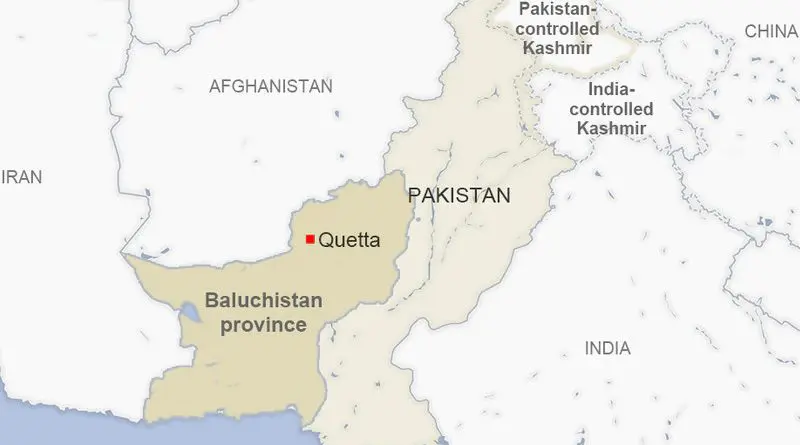
Choosing Dialogue Instead Of Carnage In Balochistan – OpEd
Balochistan has been painted for decades through the lens of an eternally struggling one that is infused with the colors of victimhood and rebellion. Its history has been taken over by forces that live off anarchy — separatist leaders, militant groups, and their ideologically aligned allies.
What began as a demand for rights and integration has become too often manipulated into secession, militancy, and murder. Along the way, rightful grievances have been silenced by bullets and the very individuals who were to be empowered have been left behind in their dust once again. That root cause of this fatal cycle is the institutionalized exploitation of Balochistan youth.
Bitter about decades of economic disregard, underdevelopment, and social marginalization, Baloch women and men repeatedly have stood at a crossroads. Rather than being offered a pathway of education, work, and political struggle, the majority have gone to the fantasy of armed struggle. Tribal identification and ancient grievances were used as a means of recruitment, and cultural pride was turned into extremist ideology. Student communities, who could have been agents of leadership and change, had become feeder groups for extremism. But “romanticism” about the “struggle” has not been carried through to achievements.
Ground reality is different — of poverty, displacement, and fear. Schools remain sub-standard, hospitals under-staffed, infrastructure weak, and economic opportunities limited. The militants, in the cause of freedom and justice, have provided none of the above. Instead, they have left the world a legacy of bombings, killing, and intimidation — not just to the state, but to fellow citizens as well. And it is the average Baloch citizen who has had to endure. In this long, torturous play, turning has finally arrived in the shape of voices within the insurgency rank and file itself.
Last week’s public renunciation of extremism by Gulzar Imam Shambay, former commander of banned Baloch Nationalist Army, is an isolated burst of reality. Bluntly honest, Shambay admitted that the reason so-called armed struggle has brought nothing but ruin. His testimony dismantles the militant myth column by column: no freedom, no honor regained, no rights achieved. What remains is suffering — and it is the Baloch who are paying the price. Shambay’s call to the youth is particularly moving.
He urged young Baloch not to be misled by slogans or those supported by foreigners. Rather, he urged them to negotiate with the state and engage with the democratic order as the only solution. His message was stark: arms cannot do what power, reform, and activism can do. And most compellingly, he highlighted how external powers — state or non-state — have long used Baloch grievances as a pretext to advance their own geopolitical interests. This has only hindered development and deepened fissures. His disclosure also cast an unpleasant light on the insurgency’s origins.
Shambay implicated senior activist Mahrang Baloch’s father, Mir Ghaffar Langov, with the Baloch Liberation Army and their campaign of terror. While some have sought to separate recent activism from normal militancy, more often than not the ideological strands get muddled. Even human rights marches, like for the disappeared, are not immune to hijacking by radical sympathizers. The danger is that genuine grievance overwhelms ulterior motives and chokes resolution into harder-to-achieve status. It is not the first time that an elderly militant has turned to peace.
People like Mir Hazar Khan Marri, who were deeply rooted in the militant organization, have also switched sides. Marri, after years of exile, realized that there is only a political engagement-and-reconciliation long-term framework for Balochistan. They influence because they are speaking from within — from people who have experienced militancy violence firsthand and realized that it is empty. The learning curve is evident: a future cannot be constructed on brutality.
It cannot construct schools, jobs, or dignity. That future is possible only when Balochistan prefers books over bullets, ballots over boycotts, and bridges over barricades. Its youth have to shatter the very old rhetoric of martyrdom and demand substantial investment in their education, health, and economic growth. Change does not come from retribution slogans but the gritty, all too often stagnant, work of reform and representation. Pakistan also has to make the best of this time. The state must continue to provide space for interaction, initiating development, and ensuring justice where there was a wrong. Trust cannot be legislated, only gained — with honesty, justice, and persistent interaction. Sensitive resolution of the issue of missing persons, legally determined, is imperative, as is making peace-building one that is inclusive, rather than symbolic.
As rightly observed by journalist Ammar Masood, Balochistan is at a crossroads. Its militancy of the past is giving way to a call for reconciliation. The future of the province will not be built by individuals who bemoan the past, but by those who are willing to dream a new morning — one of peace, dignity, and potential. For the Baloch nation, especially its youth, the moment has arrived to turn the page. The guns need to stop booming so that an actual dialogue may begin—and with that, the chance to live harmoniously with the wishes of those who inhabit Balochistan.

Like what you read?
Please consider supporting Eurasia Review. Thank you for your consideration!
