
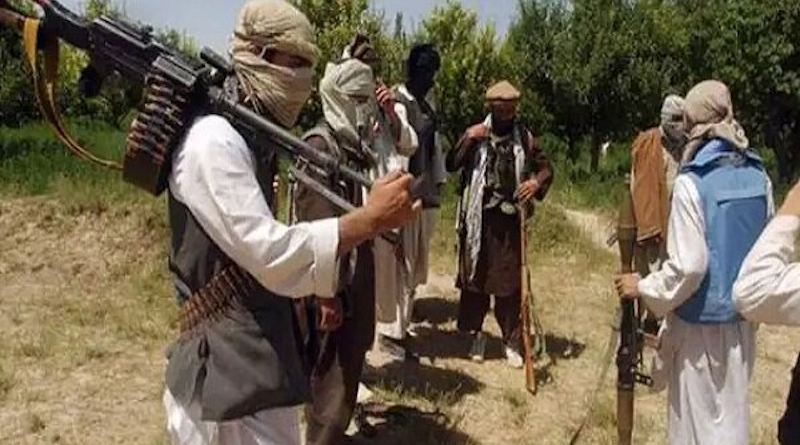
Fitna-Ul-Khawarij’s Afghan Sanctuary: The TTP’s Propaganda War Against Pakistan – OpEd
Pakistan refers to the TTP as Fitna-ul-Khawarij (FAK), a title that reflects both the group’s ideological deviation from Islam and its campaign of violence against innocent civilians. Historically, Khawarij means those who rebel against legitimate authority in the name of faith and spread chaos while cloaking it with piety. The TTP’s actions embody that very distortion.
Today, FAK operates primarily from Afghan soil, where its leadership, fighters, and families continue to enjoy protection and logistical support. It exploits Afghanistan’s porous borders to intensify cross-border attacks on Pakistan and has launched a sophisticated propaganda campaign aimed at manipulating perceptions and misleading international opinion.
Various estimations by credible sources, including the United Nations Analytical Support and Sanctions Monitoring Team, validate that FAK/TTP’s senior leadership is based in Afghanistan. The organization has operational space in Kunar, Khost, and Nangarhar provinces of Afghanistan, where it recruits militants, conducts training, and plans incursions into Pakistan.
Their strategy follows a well-documented pattern: infiltrate Pakistan’s border districts, launch attacks on security forces or civilian targets, and retreat safely across the frontier into Afghan territory. The 2,600-kilometer Durand Line remains difficult to secure, providing the group with mobility and protection. This cross-border movement, coupled with passive tolerance by elements within the Afghan Taliban, poses a serious threat to regional peace.
It has been repeatedly informing Kabul through diplomatic and other channels about such activities and pressing for decisive action to stop Afghan territory from being used for terrorism. Yet, enforcement remains limited. This persistent negligence undermines the spirit of the Doha Agreement, which commits Afghanistan’s current rulers to not allowing terrorist groups to operate from their soil.
While the Afghan Taliban leadership often proclaims friendship with the Pakistani government, local Taliban commanders and intelligence operatives reportedly aided or ignored FAK. In one documented incident, Afghan officials allegedly instructed FAK member Abu Bakr (alias Umar Afridi) and his associates to penetrate Bajaur in clear violation of international norms and Pakistani sovereignty.
This duplicity-diplomatic reassurance on one hand and operational leniency on the other-perpetuates a lack of credibility in and distrust of Afghanistan. A resultant security vacuum threatens not just Pakistan but also Afghanistan internally, allowing extremist factions to operate with abandon and attract external patronage.
As its military capabilities atrophy, the information space has become a new battleground for FAK. The group has mastered the use of digital deception, shooting mock videos inside Afghanistan but passing them off as evidence of operations inside Pakistan. These videos, passed on through social networking sites and sympathetic online channels, are meant to create confusion, heighten fear, and project an illusion of strength.
However, various OSINT analyses have unraveled these fabrications. Geolocation and metadata tracing confirm that many of these so-called “Pakistan-based” recordings actually come from Afghan regions. This deceptive strategy speaks not of operational resurgence but desperation-an attempt at propaganda relevance while the group is losing ground and credibility.
Running parallel are the anonymous social media accounts, often from Afghan or Western servers, that amplify anti-Pakistan narratives. These handles conflate counterterrorism with ethnicity, framing Pakistan’s operations against FAK as “anti-Pashtun.” Such divisive messaging aims to fracture national unity and undermine public trust in the state’s counterterrorism framework.
The ideology of Fitna-ul-Khawarij rests on a complete perversion of Islamic teachings. Declared as Khawarij by more than 1,800 ulema under the historic Paigham-e-Pakistan fatwa, the TTP/FAK’s actions run in complete contravention of every moral and legal principle enshrined in Islam. The killing of innocents, the attack on mosques, and the targeting of women and children are acts of rebellion, not faith.
By contrast, Pakistan’s security forces and law-enforcement institutions stand as the true mujahideen, defenders of peace, justice, and religious integrity. Through immense sacrifice, they have dismantled hundreds of terrorist networks and restored normalcy to areas once overrun by militants. Their commitment reflects not only state responsibility but also an Islamic duty to protect life and order.
Every cross-border infiltration, every propaganda video, carries a heavy cost, both for Pakistan and for Afghanistan. For Pakistan, it means renewed threats to border communities, stalled development, and the sacrifice of brave security personnel. For Afghanistan, harboring FAK invites economic isolation, diplomatic distrust, and renewed instability.
Pakistan has continued to call for joint counterterrorism mechanisms, border management, and intelligence coordination; but this, too, is dependent upon effective corresponding action in Kabul. The international community also needs to make sure that Afghan soil is not the starting point for militancy, a principle central to global counterterrorism endeavors since 2001.
Truth Will Triumph over Fitna Fitna-ul-Khawarij represents not only a terrorist organization but also a moral corruption that exploits religion for chaos. Its Afghan-based propaganda machine thrives on deceit, but truth and evidence have time and again brought its lies to the fore. Pakistan’s counterterrorism approach, which draws strength from intelligence precision, religious clarity, and moral resolve, remains consistently aimed at dismantling both the physical and ideological networks of these Khawarij. The world must understand that Pakistan is the victim and not the source of terrorism emanating from Afghan soil. As Islamabad pursues peace through dialogue and deterrence, the ultimate defeat of Fitna-ul-Khawarij will not be achieved on the battlefield alone but in the collective rejection of its false narrative. Its echoes may reverberate briefly, but reality as evidenced by the resilience and faith of Pakistan will prevail.

Like what you read?
Please consider supporting Eurasia Review. Thank you for your consideration!
