
Afghanistan, ISKP, And An Unsettled Security Reality – OpEd
In recent weeks, a familiar accusation has resurfaced across Afghan and affiliated social media platforms: that Pakistan’s security institutions are allegedly facilitating the reorganization and redeployment of Islamic State Khorasan Province (ISKP) militants inside Khyber Pakhtunkhwa and Balochistan. The claim is sweeping, alarming—and conspicuously unsupported by evidence. More than a charge against Pakistan, it reflects a broader struggle over narrative control at a moment when international scrutiny of Afghanistan’s security environment is intensifying.
The factual record offers little room for ambiguity. No credible national intelligence agency, international monitoring body, or United Nations mechanism has produced verifiable evidence of ISKP operational bases, regrouping efforts, or state facilitation within Pakistan’s territory. On the contrary, Pakistan’s counterterrorism landscape over the past decade has been defined by sustained military operations, intelligence-led actions, and institutional reforms that have dismantled terrorist infrastructure and significantly reduced the operational space available to transnational militant groups. ISKP, whose survival depends on territorial permissiveness and logistical freedom, finds no such environment inside Pakistan today.
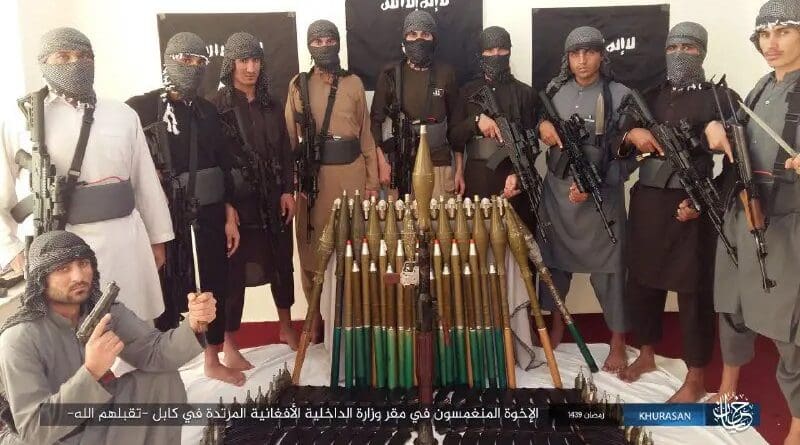
That reality stands in sharp contrast to the findings of independent international assessments on Afghanistan. United Nations monitoring reports have repeatedly identified Afghan territory as the primary sanctuary for ISKP, citing the group’s ability to recruit, train, plan, and move with relative freedom. These reports have also highlighted the continued presence of Al Qaeda and other transnational terrorist organizations, raising persistent concerns about Afghanistan’s failure to meet its counterterrorism assurances to the international community.
The timing of the allegations against Pakistan is therefore instructive. They have emerged just as diplomatic and security pressure on Afghanistan is mounting, particularly over the continued operation of terrorist networks within its borders. In this context, the attempt to redirect blame outward appears less like a security assessment and more like a diversionary tactic—one designed to dilute accountability by reframing terrorism as a diffuse regional problem rather than a concentrated governance failure.
This strategy is not new. As Western powers intensify kinetic and intelligence-driven operations against ISIS remnants in Syria and beyond, affiliated propaganda ecosystems have sought to geographically displace responsibility, manufacturing alternative threat perceptions to ease pressure on known sanctuaries. Afghan-aligned information outlets and social media networks have increasingly adopted this playbook, advancing unsubstantiated claims against Pakistan to create a false equivalence between counterterrorism enforcement and alleged complicity.
Pakistan’s response, however, has been grounded less in rhetoric than in policy. Its engagement with regional partners, participation in intelligence-sharing mechanisms, and investment in border management infrastructure reflect a consistent effort to deny terrorist groups mobility and logistical depth. These measures, often criticized as heavy-handed, align with global counterterrorism practices adopted by states facing persistent cross-border threats.
The recent temporary closure of border crossings with Afghanistan must be understood within this framework. While the economic costs are real—and acknowledged by Islamabad—the security rationale is equally undeniable. Repeated incidents of cross-border infiltration by militants operating from Afghan territory have left Pakistan with limited policy options. Border management, in this context, is not an abandonment of regional connectivity but a calibrated attempt to disrupt terrorist movement and protect civilian lives.
International law supports this position. United Nations Security Council resolutions obligate states to prevent their territory from being used for cross-border violence. When such prevention fails, neighboring states are neither unreasonable nor unlawful in tightening border controls. Pakistan has consistently emphasized that its measures are temporary, defensive, and reversible—contingent on credible steps to eliminate terrorist safe havens across the border.
What is at stake is larger than Pakistan’s reputation alone. Disinformation campaigns that replace evidence-based assessments with politically motivated narratives risk normalizing terrorist sanctuaries and eroding trust among regional partners. Counterterrorism cooperation depends on clarity—about where threats originate, who bears responsibility, and how accountability is enforced. When narratives are weaponized, cooperation frays, and security vacuums widen.
Pakistan does not claim immunity from criticism, nor does it deny the complexity of the region’s security challenges. But the effort to portray it as a facilitator of ISKP is not supported by facts, law, or independent verification. It is, instead, a symptom of a deeper contest over accountability at a moment when the international community is demanding clearer answers from Afghanistan.
In a region already burdened by conflict, truth matters. So does evidence. And so does the willingness to confront terrorism at its source, rather than exporting blame across borders.

Like what you read?
Please consider supporting Eurasia Review. Thank you for your consideration!
