
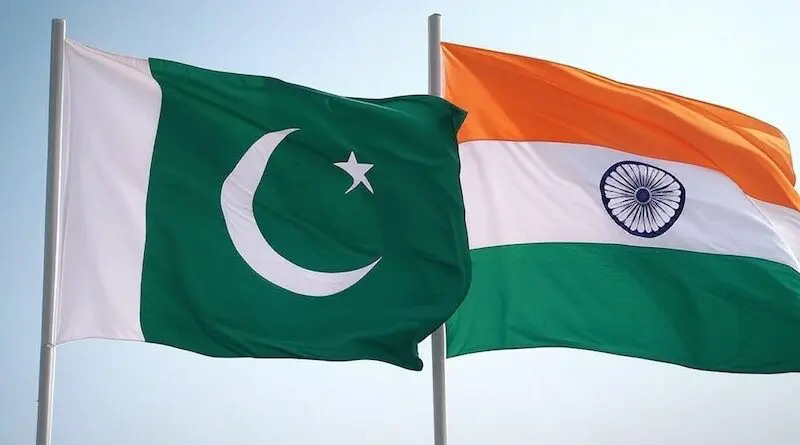
India-Pakistan: The Only Road Left Is Dialogue – OpEd
In the picturesque valley of Pahalgam, a place known more for its pine forests and snow-capped tranquility than for political tremors, a violent attack last week sent shockwaves far beyond Kashmir. As Indian soldiers were ambushed and killed, New Delhi’s rhetoric swiftly turned to escalation. Pakistan, predictably, was accused. The media on both sides of the border ignited with nationalist fervor, replaying a script as old as Partition.
But here’s the truth both nations know yet resist: there is no military solution to the India-Pakistan problem. Not in Pahalgam. Not in Pulwama. Not in Kargil. Not ever.
India’s reflexive blame of Pakistan—before any investigation concluded—is sadly familiar. It plays well domestically, especially in an election year, and helps deflect attention from uncomfortable internal questions: the political alienation in Kashmir, the erosion of civil liberties, and the growing communal divide. But blame without proof is not justice. And escalation without strategy is not strength.
Pakistan, for its part, walks a tightrope. Its government, grappling with a collapsing economy and increasing pressure from the IMF, can ill afford another military standoff. Yet, national pride—especially after years of being painted as the villain—often pushes Islamabad into a posture of defiance.
But despite this fraught history, despite wars and betrayals, the only option that remains morally defensible and strategically sound is dialogue.
Critics argue that talks have failed before. They are right. But the absence of talks has always failed. The 2003 ceasefire agreement, the backchannel diplomacy during the Musharraf-Manmohan era, the Vajpayee-Lahore declaration—all show that progress is possible when political will exists. What derailed those moments was not the futility of diplomacy, but the triumph of extremism and the politics of fear.
The attack in Pahalgam should not become a pretext for sabre-rattling. It should be a catalyst for a serious inquiry—joint, if both countries can summon the courage—to uncover who stands to gain from sabotaging peace. Spoilers exist on both sides, from jihadist factions to hyper-nationalist lobbies. But their power only grows when leaders surrender diplomacy in favor of provocation.
This region, home to over 1.5 billion people, teeters perennially on the edge of catastrophe. Both nations possess nuclear weapons. The consequences of miscalculation are not hypothetical—they are existential.
Prime Minister Narendra Modi has cultivated an image of muscular nationalism. But real strength lies in choosing restraint when anger demands retaliation. Pakistan’s military establishment, too, must recognize that posturing as a “deterrent force” while refusing to clamp down on non-state actors is neither sustainable nor wise. Peace requires both nations to clean their houses—and open their doors.
It is time to imagine a new architecture for South Asian peace. One that includes sustained diplomatic channels insulated from media frenzy, trade agreements that foster interdependence, and cultural exchanges that humanize the other. A Kashmir resolution will remain complex, but that’s no excuse for abandoning dialogue. Complexity is not impossibility.
India and Pakistan must stop reacting and start relating. They must refuse to let extremists write their foreign policy. Pahalgam’s pain should not harden hearts—it should awaken them.
Because after decades of bloodshed, bombast, and border skirmishes, only one path remains untried long enough to make a difference: talking until it hurts—and then talking some more.

Like what you read?
Please consider supporting Eurasia Review. Thank you for your consideration!
