
The Hague Turns Its Gaze On Kabul Over Crimes Against Women – OpEd
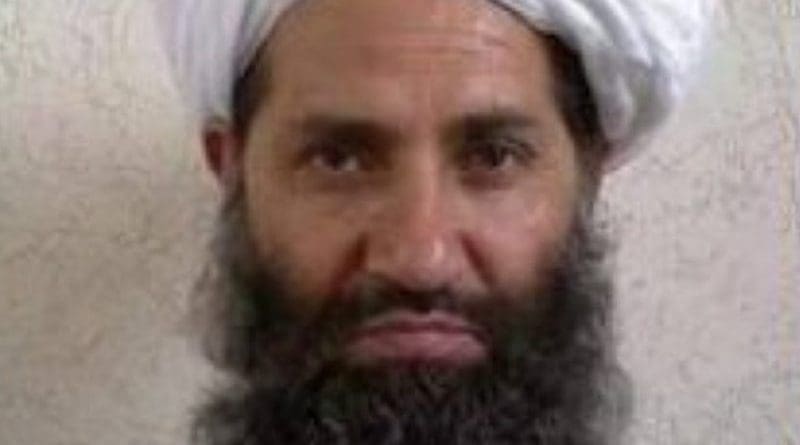
In a move that signals the growing international intolerance toward gender apartheid, the International Criminal Court (ICC) has issued arrest warrants for Taliban Supreme Leader Hibatullah Akhundzada and Chief Justice Abdul Hakim Haqqani. The charges: crimes against humanity, including systematic persecution and repression of Afghan women and girls.
This marks the first time the ICC has directly targeted top Taliban figures since the group seized control of Afghanistan in August 2021. The warrants, unsealed on Monday, accuse the Taliban leadership of implementing a state policy of gender-based persecution, amounting to one of the most sweeping assaults on women’s rights in modern history.
“The Taliban’s treatment of Afghan women is not just morally repugnant—it is criminal,” said ICC Prosecutor Karim Khan in a televised statement from The Hague. “What we are witnessing is a form of institutionalized gender apartheid.”
The ICC’s investigation—spanning four years and drawing upon over 300 testimonies, satellite imagery, internal Taliban documents, and social media content—outlines a deliberate campaign to erase women from Afghan public life. Under Akhundzada’s decrees, women have been banned from secondary and higher education, removed from most forms of employment, and prohibited from traveling without male guardianship. The court also cited instances of public beatings and arbitrary detentions of women protesting for their rights.
While the Taliban has long dismissed international human rights norms as “Western impositions,” this latest legal challenge pierces through its rhetoric. The indictment not only targets Akhundzada as the ideological spearhead of Taliban rule but also holds Haqqani responsible for legalizing gender discrimination under the guise of Islamic law. His role in formalizing edicts that criminalize dissent and curtail women’s liberties, the court argues, constitutes complicity in crimes against humanity.
In Kabul, the Taliban’s spokesperson Zabiullah Mujahid denounced the ICC’s decision as “politically motivated” and “a clear violation of Afghanistan’s sovereignty.” Mujahid insisted that Taliban rule aligns with “authentic Islamic values” and accused the West of weaponizing human rights to undermine Islamic governance.
But Afghan women’s rights activists welcomed the announcement with cautious optimism. “This is the first time the world is not just watching but acting,” said Mahbouba Seraj, a prominent women’s advocate now living in exile in Germany. “The ICC’s move is not just about legal accountability—it’s a moral verdict.”
The warrants, however, face substantial hurdles in enforcement. Afghanistan is not a signatory to the Rome Statute, and the Taliban have no incentive to cooperate with The Hague. Still, the warrants carry symbolic weight, further isolating the regime and branding its top leadership as international fugitives.
The move also complicates the already-fraught diplomatic calculus of regional powers. Pakistan, which has long been accused of harboring Taliban sympathies, now finds itself in a bind. Publicly, Islamabad has urged engagement with the Taliban on pragmatic grounds, but it has also suffered from the regime’s support for the Tehrik-i-Taliban Pakistan (TTP), a group that has waged deadly attacks on Pakistani soil.
China and Russia, both of whom maintain tactical relations with the Taliban, offered muted responses. Neither country has ratified the Rome Statute, and both are likely to block any ICC referrals at the UN Security Council. Nevertheless, the warrants may chill efforts to further normalize the Taliban’s rule or open new diplomatic pathways.
Back in Afghanistan, the real victims remain voiceless—girls denied education, women silenced, and activists imprisoned. The ICC’s action does not change their daily reality. But it does mark a turning point.
“Justice has a long memory,” said Fatima Gailani, a former Afghan peace negotiator. “And even if it takes years, what happened to Afghan women under the Taliban will not be forgotten.”
As the Taliban tighten their grip on a society half-erased from its own streets and schools, the ICC’s decision is a stark reminder: repression may rule a nation for now, but the world is watching—and judging.

Like what you read?
Please consider supporting Eurasia Review. Thank you for your consideration!
