
Cross-Border Terror: TTP’s Stronghold In Afghanistan – OpEd
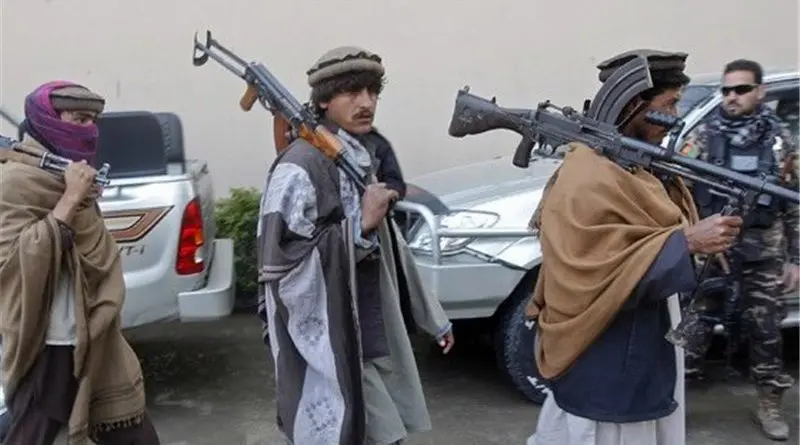
The Tehrik-i-Taliban Pakistan (TTP), a militant group responsible for numerous terrorist activities in Pakistan, has admitted to receiving training in Afghanistan. The porous and largely unregulated border between Afghanistan and Pakistan has facilitated the movement of militants, allowing groups like the TTP to seek support and resources across the border. This cross-border movement has not only enabled the group to enhance its operational capabilities but has also highlighted the challenges that arise when militant groups can freely operate across national boundaries.
The training received by TTP members in Afghanistan has significantly boosted the group’s capacity to carry out attacks in the region. It underscores the cross-border nature of terrorism, where militants exploit weak border controls to further their agendas. The ability to seek refuge and training abroad allows the TTP to regroup and strengthen its operations, making it harder for Pakistani authorities to curb their activities. The presence of training facilities and support networks in Afghanistan has become a key factor in the TTP’s ongoing operations.
In addition to receiving training, TTP members have sought refuge and established safe havens in Afghanistan, particularly in the rugged and remote areas along the border. These sanctuaries provide the group with critical hiding spots, enabling them to evade Pakistani security forces and continue their operations from across the border. The geographical terrain has historically made it difficult for authorities to secure these regions, allowing militant groups like the TTP to flourish in relative safety.
On 3rd September 2024, Rooh Ullah, a militant associated with the banned Tehreek-e-Taliban Pakistan (TTP), revealed in a video statement that he was trained in a seminary in Afghanistan to carry out suicide attacks in Pakistan. He and other attackers received training from Molvi Sibghatullah and were administered injections two days before their missions to numb their senses. Rooh Ullah, along with other bombers, infiltrated Pakistan through facilitators at the Afghan border. Security forces thwarted their attack plans, and Rooh Ullah was arrested before carrying out his mission. This incident highlights Pakistan’s ongoing struggle with cross-border terrorism, prompting the government to intensify anti-terror operations and categorize the TTP as “Fitna al-Khawarij.”
Recently, in a speech at the Hudson Institute, Ahmad Massoud, leader of Afghanistan’s National Resistance Front, warned that terrorist groups in the region are increasingly modeling themselves after the Taliban, which has emboldened extremism across South Asia, particularly in Pakistan. Massoud linked recent terror attacks in Pakistan to Taliban support for thousands of terrorists, noting that the Taliban’s rise has created a sanctuary for extremism. Pakistan, already a key player in the global fight against terrorism, faces increased attacks as militants’ exploit Afghanistan’s instability. Massoud called for international action against these terrorist sanctuaries, stressing that combating extremism requires a coordinated global effort.
Pakistan has experienced a recent surge in terror activities, particularly in Khyber Pakhtunkhwa and Balochistan, with the government and military attributing these attacks to militants operating from Afghan soil. Islamabad has repeatedly urged Kabul to take action against these groups. In response to the rising threat, Pakistan launched “Azm-e-Istehkam,” a national anti-terror operation, in June. Additionally, the government reclassified the TTP as “Fitna al-Khawarij” and mandated the use of the term “Khwariji” before the names of terrorists, prohibiting titles like “Mufti” and “Hafiz” for individuals involved in terrorism.
The existence of TTP’s safe havens in Afghanistan poses significant challenges for both Pakistan and Afghanistan in their efforts to combat terrorism. Militant groups easily cross the border to escape operations, regroup, and launch new attacks. Addressing the issue of cross-border sanctuaries is crucial for regional stability, requiring cooperation between the two nations. Moreover, international support is needed to enhance border security and dismantle terrorist hideouts effectively.
Therefore, effectively tackling the issue of TTP sanctuaries in Afghanistan requires strong cooperation between Pakistan and Afghanistan, alongside international efforts. The mountainous and porous border has long made it difficult for either country to monitor militant movement effectively. By working together and leveraging international support, both countries can improve border security, track militant activity, and reduce the TTP’s ability to operate from Afghan territory, thereby enhancing regional peace and security.
The government of Pakistan has implemented a range of measures to counter the threat of TTP terrorist attacks originating from Afghanistan. These efforts involve strengthening border security, improving intelligence sharing with Afghan authorities, launching military operations targeting TTP hideouts along the border, and promoting international cooperation to more effectively address cross-border terrorism. Furthermore, Pakistan has pursued diplomatic efforts, urging the Afghan government to take action against TTP sanctuaries within Afghanistan and prevent the use of its territory for launching attacks into Pakistan. Cooperation between the two nations is essential to tackling the common threat of terrorism and promoting regional stability and security.
The Afghan government can curb TTP activities by taking firm actions to eliminate their safe havens within Afghan territory. Through targeted military operations, enhanced border surveillance, and improved intelligence sharing with Pakistan, Afghanistan can disrupt TTP operations and prevent them from using its soil to launch cross-border attacks. Collaboration between Afghanistan and Pakistan is vital to combating the TTP threat and ensuring security and stability in the region.

Like what you read?
Please consider supporting Eurasia Review. Thank you for your consideration!
