
1962: The War That Rewrote India’s Strategic Conscience – OpEd
Wounds heal, but scars remain, reminding us of the wound. The defeat in the 1962 war against China is one such wound, which remains fresh in our memories even after 63 years.
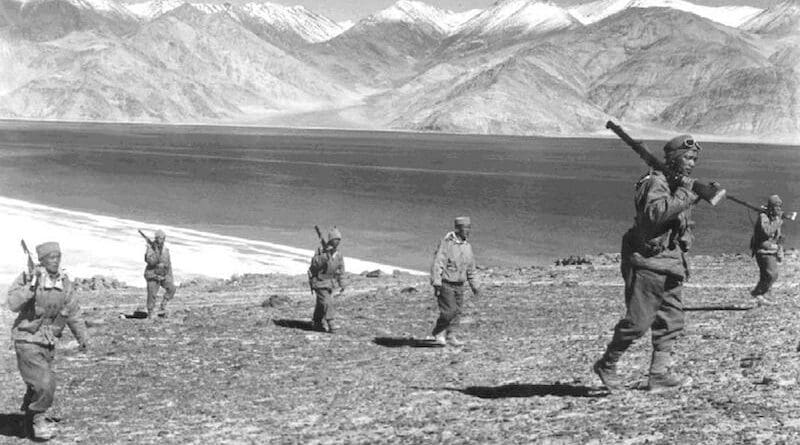
On October 20, 1962, the People’s Liberation Army (PLA) launched simultaneous offensives in the western sector (Ladakh) and across the McMahon Line in the eastern sector (Arunachal Pradesh). After a month of conflict, China declared a unilateral ceasefire on November 19, 1962, withdrawing its troops from the eastern sector to the McMahon Line, but retaining control over Aksai Chin. India suffered a major defeat, which continues to hurt our conscience even today.
Early days
In the early 1950s, the world was recovering from World War II, and the Cold War was beginning to shape international relations. India had gained independence from British rule in 1947, while China had established the People’s Republic of China in 1949 after a prolonged civil war. Both nations were looking to redefine their foreign policies and build strong, independent identities on the global stage.
With the independence of the Republic of India and the formation of the People’s Republic of China (PRC) in the year 1949, one of the policies for the Indian government was that of maintaining cordial relations with China. When China announced that it would be occupying Tibet, India sent a letter of protest proposing negotiations on the Tibet issue. China was even more active in deploying troops on the Aksai Chin border than India.
India was so concerned about its relations with China that it did not even attend a conference for the conclusion of a peace treaty with Japan because China was not invited. India even strove to become China’s representative in matters related to the world since China had been isolated from many issues.
In 1954, China and India concluded the Five Principles of Peaceful Coexistence, better known as the Panchsheel Agreement, under which, India acknowledged Chinese rule in Tibet. It was at this time when former Prime Minister of India, Jawaharlal Nehru promoted the slogan “Hindi-Chini bhai-bhai”.
But it did not address the contentious issues related to border demarcation between India and China in detail, leading to misunderstandings and conflict. From 1958 onwards, Chinese territorial claims became more assertive as it refused to accept the McMahon Line.
Reasons for the war
McMahon Line Dispute: Established in 1914, this line served as the boundary in the eastern sector between British India and Tibet. China never accepted this line, considering it a product of British aggression against Tibet.
Aksai Chin Dispute: In the western sector, India claimed Aksai Chin as part of its Ladakh region, while China considered it part of its Xinjiang province. China had secretly built a road through Aksai Chin by 1957, further complicating the issue.
China’s Occupation of Tibet: The post-1950 Chinese occupation of Tibet and the subsequent granting of asylum to the Dalai Lama by India in 1959 significantly strained relations between the two countries.
India’s Forward Policy: India’s decision to deploy troops and establish outposts in the disputed areas, a move called the Forward Policy, was seen by China as an aggressive and provocative act.
Beginning of the war
On October 20, 1962, the PLA launched simultaneous offensives in both Aksai Chin and NEFA. The Chinese troops, better-equipped and prepared for high-altitude warfare, quickly overwhelmed the Indian forces.
After a month of fighting, and having achieved its territorial objectives, China declared a unilateral ceasefire and withdrew its troops from NEFA. However, it retained control of Aksai Chin. The initiation of the 1962 War was indeed a violation of the principles of peaceful co-existence as envisaged under the Panchsheel Agreement.
The 1962 invasion shattered the idealistic notion of “Hindi-Chini Bhai-Bhai” (Indians and Chinese are brothers) and exposed the fragility of the agreement in the face of deep-seated territorial disputes.
Breach of agreements
China has repeatedly breached bilateral border agreements made with India in 1993, 1996, 2005, and 2013. These violations, most notably during the 2020 Galwan Valley clash, have seriously disturbed peace and tranquillity along the Line of Actual Control (LAC) and eroded the foundation of trust between the two countries.
1993 Border Peace and Tranquility Agreement (BPTA): Signed in September 1993, this was the first formal border agreement between India and China since the 1962 war. Both sides committed to respect the LAC and resolve boundary issues through peaceful consultations. China breached the agreement’s spirit by using military force during the 2020 Galwan Valley clash, which resulted in fatalities for the first time in decades. China also violated the commitment to strictly observe the LAC and maintain peace by initiating multiple transgressions.
1996 Agreement on Military Confidence-Building Measures: Signed in November 1996, this agreement built upon the BPTA by setting more specific rules, such as limiting military exercises and prohibiting the use of firearms within a certain distance of the LAC. China’s large-scale military build-up and aggressive actions along the border, particularly in eastern Ladakh since 2020, were clear breaches of the 1996 agreement’s provision for minimal force levels. Chinese troops violated the pact by assaulting Indian soldiers with sharp-edged batons and rods. China also stalled the process of exchanging maps to clarify the LAC’s alignment, which the agreement had mandated.
2005 Protocol on Political Parameters and Guiding Principles: An outcome of the Special Representative mechanism, this April 2005 agreement stated that differences over the boundary should not affect overall bilateral relations. It included principles for a final settlement, such as considering historical evidence and the interests of settled populations. China breached this agreement by using military force against India in 2020, effectively allowing the border issue to dictate the overall bilateral relationship. India has since maintained that bilateral ties cannot return to normal until the 2020 status quo on the LAC is fully restored. China has also introduced a new border law that violates the agreement’s mandate to respect and observe the LAC.
2013 Border Defence Cooperation Agreement (BDCA): The BDCA was signed in October 2013 to ensure that patrolling along the LAC would not escalate into armed conflict. It called for maximum self-restraint during face-to-face situations and banned the “following or tailing” of patrols in disputed areas. China’s aggressive manoeuvres and the brutal hand-to-hand combat during the 2020 Galwan incident directly violated the BDCA’s call for self-restraint and avoiding escalation. The agreement was a failure following the 2020-21 skirmishes, which proved it could not prevent hostilities.
China’s repeated violations have severely impacted diplomatic relations with India. India has consistently stated that normal relations cannot resume until China pulls back its troops and restores the pre-2020 status quo along the LAC. The Chinese military’s actions have fundamentally altered the strategic landscape, highlighting a deep-seated trust deficit that complicates efforts to resolve the long-running border dispute.
Legacy of the 1962 War
The war was a humiliating defeat for India, which was ill-prepared for the scale of the Chinese attack. It led to a massive overhaul of India’s defence policy, including a major military build-up and a more cautious approach to diplomacy with China.
The Line of Actual Control (LAC) emerged as the new de facto boundary, but its disputed nature continues to be a source of tension between the two nuclear-armed powers to this day. Border skirmishes with the PLA at Nathula in 1967, Doklam in 2017 and Galwan valley in 2020 show that the Chinese threat continues to linger even after six decades. These incidents have shattered India’s trust in Beijing.

Like what you read?
Please consider supporting Eurasia Review. Thank you for your consideration!
